

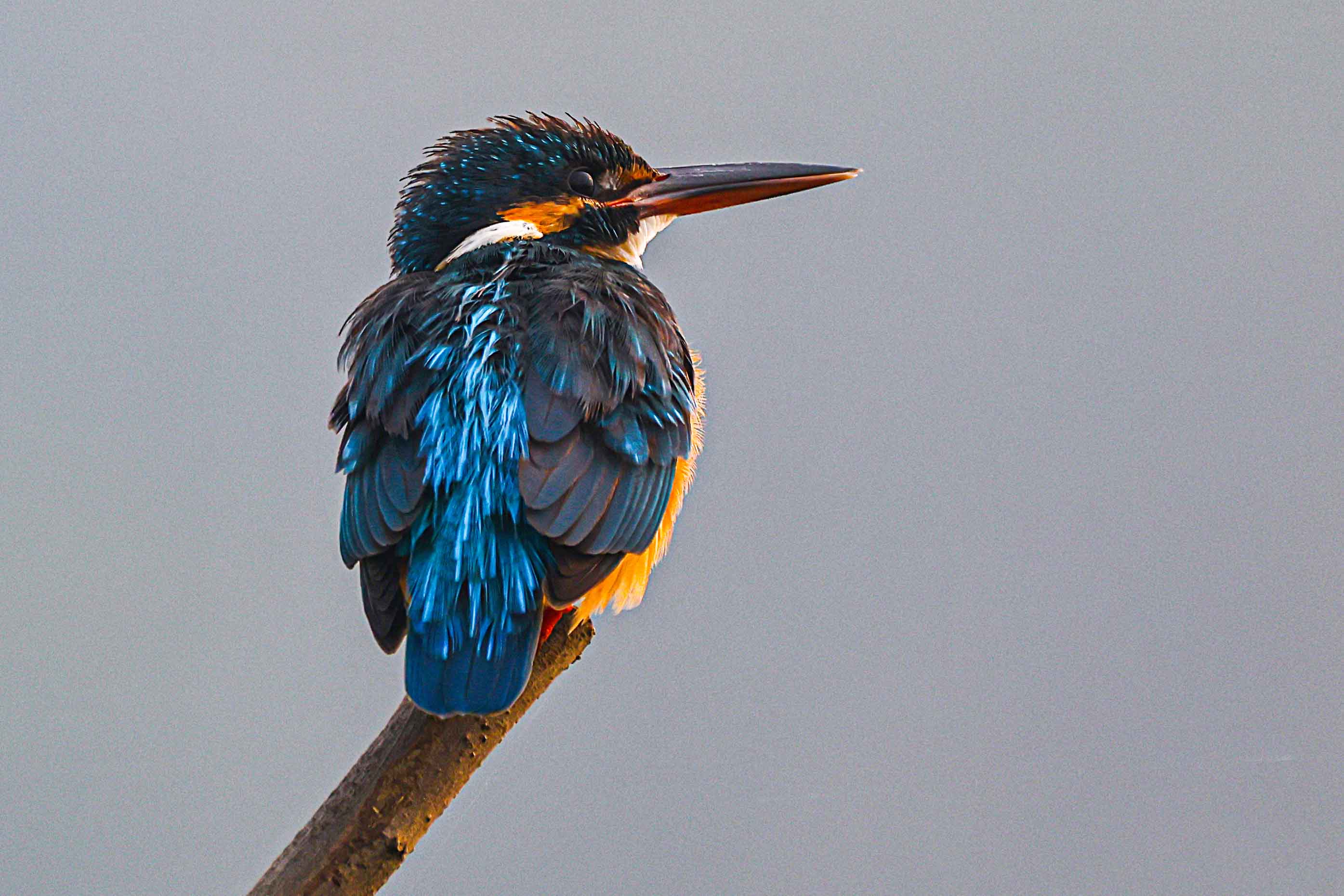
🐦 Common Kingfisher Photography and Conservation: A Complete Guide
🐦 Quick Navigation
- 🐦 Introduction
- 🦜 Physical Features
- 🌏 Habitat & Distribution
- 🍽️ Diet & Hunting Techniques
- 🐣 Breeding & Nesting Behavior
- 🔊 Behavior & Vocalization
- 🌿 Significance in Ecosystem
- 🛡️ Conservation Status
- 📚 Interesting Facts
- 🔭 How to Spot the Common Kingfisher
- 📸 How to Photograph the Common Kingfisher
- ❓ Frequently Asked Questions (FAQs)
- 📘 Conclusion: The Jewel of Wetlands
Common kingfisher photography and conservation brings together two important sides of wildlife observation. The Common Kingfisher (Alcedo atthis) is a small but remarkable bird found around rivers, streams, ponds, canals, lakes, and other suitable wetlands. Its brilliant blue upperparts and orange underparts make it a favorite subject for bird photographers. Yet photographing this bird requires more than a long lens. Understanding its habitat, feeding behavior, breeding habits, and conservation needs can help photographers create better images while respecting the bird. This guide explores the Common Kingfisher in detail, with special attention to wildlife photography and responsible conservation.
🐦 Introduction
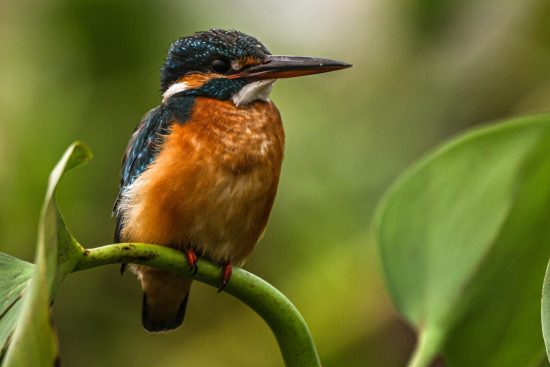
The Common Kingfisher is one of the most captivating birds found near freshwater habitats. Its brilliant blue back, orange underparts, and sharp bill make it instantly recognizable. Despite its small size, this bird displays remarkable hunting skills and impressive agility.
The Common Kingfisher (Alcedo atthis) belongs to the kingfisher family, Alcedinidae. It usually lives around rivers, streams, ponds, lakes, canals, and other water bodies. Clear water and suitable perches help it hunt efficiently.
This bird spends much of its time watching the water from a quiet perch. Once it spots suitable prey, it dives rapidly into the water. It can catch small fish and other aquatic animals with impressive precision.
For wildlife photographers, the Common Kingfisher offers many exciting opportunities. Its vibrant colors look striking in natural light. Fishing dives, flight sequences, and perched portraits can create memorable photographs.
However, photographing this bird requires patience and careful observation. The best images often come from understanding its behavior rather than simply reacting to movement. Photographers must also maintain a safe distance and avoid disturbing the bird.
Common kingfisher photography and conservation should go hand in hand. Beautiful photographs can help people appreciate this species and understand the importance of healthy aquatic habitats. Responsible photography also ensures that the bird’s natural behavior remains undisturbed.
The Common Kingfisher depends on clean water, healthy prey populations, and suitable nesting areas. Changes in water quality, habitat loss, and human disturbance can affect these essential resources.
In this guide, we will explore the Common Kingfisher’s physical features, habitat, diet, breeding behavior, and ecological importance. We will also cover practical photography techniques, spotting tips, and ethical practices for photographing this beautiful freshwater bird.
🦜 Physical Features
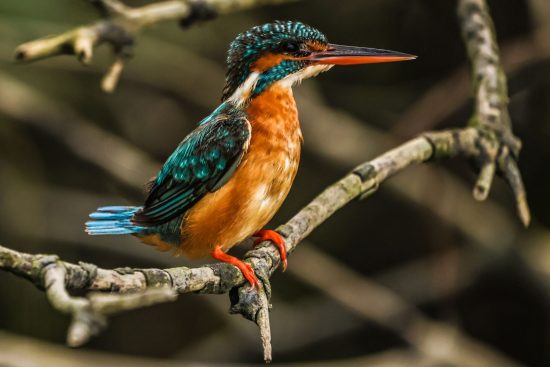
The Common Kingfisher (Alcedo atthis) is a small bird with a compact body and a relatively large head. Its bright plumage makes it easy to recognize around suitable water bodies. These physical features also create excellent opportunities for Common Kingfisher Photography and Conservation.
- Size: The Common Kingfisher measures about 16–17 cm in length. Its wingspan reaches roughly 25 cm.
- Head and bill: It has a large head and a long, pointed bill. The bill helps it catch small fish and other aquatic prey.
- Upperparts: The back and wings show brilliant blue and greenish-blue tones. Light direction can greatly change how these colors appear in photographs.
- Underparts: The breast and belly display rich orange or chestnut tones. These warm colors contrast beautifully with the blue upperparts.
- Throat: A small white patch appears around the throat. This feature stands out clearly in close photographs.
- Eyes: The dark eyes provide a strong contrast against the colorful head. Photographers should place the focus point carefully on the eye.
- Legs and feet: The legs usually show reddish or orange-red tones. They remain relatively short compared with the bird’s body.
- Male and female: Both sexes look very similar. The bill provides one useful difference. Males usually have an entirely dark bill, while females show orange-red on the lower mandible.
- Juveniles: Young birds usually appear duller than adults. Their plumage often looks less vibrant during their early development.
- Streamlined body: Its compact shape supports fast, agile flight. The bird can fly low over water with rapid wingbeats.
📸 Photography Tip
The Common Kingfisher’s colors can change dramatically under different lighting conditions. Early morning light can produce soft, detailed images. Strong midday light can create intense blue and orange tones.
For Common Kingfisher Photography and Conservation, focus on natural behavior rather than chasing the bird. A long telephoto lens lets you capture detailed portraits from a respectful distance.
A sharp eye, clean background, and natural perch can turn a simple portrait into a powerful wildlife photograph.
🌍 Habitat & Distribution
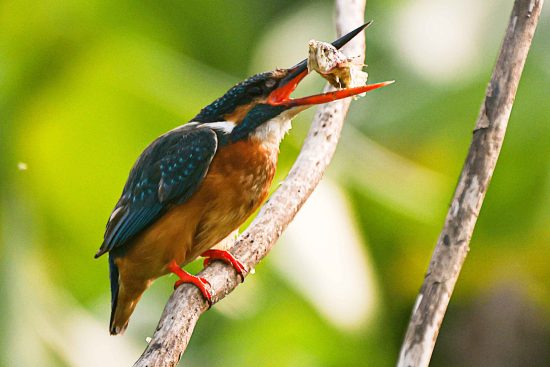
The Common Kingfisher (Alcedo atthis) lives near freshwater habitats across a large part of Europe, Asia, and North Africa. Its distribution closely follows areas with suitable water, prey, perches, and nesting banks.
- 🌊 Rivers and streams: It often lives along slow-flowing rivers and clear streams. These habitats provide fish and suitable hunting perches.
- 🏞️ Ponds and lakes: The bird also uses ponds, lakes, reservoirs, and other freshwater bodies. Vegetated edges can provide excellent hunting locations.
- 🌾 Canals and wetlands: Canals, marshes, and wetland channels can support Common Kingfishers when they offer enough prey and shelter.
- 🌳 Vegetated banks: Overhanging branches, reeds, roots, and low vegetation provide important hunting perches. The bird often waits quietly before diving.
- 🪨 Nesting banks: Steep, soft earth banks can provide suitable locations for nesting tunnels. Natural riverbanks therefore play an important role during breeding.
- 🇮🇳 Distribution in India: The Common Kingfisher occurs across many parts of India. It can appear around rivers, streams, ponds, canals, wetlands, and other suitable water bodies.
- 📍 Finding them for photography: Look for quiet water with clear views and nearby perches. Regular hunting perches can make excellent locations for Common Kingfisher Photography and Conservation.
- 📷 Photographer’s approach: Study the habitat before choosing your position. Watch the bird from a distance and identify its favorite perch.
- 💧 Water quality matters: The species depends on aquatic prey. Pollution and major habitat changes can reduce the quality of suitable feeding areas.
- 🌿 Protecting the habitat: Avoid damaging vegetation or nesting banks while photographing the bird. A healthy habitat matters more than getting a close photograph.
Understanding its habitat makes the Common Kingfisher easier to find and photograph. It also shows why protecting freshwater ecosystems matters.
🍽️ Diet & Hunting Techniques
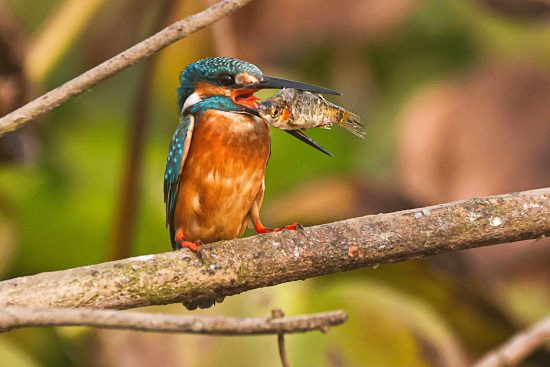
The Common Kingfisher is a skilled hunter that spends much of its time near water. It mainly feeds on small fish and other aquatic prey.
- 🐟 Small fish form an important part of its diet. The kingfisher usually catches fish from rivers, streams, ponds, and canals.
- 🦐 It also eats other small aquatic animals. Its prey can include aquatic insects, tadpoles, and small crustaceans.
- 🌿 The bird often hunts from a low perch. It chooses branches, roots, reeds, or other structures close to the water.
- 👀 It watches the water carefully before diving. The bird remains still while searching for suitable prey.
- 💦 Once it spots prey, it dives rapidly. It enters the water with remarkable speed and precision.
- 🎯 The long pointed bill helps it catch prey. The bill allows the bird to seize slippery fish effectively.
- 🪶 It often returns to a perch after a successful dive. The bird may then adjust the prey before swallowing it.
- 🔄 Common Kingfishers can repeat this hunting cycle several times. A productive location may attract the same bird repeatedly.
- 📸 This behavior creates excellent wildlife photography opportunities. Photographers can capture the bird before, during, or after a dive.
- ⚡ Use a fast shutter speed for fishing action. A speed around 1/2000 second can help freeze rapid movement.
- 🎯 Watch the bird before pressing the shutter. Its movements can reveal where and when it usually dives.
- 🚫 Never throw fish into the water to create a photograph. Baiting can interfere with natural feeding behavior.
For photographers, patience remains the most useful technique. Observe the bird first, predict its movements, and let natural behavior create the photograph.
🐣 Breeding & Nesting Behavior
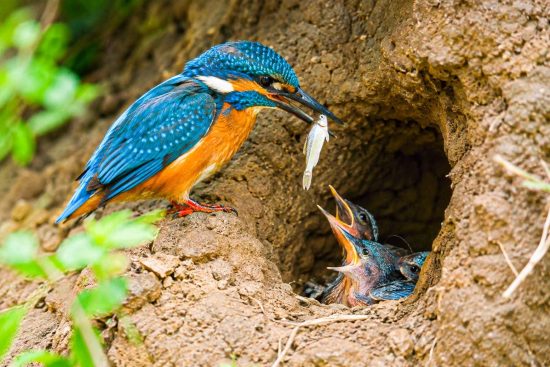
The Common Kingfisher has fascinating breeding habits closely linked to freshwater habitats. It usually nests near rivers, streams, ponds, and other suitable water bodies. The availability of suitable nesting banks can strongly influence breeding success.
- 🪺 Nesting Site: Common Kingfishers usually excavate nest tunnels in steep or vertical earth banks near water.
- 🕳️ Nest Tunnel: The pair digs a narrow tunnel into the bank. The tunnel provides a protected space for eggs and chicks.
- 🌿 Location Matters: The nest usually lies close to productive fishing areas. This allows adults to find food without traveling long distances.
- 👫 Pair Bonding: During breeding, the male and female work together. They may share responsibilities for excavation, incubation, and feeding.
- 🥚 Eggs: A typical clutch contains several white eggs. Clutch size can vary with location and environmental conditions.
- 🐣 Chick Rearing: Both parents contribute to feeding the young. Adults bring small fish and other suitable prey to the nest.
- 🎣 Feeding the Young: Parents may carry prey back to the nest repeatedly. A productive water body can therefore support successful chick development.
- 📷 Photography Ethics: Photographers should never approach an active nest closely. Frequent visits can disturb breeding birds and expose the nest.
- 🚫 Avoid Nest Disturbance: Never block the entrance or flight path. Avoid loud sounds and sudden movements near nesting areas.
- 🌱 Conservation Connection: Protecting natural riverbanks helps preserve potential nesting sites. Healthy waterways also provide the prey needed by breeding adults.
For Common Kingfisher Photography and Conservation, understanding breeding behavior is essential. A responsible photographer should prioritize the bird’s welfare over getting a rare nesting photograph. Photograph adults from a safe distance and avoid revealing precise nest locations publicly.
🔊 Behavior & Vocalization
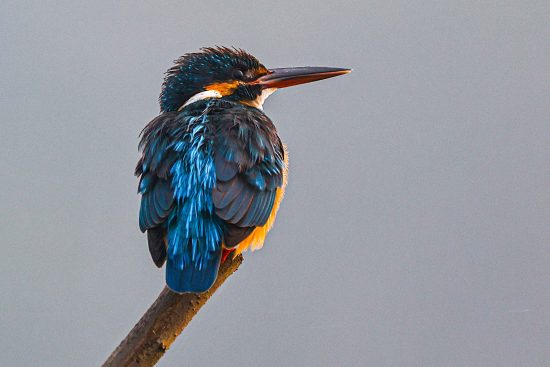
The Common Kingfisher is a fast, alert, and territorial bird. Understanding its behavior can greatly improve your chances of capturing natural photographs.
- 🔊 Distinctive Calls:
The Common Kingfisher produces a sharp, high-pitched call. You may hear it before spotting the bird. Learning this call can help photographers locate hidden individuals. - 🌿 Favorite Perches:
It often hunts from low branches, roots, reeds, or other perches near water. A productive perch may attract the same bird repeatedly. - 🎯 Patient Hunting:
The bird can remain still while watching the water. It carefully searches for fish and other aquatic prey before making a sudden dive. - 💦 Rapid Diving:
Once it spots prey, the kingfisher can plunge quickly into the water. It usually returns to a perch after catching its prey. - 🐟 Fishing Behavior:
The bird often adjusts its position before diving. Watching these movements can help photographers predict when the dive will begin. - 🪽 Fast Flight:
The Common Kingfisher flies rapidly and close to the water surface. Its blue body can appear as a quick flash during flight. - 🛡️ Territorial Nature:
It may defend a suitable feeding area from other kingfishers. Territorial behavior becomes more noticeable around productive hunting locations. - 📸 Photography Opportunity:
Observe the bird before raising your camera. Its repeated movements can reveal useful patterns for predicting the next action. - 🤫 Keep Your Distance:
Sudden movement can make the bird leave its perch. Stay quiet and avoid approaching too closely. - 🌱 Respect Natural Behavior:
Never use bait or repeated playback to force a response. Responsible Common Kingfisher Photography and Conservation should always protect natural behavior.
Understanding these behaviors helps photographers anticipate action without disturbing the bird.
🌿 Significance in Ecosystem
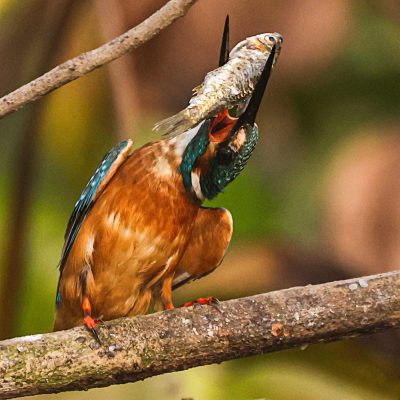
The Common Kingfisher plays an important role in freshwater ecosystems. Its survival depends on healthy aquatic habitats and abundant prey.
- 🐟 Part of the aquatic food web:
The Common Kingfisher feeds mainly on small fish and other aquatic animals. It connects aquatic prey with higher levels of the food chain. - 🌊 Closely linked to freshwater habitats:
Rivers, streams, ponds, canals, and wetlands provide important feeding areas. The bird needs suitable water conditions to hunt successfully. - 🌿 Depends on healthy riverbanks:
Overhanging branches and vegetation provide valuable hunting perches. Natural banks can also provide suitable locations for nesting. - 🐠 Reflects local habitat conditions:
A kingfisher needs enough suitable prey and hunting opportunities. Its presence can therefore highlight the ecological value of a water body. - 🪱 Helps maintain ecological connections:
By feeding on aquatic organisms, the bird forms part of the natural predator-prey relationship. This interaction contributes to the balance of wetland ecosystems. - 📷 Important for wildlife photography:
The species gives photographers an opportunity to document freshwater biodiversity. A photograph can also showcase the habitat that supports the bird.
*The Common Kingfisher’s fast movements and diving behavior make it a challenging but rewarding subject for action photography.
- 🛡️ Connects photography with conservation:
Common Kingfisher Photography and Conservation can raise awareness about aquatic habitats. Responsible images can encourage people to value rivers and wetlands. - 💧 Highlights the need for clean waterways:
Pollution and habitat changes can affect aquatic prey and suitable hunting areas. Protecting water quality benefits kingfishers and many other species. - 🌳 Supports the value of natural vegetation:
Removing waterside vegetation can reduce available perches. Keeping natural vegetation helps maintain useful hunting habitat. - 🤝 Encourages responsible wildlife observation:
Photographers can support conservation by avoiding disturbance. Maintaining distance also allows the bird to feed and behave naturally.
The Common Kingfisher may be small, but its relationship with water makes it an important part of freshwater biodiversity. Protecting its habitat protects the wider ecosystem too.
🛡️ Conservation Status
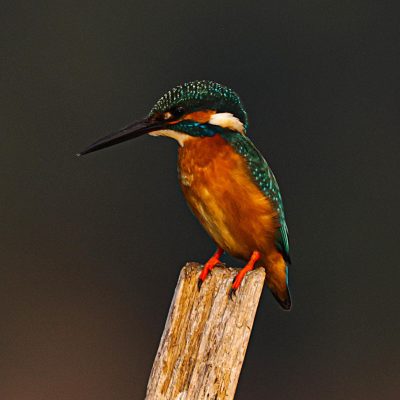
The Common Kingfisher (Alcedo atthis) has a global IUCN Red List status of Least Concern (LC). The latest available assessment places the species in this category.
However, Least Concern does not mean that the species faces no conservation problems. IUCN explains that Least Concern species can still experience local declines and require monitoring.
For photographers, this distinction matters. A species can remain secure globally while facing pressure in
🌍 IUCN Red List Status
- Common name: Common Kingfisher
- Scientific name: Alcedo atthis
- Family: Alcedinidae
- Global IUCN status: Least Concern (LC)
- Global population trend: The global trend has not been quantified with confidence. Available sources describe the overall population as large and not currently meeting threatened-category thresholds.
- Global range: The species occupies a very large geographic range across Europe, Asia, and parts of North Africa.
- IUCN assessment: The Red List assessment considers distribution, population, habitat, threats, and conservation information.
The LC category means the species does not currently meet the IUCN criteria for Vulnerable, Endangered, or Critically Endangered status.
🇮🇳 Conservation Status in India
The Common Kingfisher also receives legal protection in India.
- Indian scientific name: Alcedo atthis
- IUCN category: Least Concern
- Wild Life (Protection) Act: Schedule II
- Habitat specialization: Wetland
- Distribution: Widespread but not endemic to India
- Migratory status in the State of India’s Birds database: Resident
The State of India’s Birds database lists the Common Kingfisher as Schedule II under India’s wildlife protection framework.
The species also appears in the Indian wildlife legislation alongside other protected kingfishers.
Legal protection is important because it provides a framework for protecting the bird from direct exploitation and other harmful activities.
📉 Population Trends Need Attention
Global status alone does not tell the complete conservation story.
The State of India’s Birds 2025 assessment lists the Common Kingfisher as having a very large distribution range in India. However, its national long-term and current annual trends are both described as inconclusive.
The situation can also vary between states.
For example, the 2025 assessment reports:
- West Bengal: Current annual trend — rapid decline.
- Kerala: Current annual trend — stable.
- Assam: Current annual trend — stable.
- Uttarakhand: Current annual trend — insufficient data.
- Jammu and Kashmir: Current annual trend — insufficient data.
These differences show why local monitoring matters. A national or global status cannot describe every local population.
💧 Major Conservation Threats
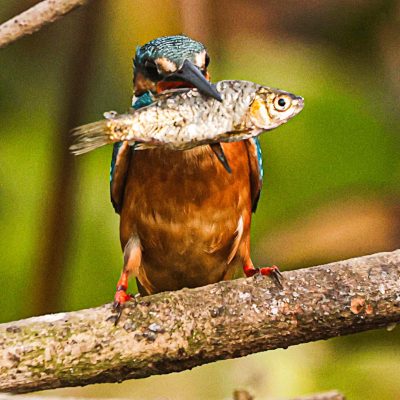
The Common Kingfisher depends strongly on healthy aquatic habitats. Any change that reduces food, nesting sites, or suitable hunting locations can affect the species.
Important conservation concerns include:
- Water pollution: Polluted water can damage aquatic ecosystems and reduce suitable prey.
- Habitat degradation: Altering rivers, streams, ponds, and wetlands can reduce suitable habitat.
- Loss of riverbank vegetation: Removing vegetation can eliminate important hunting perches.
- Destruction of nesting banks: The species excavates nesting tunnels in suitable banks.
- Waterway modification: Excessive engineering can remove natural habitat features.
- Reduced prey availability: Changes in aquatic ecosystems can affect the fish and other prey the bird needs.
- Human disturbance: Frequent disturbance can affect feeding and breeding behavior.
- Severe weather: Extreme cold can cause substantial local population losses in some regions.
IUCN’s threat framework includes pollution, residential and commercial development, agriculture, freshwater modification, and climate-related pressures among recognized categories that can affect biodiversity.
🏞️ Why Riverbanks Matter
A healthy riverbank provides several resources at once.
The Common Kingfisher needs suitable perches, feeding areas, water, prey, and nesting sites.
Natural banks can provide nesting opportunities. Overhanging branches can provide hunting posts. Shallow water can provide suitable feeding areas.
Removing one feature can affect several parts of the bird’s daily life.
For example, replacing a natural riverbank with concrete may reduce nesting opportunities. Removing riverside trees can also eliminate important hunting perches.
This is why conservation should protect the whole habitat, rather than focusing only on the bird.
🐟 Protecting the Food Supply
The Common Kingfisher depends heavily on aquatic prey.
Small fish form an important part of its diet. The bird also takes aquatic insects and other small aquatic animals.
Therefore, protecting the kingfisher also means protecting aquatic food webs.
Clean water helps maintain the organisms that support these food webs. Natural aquatic vegetation can also provide habitat for prey species.
A healthy water body can therefore support the kingfisher indirectly.
🌱 Conservation Measures
Effective conservation should focus on maintaining suitable habitat.
Important measures include:
- Protect natural riverbanks and wetland edges.
- Maintain clean freshwater habitats.
- Reduce pollution entering rivers and ponds.
- Preserve waterside vegetation.
- Protect suitable nesting banks.
- Maintain natural aquatic food webs.
- Reduce unnecessary disturbance near breeding areas.
- Monitor local populations over time.
- Improve public awareness of freshwater biodiversity.
- Support restoration of degraded wetlands and waterways.
IUCN describes habitat protection, restoration, legal protection, and research as examples of conservation actions that can support species conservation.
📷 The Role of Wildlife Photographers
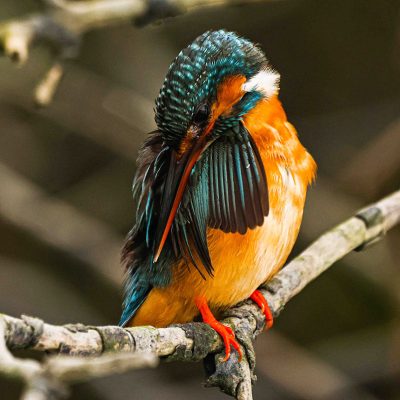
Common Kingfisher Photography and Conservation should go together.
A photographer can do much more than create attractive bird photographs. Responsible photography can help people understand the species and its habitat.
Photographers can:
- Photograph the bird without disturbing its natural behavior.
- Keep a safe distance from feeding and breeding birds.
- Avoid approaching active nests.
- Never use bait to force fishing behavior.
- Avoid repeated playback of calls.
- Avoid blocking the bird’s flight path.
- Avoid trampling riverside vegetation.
- Keep sensitive nesting locations private.
- Share accurate information with photographs.
- Support credible habitat and conservation projects.
A photograph becomes more valuable when it tells the story of the habitat behind the bird.
⚠️ Why “Least Concern” Still Matters
It is easy to misunderstand the term Least Concern.
The Common Kingfisher still needs protection despite its current status. This classification means the species does not currently meet the IUCN thresholds for a threatened category at the global level. However, local populations may still face habitat loss and other environmental pressures.
IUCN also points out that some Least Concern species experience slow declines. Monitoring helps detect future changes before they become more serious.
The Indian situation demonstrates why this matters. State-level assessments show different trends and different levels of available information.
Therefore, photographers and birdwatchers should not judge conservation needs from global status alone.
📝 Key Conservation Facts
IUCN Status: Least Concern (LC)
Scientific Name: Alcedo atthis
Family: Alcedinidae
Indian Wildlife Protection Status: Schedule II
Habitat: Freshwater and wetland environments
Main Conservation Focus: Protect aquatic habitats and nesting banks
Important Local Concern: Population trends can vary between regions
Photography Priority: Photograph without disturbing natural behavior
The Common Kingfisher remains a widespread species, but its future depends on healthy aquatic ecosystems. Protecting rivers, streams, ponds, wetlands, vegetation, and natural banks protects more than one bird.
For wildlife photographers, this creates an important responsibility. A beautiful photograph should never come at the cost of the bird’s welfare or its habitat.
📚 Interesting Facts
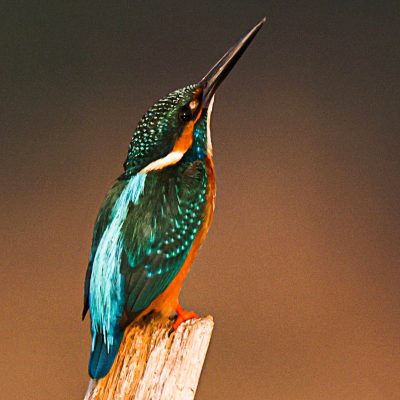
The Common Kingfisher (Alcedo atthis) may look small, but it has remarkable adaptations. Here are some fascinating facts about this colorful bird.
- 🐦 It is a small but powerful hunter.
The Common Kingfisher usually measures around 16–17 cm in length. Its compact body helps it move quickly around water. - 🎨 Its blue color comes from feather structure.
The bright blue appearance does not simply come from blue pigment. The structure of the feathers affects how light reflects from them. - 👀 It has excellent vision for underwater hunting.
The kingfisher watches prey from above the water. It then dives quickly to catch its target. - 🎣 It can catch prey with remarkable speed.
The bird often waits quietly on a perch. It then plunges into the water when it spots suitable prey. - 🌊 It depends closely on aquatic habitats.
Rivers, streams, ponds, canals, and wetlands can provide feeding opportunities. Suitable banks can also provide nesting sites. - 🪺 It digs its own nesting tunnel.
The Common Kingfisher excavates a tunnel in a suitable earth bank. This tunnel leads to the nesting chamber. - 🦜 Male and female birds look very similar.
Their bill coloration helps distinguish the sexes. Males usually have a black bill, while females have an orange-red lower mandible. - 🔊 Its call can reveal its location.
The species produces a sharp, high-pitched call. Birdwatchers may hear it before seeing the bird. - 📸 It challenges even experienced photographers.
Its small size and rapid movements demand careful timing. Fishing dives require especially quick shutter speeds. - 🛡️ Its conservation depends on healthy waterways.
Clean water, suitable prey, vegetation, and nesting banks support the species. Protecting these habitats also benefits other wildlife.
🔭 How to Spot the Common Kingfisher
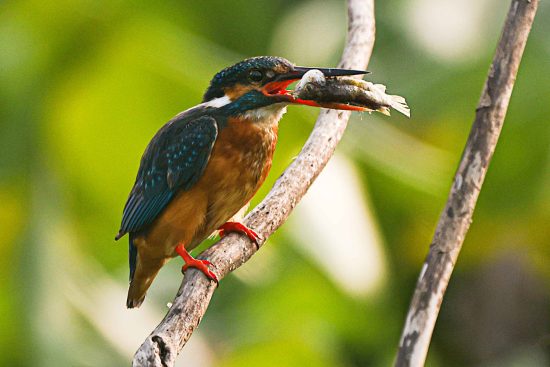
Finding a Common Kingfisher becomes much easier when you understand its preferred habitat and hunting behavior. Look for quiet water bodies with fish, aquatic insects, and suitable perches. The bird often sits silently before making a sudden dive.
- 🌊 Search near suitable water bodies: Check rivers, streams, canals, ponds, lakes, and wetlands. Look for areas with relatively clear water and good prey availability.
- 🌿 Look for natural perches: Search for overhanging branches, exposed twigs, roots, reeds, and low vegetation near the water. Kingfishers often use these spots to watch for prey.
- 👀 Watch the water’s edge: Scan branches and vegetation rather than looking only at the water. The bird can remain completely still for several minutes.
- 🔊 Listen for its call: Its sharp, high-pitched call can reveal its presence before you see it. Stop and scan the nearby vegetation when you hear it.
- 💙 Watch for a blue flash: A flying Common Kingfisher often appears as a quick blue streak. It usually flies low and rapidly over the water.
- 🎯 Observe hunting patterns: Watch for repeated dives from the same perch. Once you find a hunting spot, stay quietly nearby and observe.
- 🪶 Look for signs of regular activity: Droppings below a branch can indicate a frequently used perch. Repeated splashes can also reveal a fishing location.
- 📷 Choose your position carefully: For photography, keep a comfortable distance from the bird. Avoid blocking its flight path or approaching suddenly.
- 🤫 Stay quiet and patient: Sudden movements can make the bird leave. Remain still and allow it to return naturally.
- 🚫 Never chase the bird: Follow the bird’s behavior instead of pursuing it along the water. This approach reduces disturbance and improves your photography opportunities.
Tip: Once you locate a regular perch, spend time observing it before moving closer. Understanding the bird’s routine can help you anticipate its next move and capture natural behavior without disturbing it.
📸 How to Photograph the Common Kingfisher
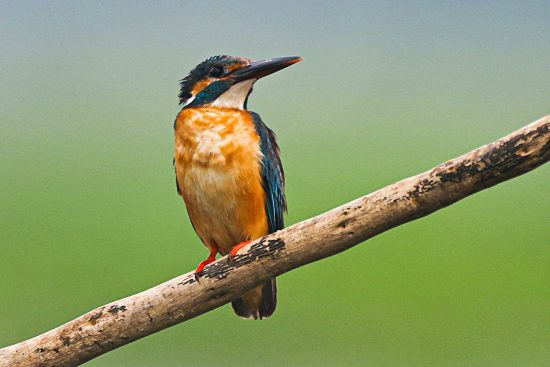
Photographing the Common Kingfisher requires patience, careful observation, and quick camera handling. Its small size and rapid movements can challenge even experienced bird photographers. The key is to understand the bird before pressing the shutter.
📷 Choose the Right Lens
- A 400mm or longer telephoto lens works well for kingfisher photography.
- Longer focal lengths help you maintain a safe distance.
- A teleconverter can provide extra reach when light conditions permit.
- Avoid moving closer just to fill the frame.
- A distant, relaxed bird makes a better subject than a disturbed one.
⚙️ Recommended Camera Settings
Use fast settings when photographing active kingfishers.
- Shutter speed: Start around 1/1600 sec for general action.
- Use 1/2500 sec or faster for diving and rapid flight.
- Aperture: Use around f/5.6–f/8, depending on your lens and light.
- ISO: Use Auto ISO when light changes frequently.
- Focus: Use continuous autofocus for moving birds.
- Drive mode: Select high-speed continuous shooting.
- Metering: Evaluative or matrix metering works well in most situations.
For perched birds, you can lower the shutter speed when the bird remains still. Always check the shutter speed before starting a session.
🌿 Find a Good Perch
The Common Kingfisher often uses regular hunting perches.
- Look for branches, sticks, roots, and other natural perches above the water.
- Watch the bird before choosing your position.
- Identify where it usually dives.
- Set up near the action instead of following the bird.
- Keep your position low when the surroundings allow it.
- Use natural vegetation as cover.
A clean perch can make your photograph much stronger. Avoid backgrounds with distracting branches, plastic, buildings, or other objects.
🎯 Focus on the Eye
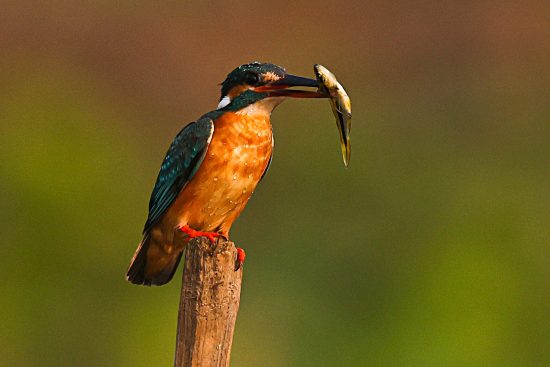
The eye should remain the main focus of a kingfisher portrait.
- Place the focus point over the bird’s eye.
- Keep the bird’s head parallel to your camera when possible.
- Use animal or bird eye autofocus if your camera performs reliably with small subjects.
- Check your images at high magnification.
- Do not rely only on autofocus confirmation.
A sharp eye gives the photograph a stronger sense of life and detail.
💦 Capture the Fishing Action
Fishing behavior offers some of the most exciting kingfisher photographs.
- Watch the bird closely before it dives.
- Learn its body movements before each dive.
- Track the bird as it leaves the perch.
- Keep the autofocus active during the movement.
- Use a fast shutter speed to freeze the splash.
- Continue shooting as the bird emerges.
- Watch for the moment when the bird carries a fish.
Try to anticipate the dive rather than reacting after it begins. Your reaction time may not be fast enough once the bird enters the water.
🪽 Photograph Flight
The Common Kingfisher’s fast flight can produce dramatic photographs.
- Choose a clear section of water.
- Pre-position yourself along its regular flight path.
- Use a fast shutter speed.
- Select continuous autofocus.
- Keep both eyes open while tracking the bird.
- Start shooting slightly before the expected movement.
- Leave space in front of the flying bird.
Flight photography takes practice. Expect many missed frames before you capture a sharp image.
🌅 Use Natural Light
Good light can transform a kingfisher photograph.
- Early morning light often produces soft and attractive illumination.
- Late afternoon light can create warm tones.
- Avoid harsh overhead light when possible.
- Watch the direction of sunlight before setting up.
- Keep the sun behind or slightly to the side of you.
- Watch bright highlights on the bird’s blue plumage.
Soft light can reveal subtle details in the blue and orange feathers.
🧘 Practice Ethical Wildlife Photography
The welfare of the bird should always come before the photograph.
- Never bait a wild kingfisher for a photograph.
- Do not throw fish into the water to trigger a dive.
- Avoid playing recorded calls repeatedly.
- Never approach an active nest closely.
- Do not block the bird’s regular flight path.
- Leave if the bird repeatedly shows signs of disturbance.
- Avoid revealing sensitive nesting locations.
Patience is one of the most important tools in wildlife photography. Let the kingfisher behave naturally, and wait for the photograph to come to you.
A technically perfect photograph has little value if you obtained it by disturbing the bird. The best Common Kingfisher photograph combines sharp technique, natural behavior, beautiful light, and responsible fieldcraft.
❓ Frequently Asked Questions (FAQs)
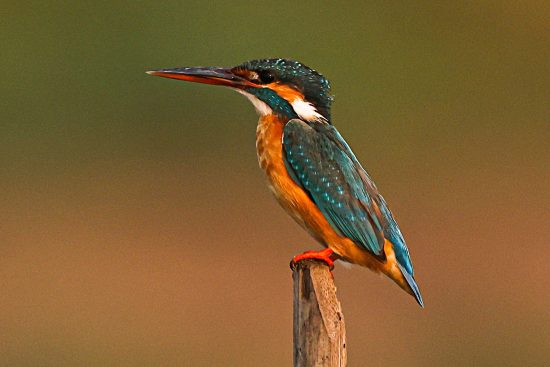
What is the scientific name of the Common Kingfisher?
The scientific name is Alcedo atthis. It belongs to the kingfisher family, Alcedinidae.
What does the Common Kingfisher eat?
It mainly eats small fish. It can also consume aquatic insects, tadpoles, and other small aquatic prey.
Where can I find a Common Kingfisher?
Look around suitable rivers, streams, canals, ponds, lakes, wetlands, and other water bodies. It prefers locations with suitable prey and nearby hunting perches.
Is the Common Kingfisher found in India?
Yes. The species occurs across suitable habitats in India. Indian references record it around streams, canals, ponds, plains, and other aquatic environments.
What lens is good for Common Kingfisher photography?
A telephoto lens is useful because the bird is small and easily disturbed. A 400mm or longer lens can provide useful reach.
What shutter speed should I use?
Around 1/1000 second can work for perched birds. Use around 1/2000 second or faster for fast flight and diving action. Adjust according to light and your camera.
Is the Common Kingfisher endangered?
The species is currently classified as Least Concern globally. However, local populations can face habitat and environmental pressures.
How can photographers help kingfishers?
Photographers can maintain distance, avoid disturbing nests, avoid baiting, protect sensitive locations, and share accurate conservation information.
📘 Conclusion: The Jewel of Wetlands
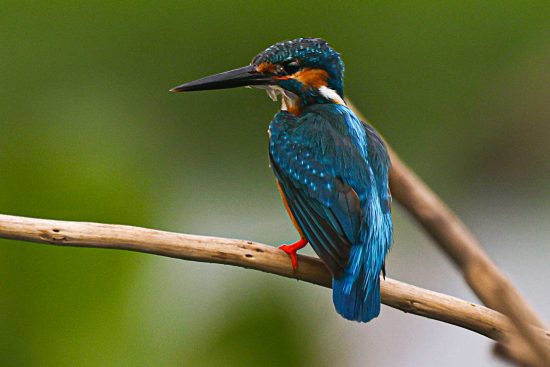
The Common Kingfisher is more than a beautiful subject for wildlife photography. It represents the health and richness of freshwater ecosystems. Its vibrant colors, remarkable hunting skills, and fascinating behavior make every encounter special.
For photographers, capturing this bird requires patience, preparation, and respect. The best photographs often come from quiet observation rather than disturbance. Understanding its behavior can help you anticipate dives, choose better camera settings, and capture natural moments.
Common kingfisher photography and conservation should always go hand in hand. A great photograph should tell a story without harming the subject. Avoid baiting, chasing, excessive calls, or approaching sensitive nesting areas. Give the bird enough space to behave naturally.
📸 Turn Your Photos Into a Conservation Message
If you photograph a Common Kingfisher, look beyond the image. Notice the condition of its habitat. Observe the water quality, vegetation, and surrounding environment. These details can reveal important information about the ecosystem.
You can also:
- 📷 Share your best photographs responsibly.
- 🌿 Support projects that protect wetlands and freshwater habitats.
- 🐦 Participate in ethical bird surveys and citizen-science projects.
- 💧 Help raise awareness about clean and healthy waterways.
- 📚 Learn more about local birds and their habitats.
- 🚫 Avoid sharing exact locations of sensitive nests.
- ❤️ Encourage other photographers to follow ethical wildlife practices.
Your photograph can inspire someone to appreciate nature. That appreciation can encourage greater care for wildlife and its habitat.
🌏 Photograph With Purpose
Wildlife photography becomes more meaningful when it contributes to conservation awareness. Every responsible photographer can help people understand why wetlands and rivers matter.
So, the next time you find a Common Kingfisher beside a quiet stream, slow down and observe. Wait for the right moment. Let the bird behave naturally. Then capture the scene without disturbing its world.
Photograph the beauty. Respect the wildlife. Protect the habitat.
👉 Call-to-Action: If you enjoyed this guide on common kingfisher photography and conservation, share it with fellow bird photographers and nature lovers. Encourage them to photograph responsibly and protect the habitats that make these encounters possible.
Keep exploring. Keep photographing. And most importantly, keep nature wild.
Recent Comments