

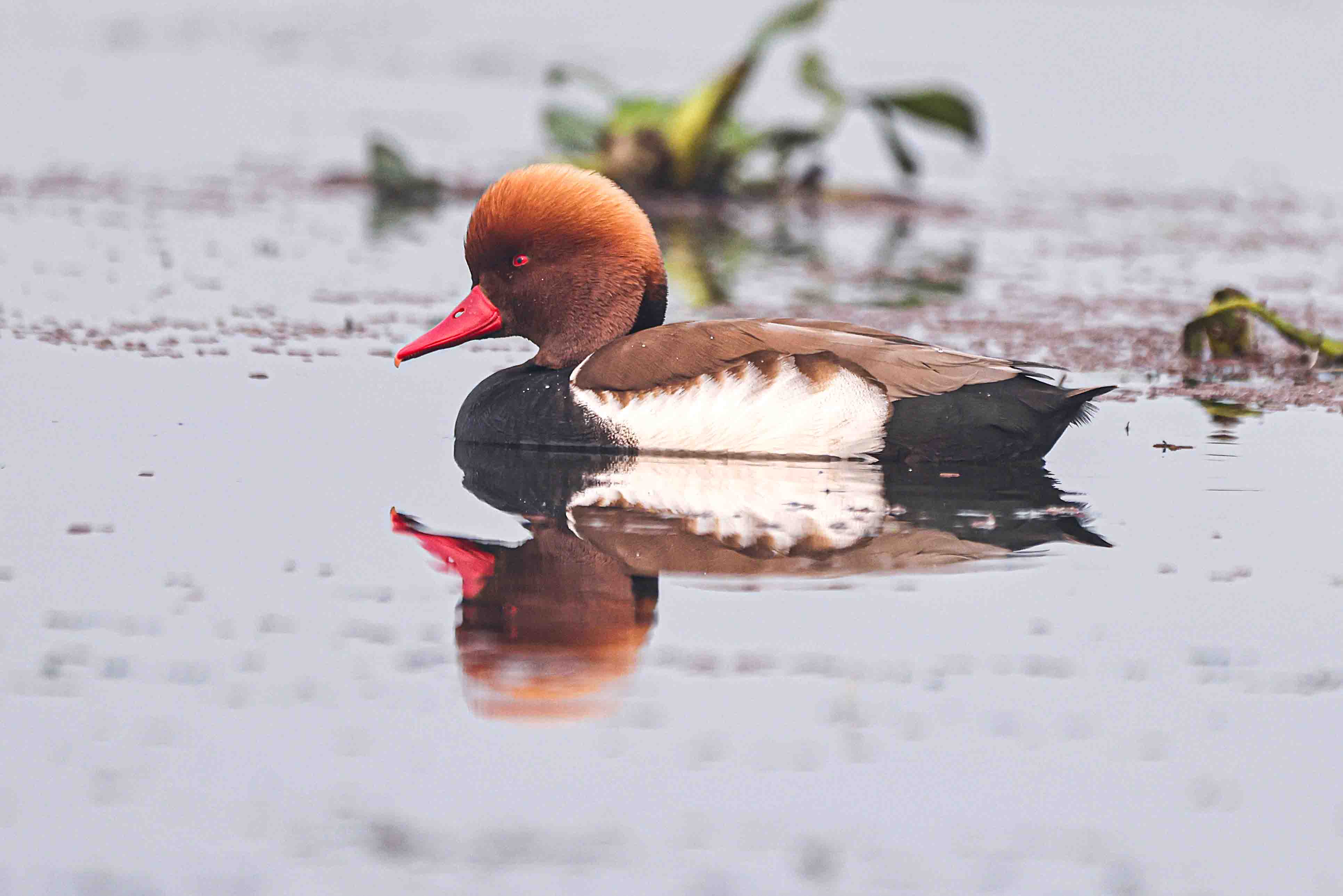
Red-crested Pochard: A Striking Waterbird of Lakes and Wetlands
📖 Index
🦆 Quick Navigation
- 🦆 Introduction
- 🔍 Physical Appearance
- 🌍 Habitat and Distribution
- 🍃 Feeding and Behavior
- 🧭 Migration Patterns
- 🐣 Breeding and Nesting
- 🎎 Cultural Significance
- 🛡️ Conservation Status and Threats
- 📸 Photography and Birding Tips
- 📘 Why Documentation Matters and How You Can Help
- ❓ FAQs About Red-crested Pochard
- ✨ Conclusion: The Scarlet Beauty of Wetlands
🦆 Introduction
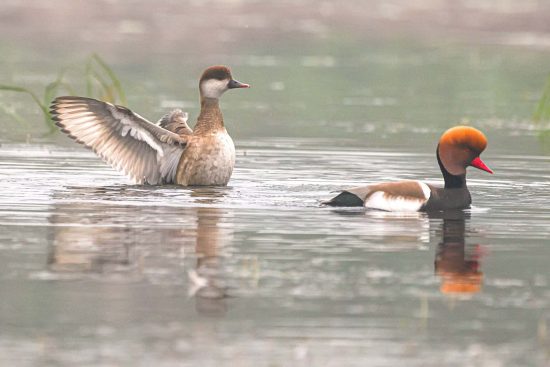
The Red-crested Pochard (Netta rufina) is a dazzling freshwater duck admired across Europe and Asia. With its vibrant scarlet head, bright orange-red bill, and chestnut body, this bird instantly stands out in wetlands. Often called the “scarlet beauty of wetlands,” the Red-crested Pochard brings life and color to lakes, marshes, and rivers.
This duck is more than just a visual delight. The Red-crested Pochard plays an important role in wetland ecosystems. It helps control aquatic vegetation, supports food chains, and balances freshwater habitats. Birdwatchers love spotting its striking plumage, while photographers treasure its bold colors and graceful movements.
The Red-crested Pochard is also known for its fascinating lifestyle. It prefers diving for food rather than dabbling like many other ducks. Seasonal migration adds another layer of wonder, as large flocks move across regions in search of food and breeding grounds.
Conservation efforts matter too. Rapid habitat loss, pollution, and wetland degradation threaten this species. Protecting the Red-crested Pochard means protecting entire wetland ecosystems. Understanding its behavior, migration patterns, and nesting needs can guide stronger conservation strategies.
For bird enthusiasts, nature lovers, and researchers, the Red-crested Pochard offers endless opportunities to observe and learn. For photographers, it is a living masterpiece that captures the true charm of wild wetlands.
🔍 Physical Appearance
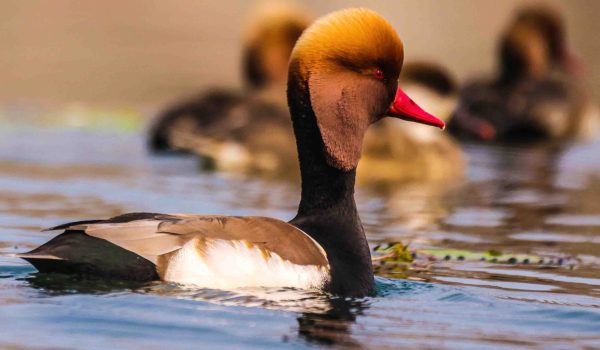
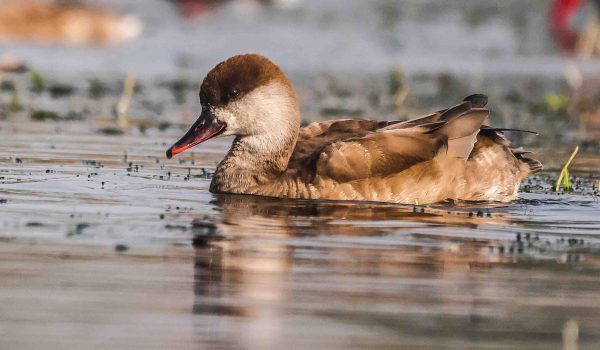
The Red-crested Pochard is a medium-sized diving duck known for its striking beauty and sexual dimorphism. Males and females look very different, which makes identification easier in the field.
Male Birds
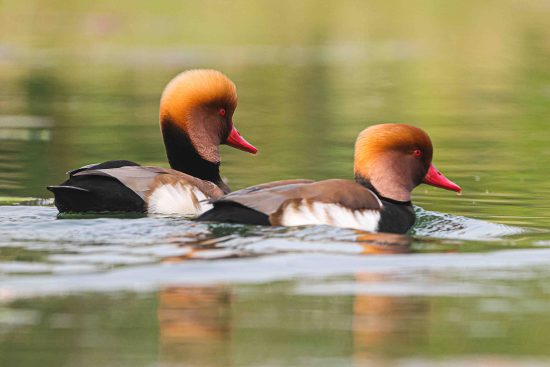
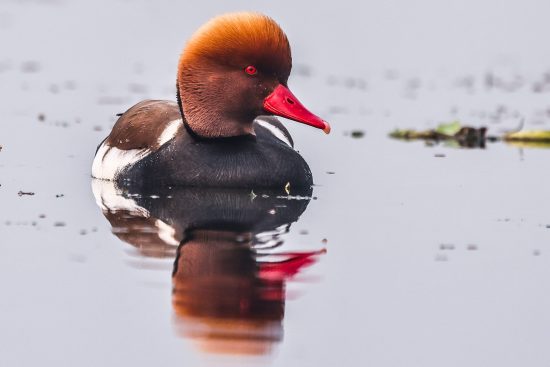
- Bright scarlet crestwith a rounded, puffed shape, making the head look larger.
- Crimson-red billthat shines in sunlight and contrasts against the dark chest.
- Fiery red eyesthat enhance its bold appearance.
- Glossy black chestwith pale buff flanks and a white belly.
- Reddish-brown back and tail adding warmth to its plumage.
- During breeding season, colors become brighter and more vivid.
Female Birds
- Subtle brownish-grey plumagedesigned for camouflage in wetland habitats.
- Pale face with a distinct white cheek patch, a key marker for identification.
- Darker crown and nape, giving contrast to the lighter head.
- Greyish-buff body and paler underparts.
- Smaller size impression compared to the striking male.
Shared Features
- Body length: 49–57 cm.
- Wingspan: 84–90 cm.
- Strong webbed feetadapted for efficient swimming and diving.
- Short tail and compact body, perfect for aquatic life.
- Both sexes have fast, direct flight with rapid wingbeats.
🔍 Quick ID Tip: Spot the male’s vibrant red crest and glowing eyes during winter migrations. The female’s muted brown and white cheek patch provide a subtle, camouflaged beauty.
🌍 Habitat and Distribution
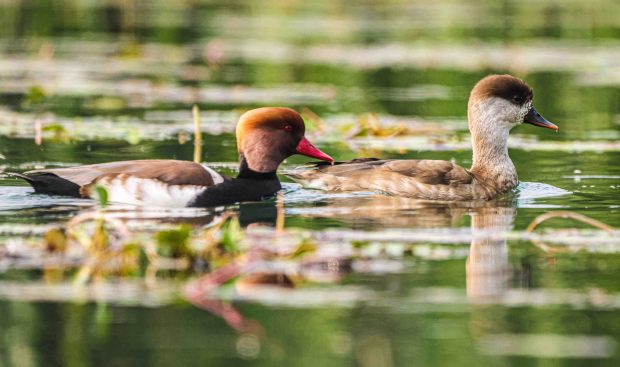
The Red-crested Pochard thrives in freshwater ecosystems rich in aquatic plants. They favor shallow lakes, lagoons, marshes, and slow-moving rivers with plenty of vegetation. These wetlands provide food, nesting cover, and shelter from predators. Nutrient-rich waters with submerged and floating plants form their prime habitats.
Their breeding range stretches across central and southern Europe, central Asia, and parts of the Indian subcontinent. They breed in wetlands with calm, clear water and abundant reeds. During breeding, they prefer areas away from heavy human disturbance.
The wintering grounds of the Red-crested Pochard extend across South Asia, including India, Pakistan, Nepal, and Bangladesh. Large flocks migrate to India every winter, making the country a stronghold for this species. Birdwatchers often spot them in Bharatpur’s Keoladeo National Park, Odisha’s Chilika Lake, and wetlands of northern and eastern India.
In India, the Red-crested Pochard shows strong site fidelity, returning to the same wetlands year after year. They choose habitats that support rich biodiversity, often mixing with other migratory ducks and geese. Healthy wetland ecosystems are vital for sustaining their populations, especially in regions facing rapid habitat loss.
By adapting to different freshwater habitats across continents, the Red-crested Pochard highlights the ecological importance of conserving wetlands worldwide.
🍃 Feeding and Behavior
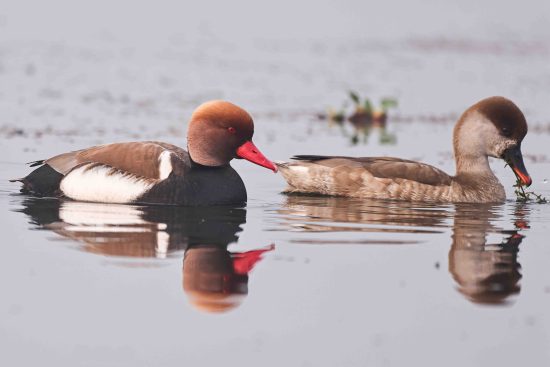
The Red-crested Pochard is an elegant diving duck with fascinating feeding habits that adapt to changing seasons and habitats. Its diet mainly consists of aquatic plants, seeds, and small invertebrates, making it an essential species in maintaining wetland ecosystems.
The Red-crested Pochard feeds mainly on aquatic plants, seeds, and roots.
It prefers submerged vegetation like pondweeds, water lilies, and other freshwater plants.
During summer, it consumes large amounts of soft shoots and young leaves.
In winter, it shifts diet to seeds, roots, and tubers.
The bird also eats small aquatic insects, larvae, and crustaceans for protein.
Males and females often feed together in shallow freshwater lakes and marshes.
They feed by diving and dabbling near the water surface.
A Red-crested Pochard can dive up to 2–3 meters to reach submerged plants.
It uses its broad bill to filter food from water and mud.
Chicks feed on small insects and larvae in early weeks for rapid growth.
The female guides chicks to shallow areas rich in insects and plant matter.
Juveniles gradually shift to a plant-based diet as they mature.
Red-crested Pochards usually feed in the early morning and late evening.
They often form small feeding groups for better safety.
Feeding grounds are usually calm, shallow waters with dense vegetation.
The feeding behaviour of the Red-crested Pochard not only sustains its survival but also benefits wetland biodiversity. By consuming aquatic plants and insects, this species helps control vegetation growth and maintains ecological balance. Understanding its diet and feeding patterns is vital for wetland conservation and for protecting this striking duck for future generations.
🕊️ Behavior Note: These ducks are relatively shy and often stay away from shorelines, making a telephoto lens essential for photographers.
🧭 Migration Patterns
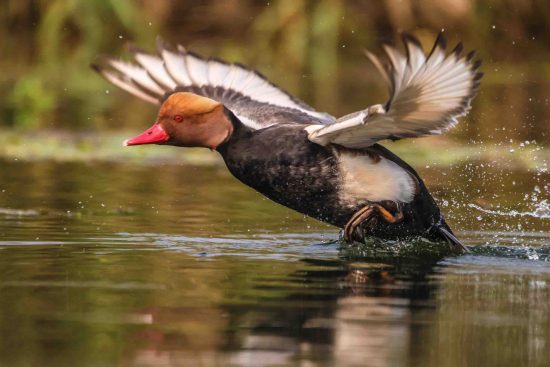
The Red-crested Pochard is a long-distance migratory duck. It breeds mainly in Europe, Central Asia, and western China. As winter approaches, it leaves the colder regions and travels south. Large flocks head towards South Asia, including India, Nepal, and Pakistan.
In India, this majestic diving duck appears as a winter visitor. It usually arrives between October and March. Birders spot them in large wetlands, lakes, and reservoirs. They prefer calm freshwater bodies with rich vegetation. Their bright plumage and group behavior attract bird watchers during this season.
The Red-crested Pochard often joins mixed flocks of other migratory ducks. You can see them with pintails, gadwalls, and common pochards. These flocks create spectacular sights in wetland areas like Bharatpur, Chilika Lake, and Purbasthali. Such gatherings make winter birding in India more exciting.
The migration of the Red-crested Pochard is not just about survival. It also plays a key role in balancing wetland ecosystems. By moving between regions, they help in seed dispersal and nutrient cycling. This makes their presence valuable both for bird lovers and for nature.
🐣 Breeding and Nesting
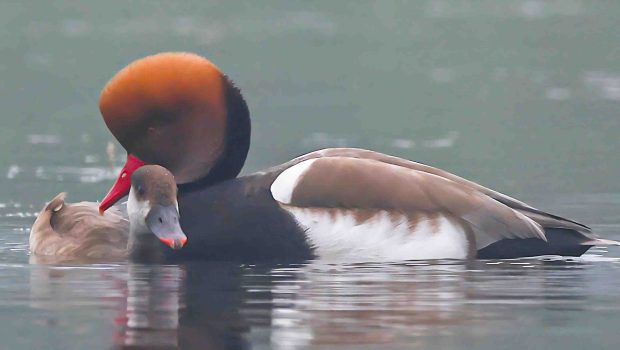
The Red-crested Pochard shows fascinating breeding habits that reflect its adaptability to wetlands and lakesides. These ducks follow a seasonal rhythm that ensures the survival of their chicks.
Breeding Season: They breeds mainly in late spring and early summer when food is abundant.
Preferred Habitat: They choose reed beds, marshes, and quiet lakesides with dense vegetation for protection.
Nest Construction: The female builds the nest on the ground, hidden under thick reeds or grasses. She lines it with soft plant material and down feathers.
Egg Laying: A clutch usually contains 8–12 eggs. The eggs are pale greenish or whitish, blending well with the surroundings.
Incubation Process: The female incubates the eggs for 25–28 days. During this time, the male often stays nearby but does not incubate.
Hatching: The chicks hatch with open eyes and soft down, ready to follow their mother soon after birth.
Precocial Nature: Red-crested Pochard chicks leave the nest almost immediately. They swim and move with their mother for safety.
Parental Care: The female protects and guides the chicks. She helps them find food until they can feed themselves.
Survival Strategy: Early independence allows chicks to avoid predators and adapt quickly to wetland life.
The breeding and nesting behavior of the Red-crested Pochard highlights its strong survival strategies in freshwater ecosystems. These ducks ensure the next generation thrives by choosing safe habitats, building hidden nests, and providing early care.
🎎 Cultural Significance
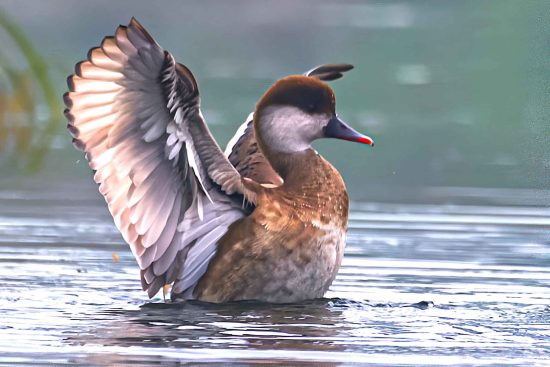
The Red-crested Pochard is more than just a striking waterbird. Across regions, it holds a unique place in culture, symbolism, and traditions.
Symbol of Beauty and Tranquility
In many cultures, ducks and waterfowl symbolize peace, prosperity, and balance with nature. The vivid red head of the male Red-crested Pochard often draws admiration, making it a symbol of elegance in wetland biodiversity.
Historical Mentions
Ancient travelers and naturalists recorded waterfowl like the Red-crested Pochard in their journals.
In parts of Europe and Asia, it was admired for its graceful diving and swimming abilities.
Folklore in wetland regions often portrays ducks as messengers between humans and nature.
Inspiration in Art and Photography
Wildlife artists frequently depict the Red-crested Pochard in paintings to represent freedom and serenity.
Photographers consider it a prized subject due to its vibrant colors and seasonal migrations.
In modern culture, it is often featured in documentaries, bird festivals, and conservation campaigns.
Role in Ecotourism
Birdwatching communities celebrate the Red-crested Pochard as a flagship species in wetland habitats. Its presence attracts eco-tourists, photographers, and researchers, boosting awareness and local economies.
👉 By understanding its cultural significance, we see the Red-crested Pochard not only as a beautiful bird but also as a bridge between nature, heritage, and human creativity.
🛡️ Conservation Status and Threats
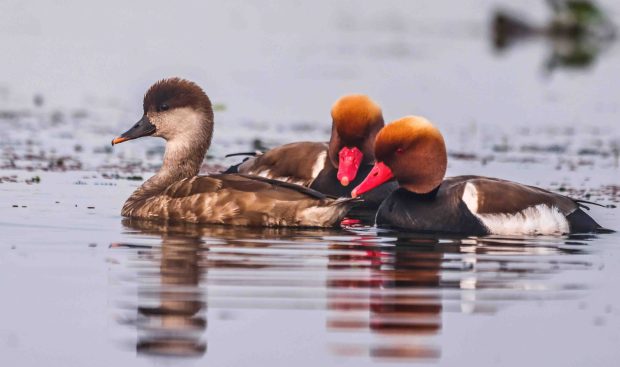
The Red-crested Pochard (Netta rufina) is a striking winter visitor to Indian wetlands.
Its bright red bill and orange-red head make the male especially distinctive.
The species faces different conservation conditions across its range.
Global assessments and Indian data provide two important perspectives.
🌍 IUCN Red List Status
- 🦆 Species: Red-crested Pochard
- 🔬 Scientific name: Netta rufina
- 🟢 IUCN status: Least Concern (LC)
- 🇮🇳 Indian legal status: Schedule II
- ❄️ Indian migration status: Winter migrant
- 💧 Habitat specialization: Wetland
The IUCN lists the Red-crested Pochard as Least Concern globally.
This category reflects its overall extinction risk across its global range.However, Least Concern does not mean that every population remains stable.
Local declines can still create serious conservation concerns.
🇮🇳 What the State of India’s Birds Report Shows
The State of India’s Birds 2025 provides important data for India.
The report uses millions of bird observations from across the country.
Its updated assessment reports a 31.39% long-term decline for the species in India.
It also records a current annual trend of -1.54%.
- 📉 Long-term trend: Rapid Decline
- 📉 Long-term change: -31.39%
- 📊 Current annual trend: -1.54%
- 🗺️ Distribution range: About 653,781 km²
- ❄️ Migration: Winter migrant
- 💧 Habitat specialization: Wetland
The report also estimates the species’ distribution range at about 653,781 km².
These figures help reveal changes that global assessments may not show clearly.
📉 Understanding the Indian Trend
The Indian figures deserve careful attention.
A long-term decline of 31.39% suggests a substantial change over time.
The current annual trend also points downward.
However, the report gives different levels of data certainty across states.
Several state pages list insufficient or inconclusive local trend data.
This makes continued field monitoring important.
⚠️ Major Conservation Concerns
Several pressures can affect Red-crested Pochard populations.
- 💧 Wetland loss: Drainage can remove important wintering sites.
- 🧪 Water pollution: Contaminants can reduce wetland quality.
- 🏗️ Habitat alteration: Development can disturb feeding and resting areas.
- 🚤 Human disturbance: Repeated disturbance can force birds away from feeding sites.
- 🌡️ Climate change: Changing water conditions can alter migration and wintering patterns.
- 🎯 Hunting pressure: Illegal hunting can add pressure to migratory waterbirds.
These threats can act together.
A degraded wetland may provide less food and fewer safe resting areas.
🌿 Why Wetlands Matter
The Red-crested Pochard depends strongly on wetland habitats.
It uses lakes, marshes, reservoirs, and other suitable water bodies during winter.
Wetlands provide essential feeding and resting areas.
They also offer safe places for large wintering flocks.
When wetlands shrink or degrade, suitable winter habitat can disappear.
Pollution and excessive disturbance can further reduce habitat quality.
📊 A Regional Warning
The national trend provides an important signal.
However, local data remain uneven across India.
For example, the 2025 State of India’s Birds pages show insufficient or inconclusive trend data for several individual states.
This gap makes continued monitoring especially valuable.
🛡️ Conservation Priorities
Protecting the Red-crested Pochard requires healthy and connected wetlands.
- 💧 Protect important wintering wetlands.
- 🌾 Preserve natural wetland vegetation.
- 🧪 Reduce pollution entering water bodies.
- 🚫 Limit disturbance at major wintering sites.
- 📊 Monitor wintering populations regularly.
- 🗺️ Record important sites across its Indian range.
- 🤝 Support local wetland conservation efforts.
Long-term monitoring can reveal population changes early.
Better data can also guide future conservation planning.
📷 Role of Wildlife Photographers
Wildlife photographers can help document this species responsibly.
- 📸 Photograph from a safe distance.
- 🚫 Avoid flushing resting flocks.
- 🔇 Keep noise levels low.
- 🌿 Capture natural behaviour.
- 📍 Record sightings accurately.
- 📚 Share reliable conservation information.
Photographs can document the species and its wintering landscapes.
They can also help build public interest in wetland birds.
💚 Conservation Message
The Red-crested Pochard remains Least Concern globally.
Yet India’s updated data show a rapid long-term decline.
That contrast deserves attention.
Protect the wetlands.
Monitor the winter visitors.
Keep the Red-crested Pochard part of India’s wild landscapes.
📸 Photography and Birding Tips
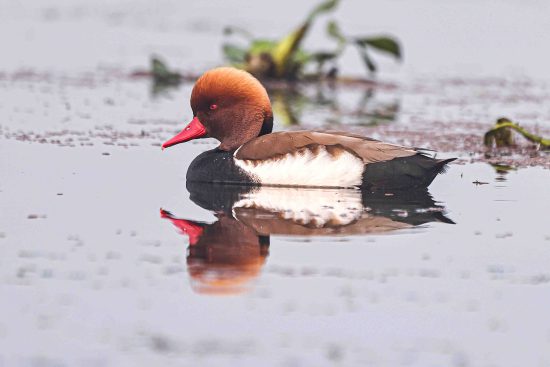
The Red-crested Pochard offers excellent opportunities for creative waterbird photography.
Its bright colors stand out beautifully against calm water.
The male shows a vivid orange-red head and striking red bill.
The female offers softer tones and delicate facial patterns.
🌅 Choose the Right Light
Light can transform a simple duck portrait into a striking photograph.
- 🌄 Shoot soon after sunrise.
- 🌇 Try the last hours before sunset.
- ✨ Use soft side light to reveal feather texture.
- 💧 Look for reflections on calm water.
- ☁️ Use cloudy light for softer colors.
Early and late light reduces harsh shadows.
It also brings out plumage detail more naturally.
🎯 Watch Before You Shoot
Spend time observing the flock first.
Red-crested Pochards often rest, swim, preen, and feed.
A West Bengal study found resting dominated much of their daytime activity.
It also recorded swimming, feeding, and preening as common behaviors.
This observation helps you predict the next action.
🦆 Capture Natural Behavior
Do not photograph only static portraits.
Try to capture:
- 💦 Water splashes during bathing.
- 🪶 Feather movement during preening.
- 🌊 Ripples during swimming.
- 🤿 Diving and feeding moments.
- 💨 Take-off sequences.
- 🪽 Wing stretches.
- 👥 Flock interactions.
In West Bengal, researchers found that males dived more often than females.
Shallow water also encouraged beak dipping and upending.
⚙️ Use Fast Shutter Speeds
Waterbirds can move suddenly.
Start around 1/1000 second for active swimming and wing movement.
Use 1/1600–1/2500 second for fast take-offs.
Increase ISO when light becomes weak.
A sharp photograph matters more than a perfectly clean ISO file.
For flight shots, continuous autofocus and burst mode can improve your success rate.
🔭 Choose a Long Lens
A telephoto lens helps you maintain a respectful distance.
A 400mm or longer lens works well for distant waterbirds.
A 500mm or 600mm lens can provide tighter portraits.
Use a monopod when your setup becomes heavy.
Keep your camera ready before the bird starts moving.
👁️ Get Down to Eye Level
Low angles can transform waterbird portraits.
Shoot close to the water surface when conditions allow.
This approach creates a softer background.
It also places the viewer closer to the bird’s perspective.
Avoid entering restricted or sensitive wetland areas for a lower angle.
🎨 Highlight the Male's Colors
The male deserves special attention.
Focus carefully on the eye and bill.
Expose for the bright orange head.
Avoid overexposing the red-orange plumage.
Check your histogram when the sunlight becomes strong.
Try a clean background to make the colors stand out.
🤎 Photograph the Female Too
Do not overlook the female.
Her muted plumage creates a different photographic challenge.
Soft light can reveal her subtle facial pattern.
Use darker or uncluttered backgrounds for stronger separation.
A male and female together can create a compelling natural portrait.
💧 Use Reflections Creatively
Calm water can add another visual layer.
Capture the bird with its reflection.
Leave enough space around the reflection.
Try symmetrical framing when the water stays perfectly still.
For a more natural image, place the bird off-center.
Reflections can also create beautiful abstract compositions.
🪽 Prepare for Take-Off
Watch the bird’s body language.
A sudden upright posture may signal movement.
Keep your focus point on the bird’s head.
Leave space in front of the bird.
This gives the photograph a stronger sense of direction.
🌿 Keep the Background Clean
Look for uncluttered water or distant vegetation.
Avoid distracting branches, litter, boats, and people.
Use a wide aperture when it suits the scene.
This can soften distracting backgrounds.
🤫 Respect the Birds
Good photography begins with responsible behaviour.
- 🚫 Never chase the flock.
- 🔇 Avoid loud movements.
- 📏 Maintain a safe distance.
- 🦆 Never force birds into flight.
- 🚫 Avoid baiting or feeding.
- 🌿 Stay within permitted viewing areas.
Watch for signs of stress.
If birds repeatedly move away, increase your distance.
✨ Create a Complete Story
Do not capture only close-up portraits.
Include wide shots of the wetland.
Show flocks moving across the water.
Photograph feeding, resting, flight, and interaction.
These images create a stronger visual story.
The best Red-crested Pochard photograph combines sharp detail, beautiful light, natural behaviour, and respect for the bird.
📘 Why Documentation Matters and How You Can Help
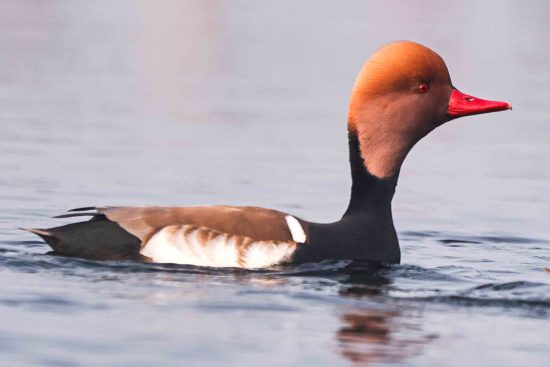
Documenting species like the Red-crested Pochard is crucial for both science and conservation. Every photo, sighting, and observation adds valuable data about their behavior, habitat, and population trends. Without consistent documentation, it becomes difficult to monitor their migration routes, breeding cycles, and threats.
Your role as a photographer or birdwatcher is vital. By capturing and sharing your observations, you help scientists, researchers, and conservationists build accurate databases. This ensures better protection measures and long-term survival for the Red-crested Pochard.
How You Can Help Through Documentation
Capture Clear Photographs: Focus on the bird’s plumage, habitat, and behavior.
Note the Location: Record GPS coordinates or the name of the wetland.
Track Time & Season: Mention whether the sighting happened during migration or breeding season.
Share Observations: Upload images to birdwatching portals like eBird or iNaturalist.
Raise Awareness: Use social media platforms to spread knowledge about the Red-crested Pochard.
By combining careful documentation with active sharing, you support wildlife research, awareness, and conservation in a meaningful way.
❓ FAQs
1. What is the best time to photograph the Red-crested Pochard?
The best time to photograph the Red-crested Pochard is during early mornings and late evenings. Soft golden light highlights the male’s red head and creates natural reflections on water.
2. Which camera settings are ideal for Red-crested Pochard photography?
Use a fast shutter speed of 1/1000 or higher to freeze movement. An aperture of f/5.6–f/8 ensures sharp focus with a smooth background. Start with ISO 400 and adjust based on light conditions.
3. What gear is essential for photographing the Red-crested Pochard?
A telephoto lens (300mm or more) is crucial for close-up shots. Pair it with a DSLR or mirrorless camera from Canon, Nikon, or Sony. A tripod or monopod helps stabilize shots, while waterproof camera bags protect gear in wetland areas.
4. Where can I find Red-crested Pochards for photography?
These ducks prefer freshwater lakes, rivers, and wetlands with plenty of aquatic plants. They are often spotted in Europe, Central Asia, and the Indian subcontinent during migration seasons.
5. How can I capture creative shots of the Red-crested Pochard?
Experiment with low angles to shoot at eye level. Use burst mode for diving sequences. Frame reflections on calm water or capture family groups during the breeding season for unique wildlife images.
6. Do I need professional gear to photograph the Red-crested Pochard?
Not always. While professional lenses give sharper results, even entry-level DSLR or mirrorless cameras with a zoom lens can produce beautiful Red-crested Pochard photos if you use the right techniques and lighting.
7. What challenges may I face when photographing the Red-crested Pochard?
The main challenges are fast movements, shy behavior, and lighting conditions near water. Patience, camouflage, and steady hands or a tripod are key to overcoming these issues.
✨ Conclusion: The Scarlet Beauty of Wetlands
The Red-crested Pochard is more than just a bird—it is a living jewel of the wetlands. Its scarlet crown, graceful movements, and fascinating migration stories make it a favorite among birders and photographers worldwide. Protecting its habitat ensures the survival of countless other wetland species, highlighting the interconnectedness of ecosystems.
Whether you are a seasoned birder, a wildlife photographer, or a nature enthusiast, spotting this magnificent diving duck in its natural wetland home is an unforgettable experience. Truly, it is the scarlet beauty of wetlands and a reminder of why wetland conservation is more important than ever.
✨Call to Action: If this magnificent duck inspires you, consider supporting wetland conservation projects, joining birdwatching groups, and spreading awareness about the importance of protecting fragile ecosystems. Don’t forget to share this guide with fellow bird lovers, and if you’ve captured a Red-crested Pochard in your lens, share your experiences in the comments below. Together, we can ensure that future generations continue to witness the dazzling beauty of the Red-crested Pochard in the wild.
Recent Comments