

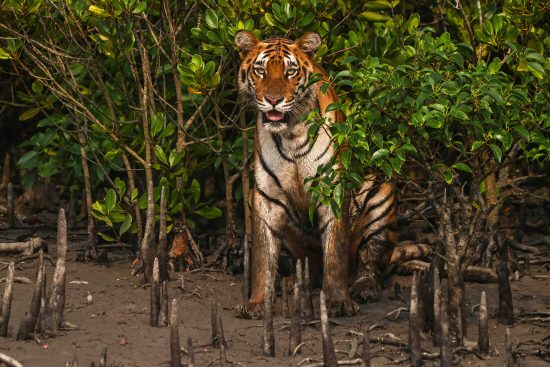
The Royal Bengal Tiger of Sundarbans is not only the pride of India and Bangladesh but also one of the most extraordinary big cats on the planet. Roaming the world’s largest mangrove forest, these tigers have evolved unique traits that set them apart from all other tiger populations. Known as the “swimming tigers,” they are expert navigators of tidal rivers, saline creeks, and muddy islands, making them masters of survival in a habitat that is as unforgiving as it is breathtaking.
Unlike their counterparts in grasslands and tropical forests, the Royal Bengal Tigers of Sundarbans live at the delicate crossroads of land and water. Their presence ensures ecological balance, controls herbivore populations, and serves as a living indicator of the health of this fragile ecosystem. More than just apex predators, they symbolize the strength of wild nature, the cultural spirit of Bengal, and the global urgency of wildlife conservation. To understand the Royal Bengal Tiger of Sundarbans is to uncover the story of resilience, adaptation, and the timeless connection between humans and the mangrove wilderness.
🐾 Physical Appearance
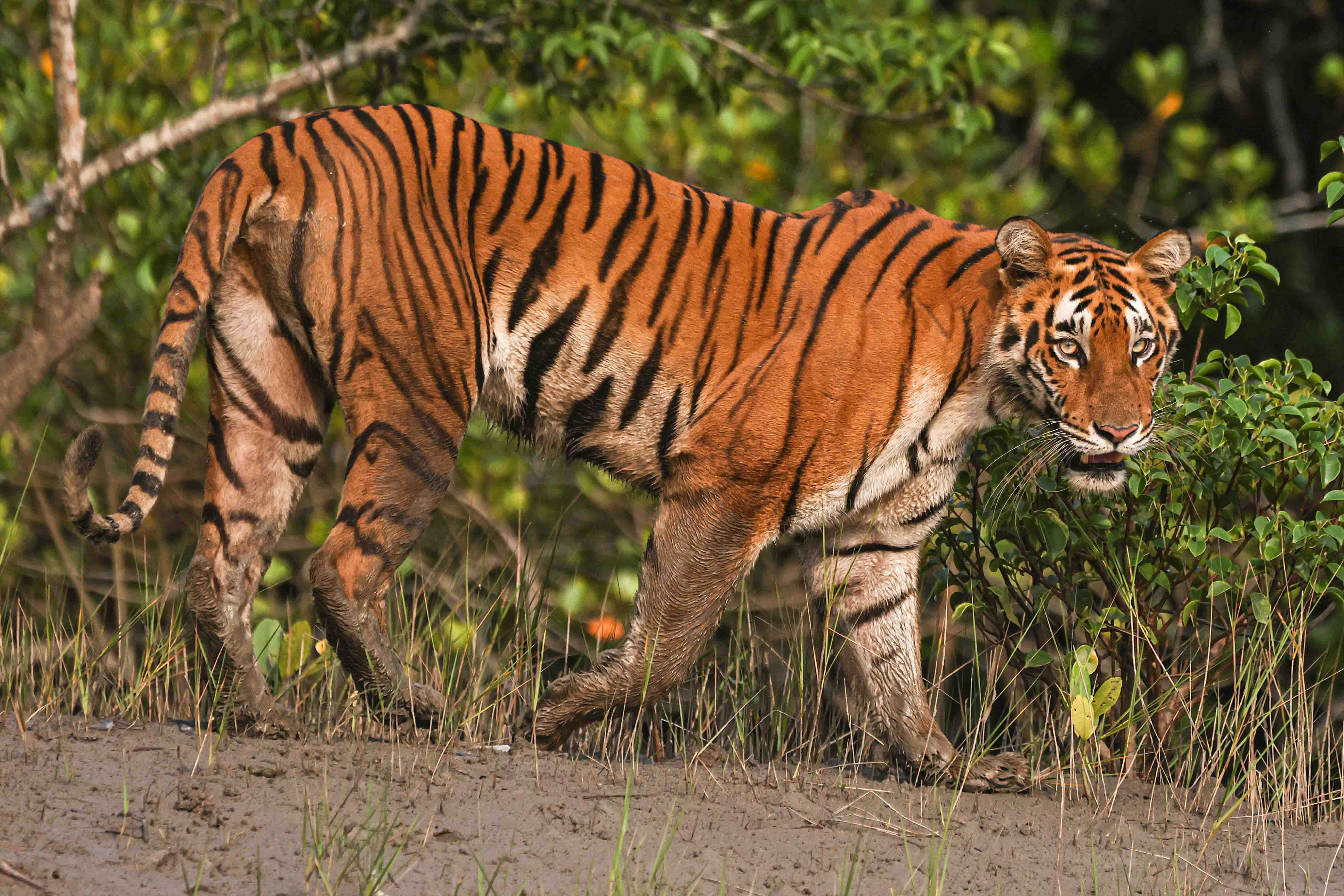
The Royal Bengal Tiger of Sundarbans stands out as one of the most powerful predators of the mangrove forests. It has a muscular build, broad head, and strong jaws designed for hunting in dense terrain.
Its coat shows a bright orange to reddish hue with bold black stripes. These stripes act as camouflage, blending perfectly with the light and shadow of the mangroves. No two tigers share the same stripe pattern, making every tiger unique.
Compared to other tiger populations, the Royal Bengal Tiger of Sundarbans is slightly smaller. This adaptation helps it move through narrow creeks, muddy grounds, and dense mangrove roots. Males usually weigh between 180 to 200 kilograms, while females weigh around 100 to 140 kilograms.
🐾 Did you know? The Royal Bengal Tiger of Sundarbans has slightly shorter, stronger legs and webbed paws — an incredible adaptation that helps it swim long distances through tidal mangrove waters, unlike any other tiger in the world.
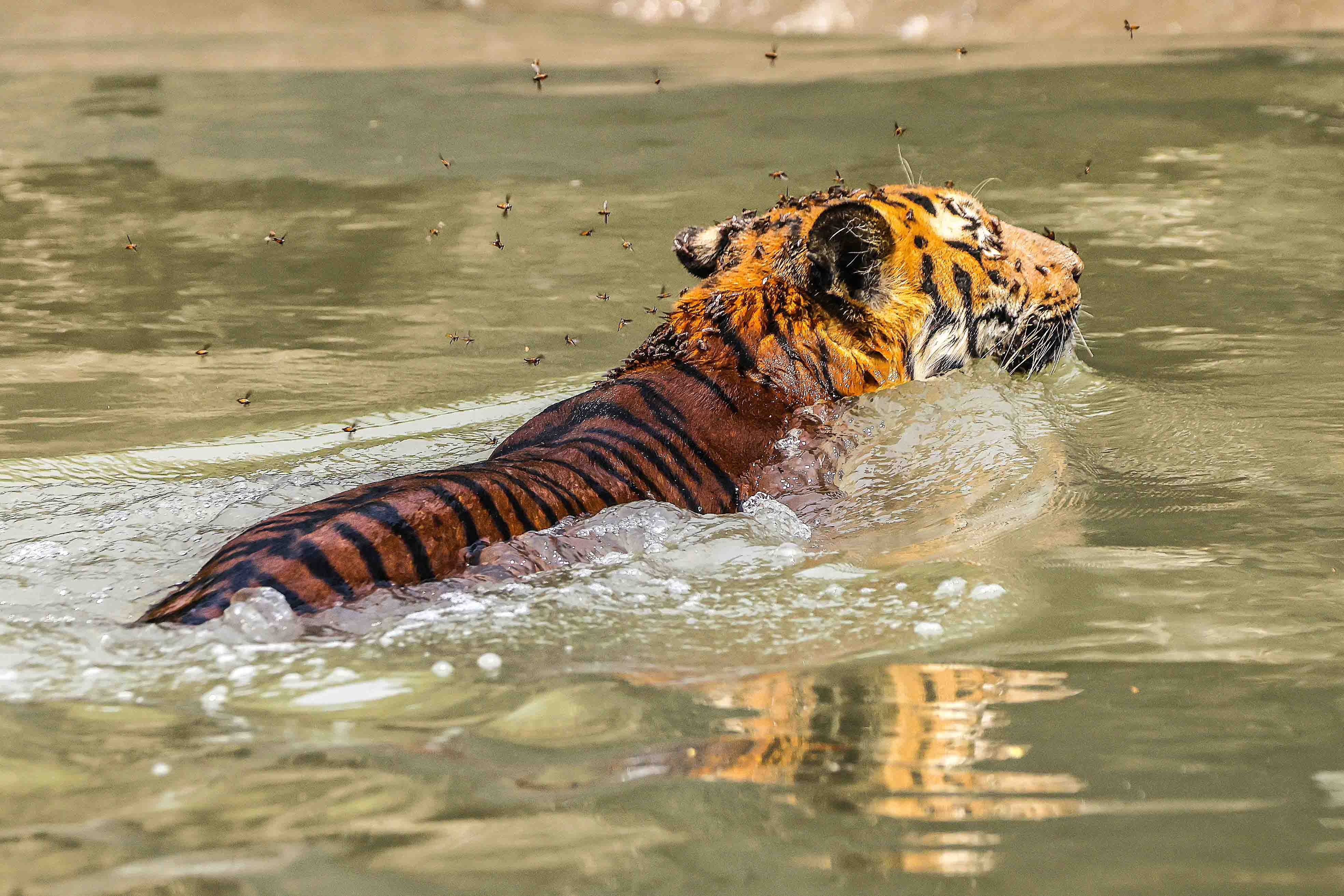
The tiger’s legs are short but very powerful, giving it strength to swim long distances. Sundarbans tigers are excellent swimmers, often crossing rivers and tidal channels in search of prey. Their webbed paws provide strong grip in mud and water.
Eyes of the Royal Bengal Tiger of Sundarbans shine with a yellow-golden glow. Sharp vision and keen hearing allow it to hunt in low light. Its long whiskers detect movement in water and guide it through thick mangrove branches.
The tail, almost three feet long, helps balance the body during swimming and chasing prey. Strong canine teeth and retractable claws make it a skilled predator, capable of bringing down large animals like deer and wild boar.
Every feature of the Royal Bengal Tiger of Sundarbans reflects survival in the world’s toughest mangrove ecosystem. From its camouflage to its swimming ability, the tiger is perfectly designed for life in Sundarbans.
🌿 Habitat: The Mysterious Mangrove Forests
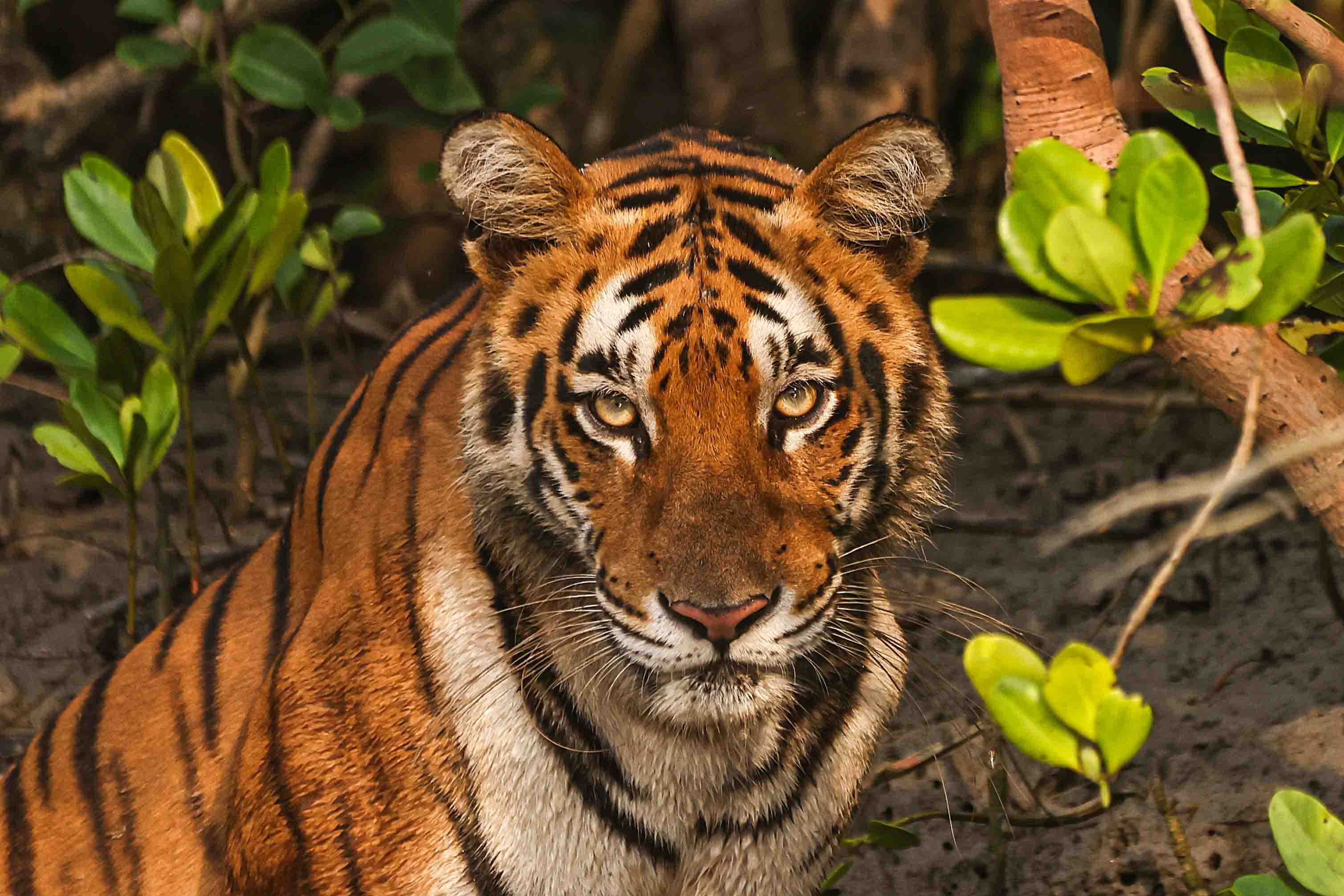
The Royal Bengal Tiger of Sundarbans inhabits one of the most unique and challenging ecosystems in the world—the mangrove forests of the Sundarbans Delta, spread across India and Bangladesh. This UNESCO World Heritage Site is the largest contiguous mangrove forest on Earth, covering nearly 10,000 square kilometers of tidal waterways, mudflats, and small islands.
Unlike other tiger habitats such as tropical rainforests or dry grasslands, the Sundarbans presents a dynamic environment shaped by daily tides, saline waters, and dense mangrove roots. This ever-changing landscape has forced the tigers here to evolve distinctive survival strategies, making them unlike any other tiger population in the world.
🌊 Aquatic Adaptations
The Sundarbans is the only place where tigers have fully adapted to an aquatic lifestyle. They are powerful swimmers, often covering several kilometers across river channels in search of prey or to patrol territory. This unique adaptation has earned them the name “swimming tigers” among locals and researchers.
🌳 Mangrove Ecosystem as Shelter
The dense mangrove vegetation, dominated by species such as Heritiera fomes (sundari trees), Avicennia, and Rhizophora, provides natural camouflage. The tangled breathing roots and thick foliage serve as perfect hiding spots, allowing these big cats to ambush prey with stealth and precision.
⚠️ Challenges of the Terrain
Life in the Sundarbans is not easy. The saline water, scarcity of freshwater, and muddy terrain create a harsh environment. During high tides, many parts of the forest become submerged, forcing the Royal Bengal Tiger of Sundarbans to constantly adapt its movement and hunting patterns. Unlike their counterparts in mainland forests, they must balance survival in an ecosystem where land and water are inseparably intertwined.
🦩 A Shared Habitat
The Sundarbans is not only home to the Royal Bengal Tiger but also to estuarine crocodiles, fishing cats, wild boars, spotted deer, and a dazzling variety of birdlife. This biodiversity makes the mangroves a delicate ecological web where every species plays a role. The presence of tigers at the top of this food chain signifies the overall health of the forest.
💚 Why This Habitat Matters?
The mangroves act as a natural shield for millions of people living in the Bay of Bengal, protecting them from cyclones, floods, and coastal erosion. Protecting the Royal Bengal Tiger of Sundarbans is therefore not just about conserving a big cat—it is about safeguarding one of the world’s most vital ecosystems.
🐆 Breeding and Reproduction of the Royal Bengal Tiger of Sundarbans
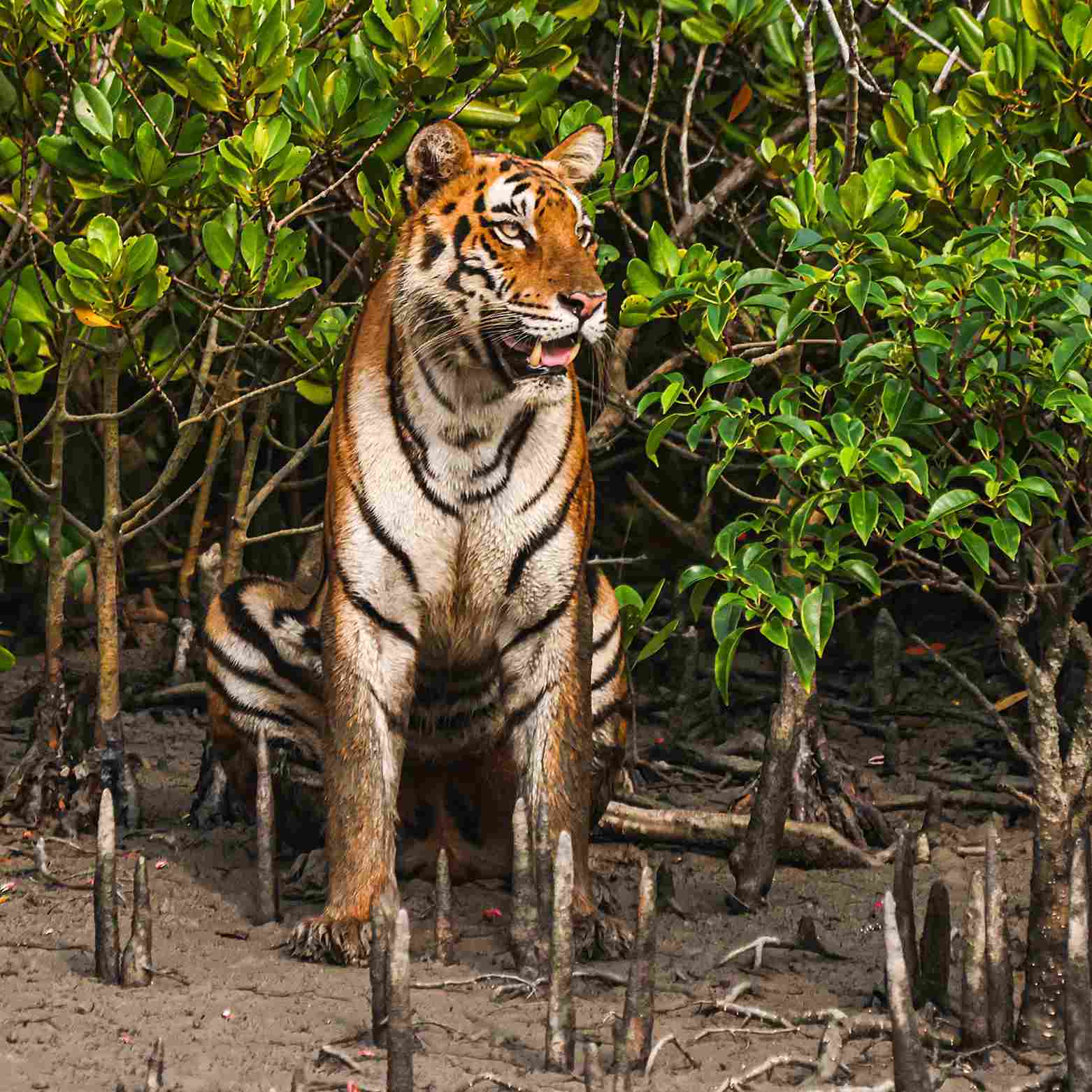
The Royal Bengal Tiger of Sundarbans follows a unique breeding pattern adapted to the mangrove habitat. Unlike many other big cats, they do not have a fixed mating season. Breeding can occur at any time of the year. However, activity increases during the cooler months between November and April, when conditions are favorable.
A female tiger usually becomes receptive once every three to nine weeks. The mating process is intense, with pairs often staying together for several days. After successful mating, the tigress carries her young for about 100 to 110 days.
The tigress gives birth to two to four cubs in a secure den within the mangrove thickets. Cubs are blind at birth and completely dependent on their mother. The Royal Bengal Tiger of Sundarbans shows strong maternal care. The mother nurses and protects her cubs from predators like crocodiles and jackals.
Cubs stay with the tigress for nearly two years before becoming independent hunters. During this time, the mother teaches survival skills—swimming across tidal creeks, stalking prey, and navigating the mangroves.
The breeding success of the Royal Bengal Tiger of Sundarbans depends on food availability, climate, and safe habitat. Healthy populations of deer, wild boars, and fish directly influence cub survival. Sadly, habitat loss and climate change threaten this delicate cycle.
Understanding the breeding habits of the Royal Bengal Tiger of Sundarbans helps conservationists create better strategies. Protecting breeding grounds ensures that these magnificent cats continue to thrive in the world’s largest mangrove forest.
🍖 Hunting and Diet: The Apex Predator
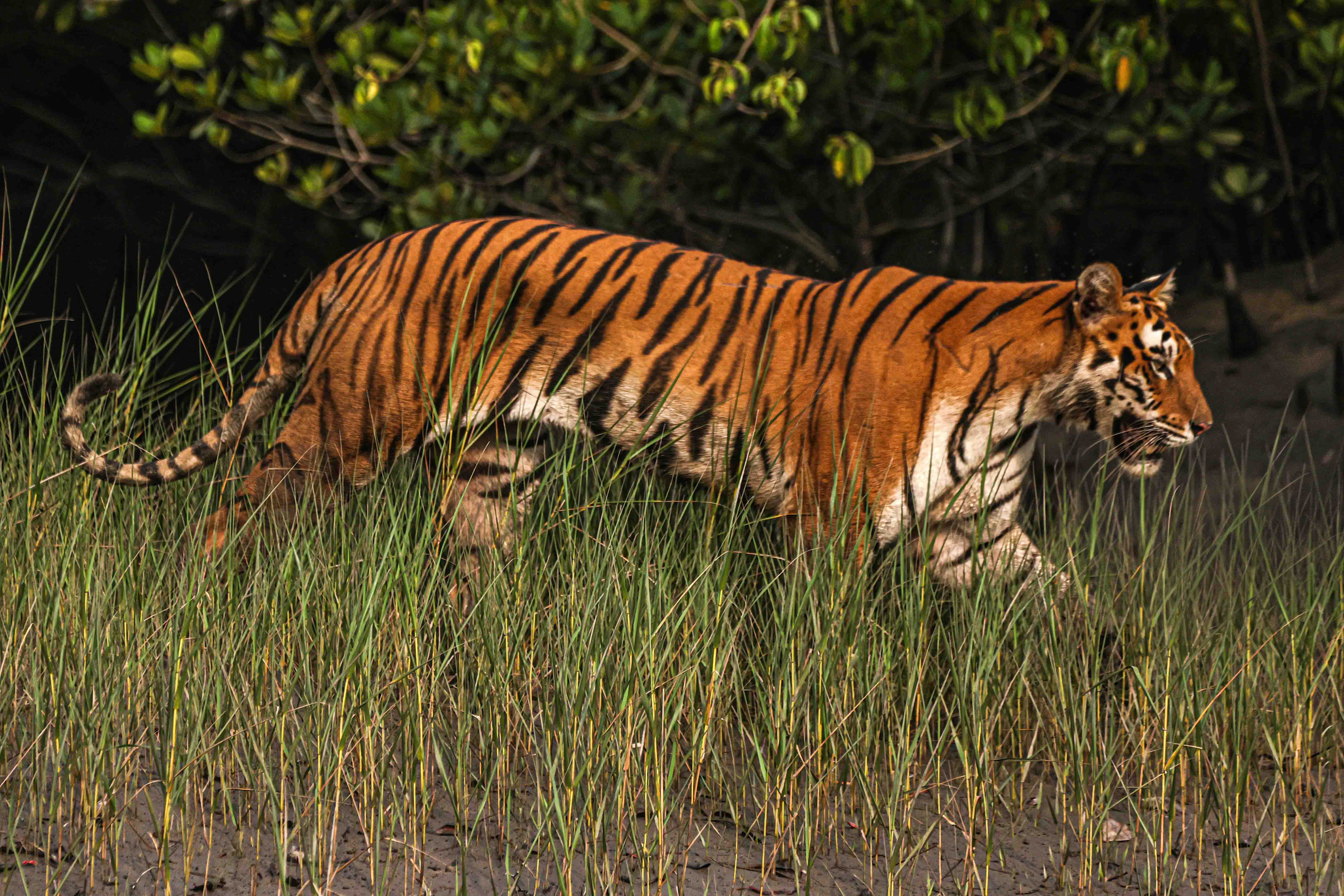
The Royal Bengal Tiger of Sundarbans rules as the supreme predator of the mangrove ecosystem. Its hunting style is unique and shaped by tidal rivers, muddy grounds, and dense mangroves. Unlike other tigers that stalk prey on dry land, Sundarbans tigers move silently through waterlogged terrain. They use stealth, patience, and sudden bursts of power to strike down their prey.
Their diet is highly diverse. They hunt spotted deer, wild boars, rhesus macaques, and monitor lizards. At times, they catch fish, crabs, and other aquatic animals. This ability to feed on both land and water prey highlights their remarkable adaptability.
The Royal Bengal Tiger of Sundarbans is also a strong swimmer. They often cross wide rivers in search of food. Some tigers swim for several kilometers at a stretch. This unique skill allows them to expand their hunting range across hundreds of mangrove islands.
Prey density in Sundarbans is low compared to inland forests. Because of this, these tigers follow opportunistic feeding strategies. They ambush whatever prey is available, from deer herds to solitary wild boars. During food shortages, they sometimes hunt livestock near villages at the forest edge. Such encounters often lead to human-tiger conflicts, a major conservation challenge.
Each hunt requires immense energy. The tigers can wait for hours before attacking with explosive speed. Their powerful jaws and sharp claws ensure a quick kill. Once the prey falls, they drag it to a safe spot before feeding.
The Royal Bengal Tiger of Sundarbans shows why it is considered one of the most formidable apex predators on Earth. Its ability to hunt across mud, water, and dense vegetation sets it apart from all other tiger populations. These adaptations not only ensure survival but also reflect the wild spirit of the Sundarbans.
🧠 Behavior and Adaptations
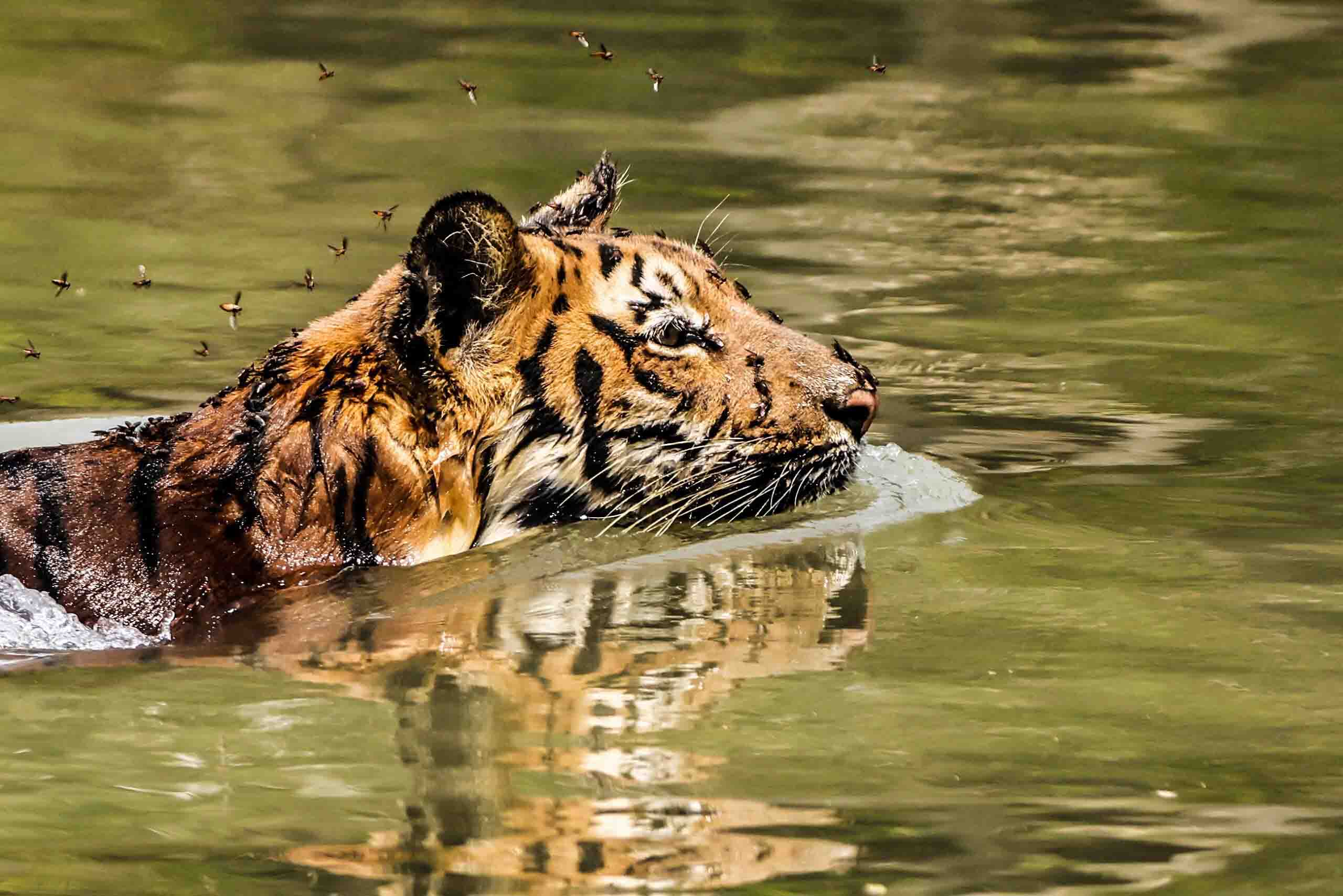
The Royal Bengal Tiger of Sundarbans thrives in one of the most challenging habitats on Earth. Its unique behavior and physical traits show how well it has adapted to mangrove forests and tidal landscapes.
🌊 Swimming Ability
The Royal Bengal Tiger of Sundarbans swims with ease across rivers and creeks. It can cover 6–8 kilometers in a single stretch. This ability helps it hunt, travel, and patrol territories scattered by waterways.
💧 Tolerance to Saline Water
Freshwater is often scarce in the mangroves. Unlike other tiger populations, the Royal Bengal Tiger of Sundarbans can survive by drinking slightly saline water. This rare trait gives it an advantage in a harsh and shifting environment.
🐾 Master of Ambush
Thick mangrove roots, tall grasses, and muddy terrain create perfect camouflage. The tiger uses this cover to stalk silently and ambush prey like spotted deer, wild boar, and monkeys.
🌙 Nocturnal Lifestyle
The Royal Bengal Tiger of Sundarbans is mostly active at night. Tidal patterns and the need to avoid human presence shape this nocturnal behavior. Night hunting also improves its success rate, as prey is less alert.
💪 Adapted Body Size
Compared to mainland tigers, Sundarbans tigers are slightly smaller. This adaptation helps them move through tangled roots, narrow channels, and dense shrubs with agility and stealth.
🐅 Solitary Nature
Like other big cats, the Royal Bengal Tiger of Sundarbans is highly territorial and solitary. Each individual patrols its own range, marked by scent and scratches. Encounters with other tigers are rare except during mating season.
🔥 Survival in Harsh Conditions
Mangrove forests are unpredictable, with rising tides, mudflats, and thick vegetation. The Royal Bengal Tiger of Sundarbans has evolved unmatched resilience, making it one of the toughest predators in the wild.
🌏 Why Are Sundarbans Tigers Important?
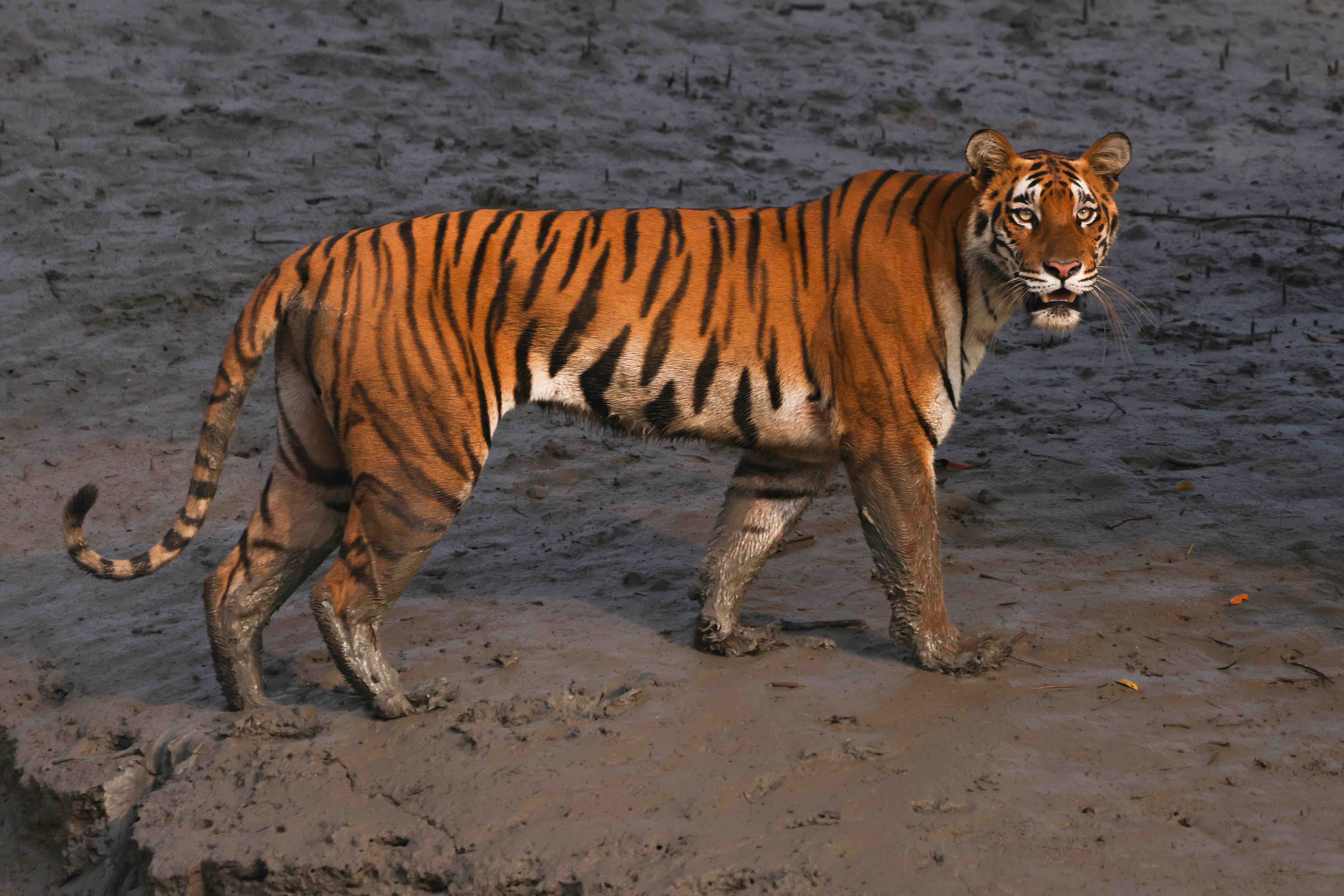
The Royal Bengal Tiger of Sundarbans plays a crucial role in the mangrove ecosystem. It is not just a predator—it is the keystone species that maintains ecological balance. By hunting deer, wild boars, and other herbivores, the tiger prevents overgrazing. This allows young mangroves to regenerate, protecting the health of the forest.
A thriving tiger population reflects a thriving Sundarbans. Where tigers survive, the forest remains rich in biodiversity. Birds, reptiles, fish, and countless smaller species benefit when the tiger holds its ground. The survival of the tiger is directly linked to the survival of the mangroves.
Beyond ecology, the Royal Bengal Tiger of Sundarbans carries cultural and economic importance. Tourists travel across the world to witness this majestic predator in its natural home. Tiger tourism supports local livelihoods and creates awareness about conservation. The tiger also symbolizes strength, resilience, and the wild spirit of the Sundarbans.
On a global scale, these tigers represent the fight against climate change. The Sundarbans mangroves act as natural shields against cyclones and rising sea levels. By protecting the tiger, we also protect millions of people who depend on mangroves for storm protection, fisheries, honey collection, and agriculture.
In simple terms, saving the Royal Bengal Tiger of Sundarbans means saving the Sundarbans itself. Protecting this predator safeguards the forest, secures human livelihoods, and ensures a sustainable future for both nature and people.
🛡️ Conservation Status and Threats
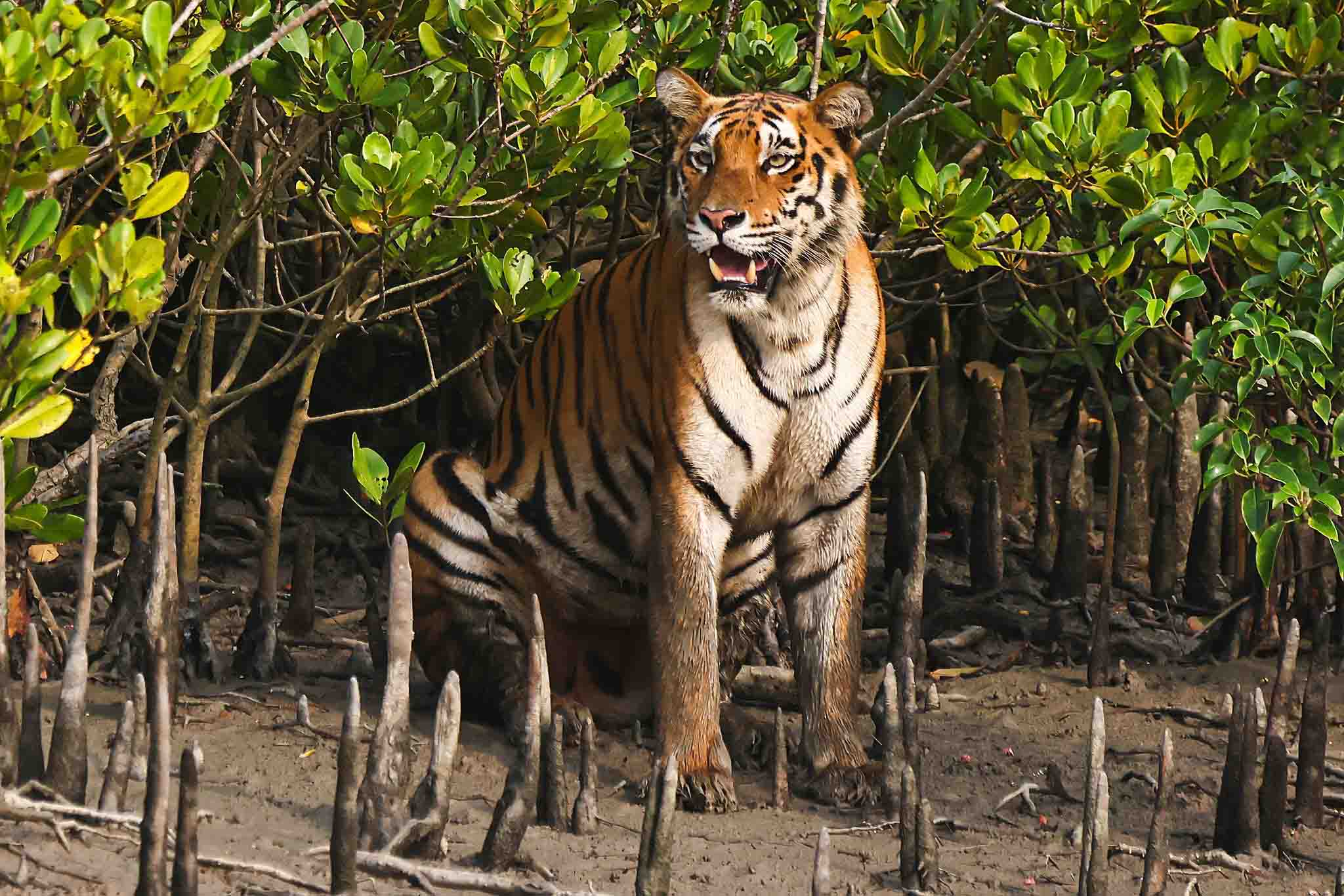
The Royal Bengal Tiger of Sundarbans is classified as Endangered on the IUCN Red List, with fewer than 250 adult individuals surviving across India and Bangladesh. This makes the Sundarbans one of the most critical landscapes for global tiger conservation. Unlike other tiger populations, these “swimming tigers” face a unique combination of natural and human-induced challenges that threaten their long-term survival.
Major Threats to the Royal Bengal Tiger of Sundarbans
Habitat Loss and Fragmentation
Expanding agriculture, aquaculture, and settlement encroachment are shrinking tiger corridors. As mangrove forests are cleared for human use, tigers lose the dense cover and safe breeding grounds essential for survival.Climate Change and Rising Sea Levels
The Sundarbans lies at the frontline of climate change. Rising seas, frequent cyclones, and coastal erosion are submerging tiger habitats. Studies predict that large portions of the Sundarbans may disappear by the end of the century, leaving the Royal Bengal Tiger of Sundarbans with no refuge.Human-Tiger Conflict
With prey density often low, tigers sometimes enter villages and prey on livestock, triggering retaliation by local communities. These conflicts, fueled by fear and economic loss, remain one of the biggest challenges for tiger conservation.Poaching and Illegal Wildlife Trade
Although strict anti-poaching measures have reduced illegal hunting, threats still exist. The demand for tiger skins, bones, and body parts in the black market continues to endanger this vulnerable population.Declining Prey Base
Overhunting of deer, boars, and other herbivores by humans reduces natural food availability, forcing tigers to take risks near human settlements.
Why Conservation Matters
Protecting the Royal Bengal Tiger of Sundarbans is about more than saving a big cat. Tigers regulate herbivore populations, ensuring the mangroves regenerate naturally. Healthy mangroves act as natural barriers against cyclones, floods, and climate disasters, safeguarding millions of people living in the Bay of Bengal region. Thus, tiger conservation here is both an ecological imperative and a human survival strategy.
Ongoing Conservation Efforts
Project Tiger in India and cross-border collaborations with Bangladesh are actively monitoring tiger numbers.
WWF and local NGOs run awareness campaigns and community livelihood programs to reduce dependency on forest resources.
Eco-tourism initiatives are creating incentives for locals to protect rather than exploit the forest.
Community-based watch groups help reduce poaching and human-tiger conflicts.
Despite these efforts, the survival of the Royal Bengal Tiger of Sundarbans depends on sustained global attention, stronger climate resilience strategies, and empowering local communities as custodians of this unique ecosystem.
📅 Best Time and Places to Spot the Royal Bengal Tiger
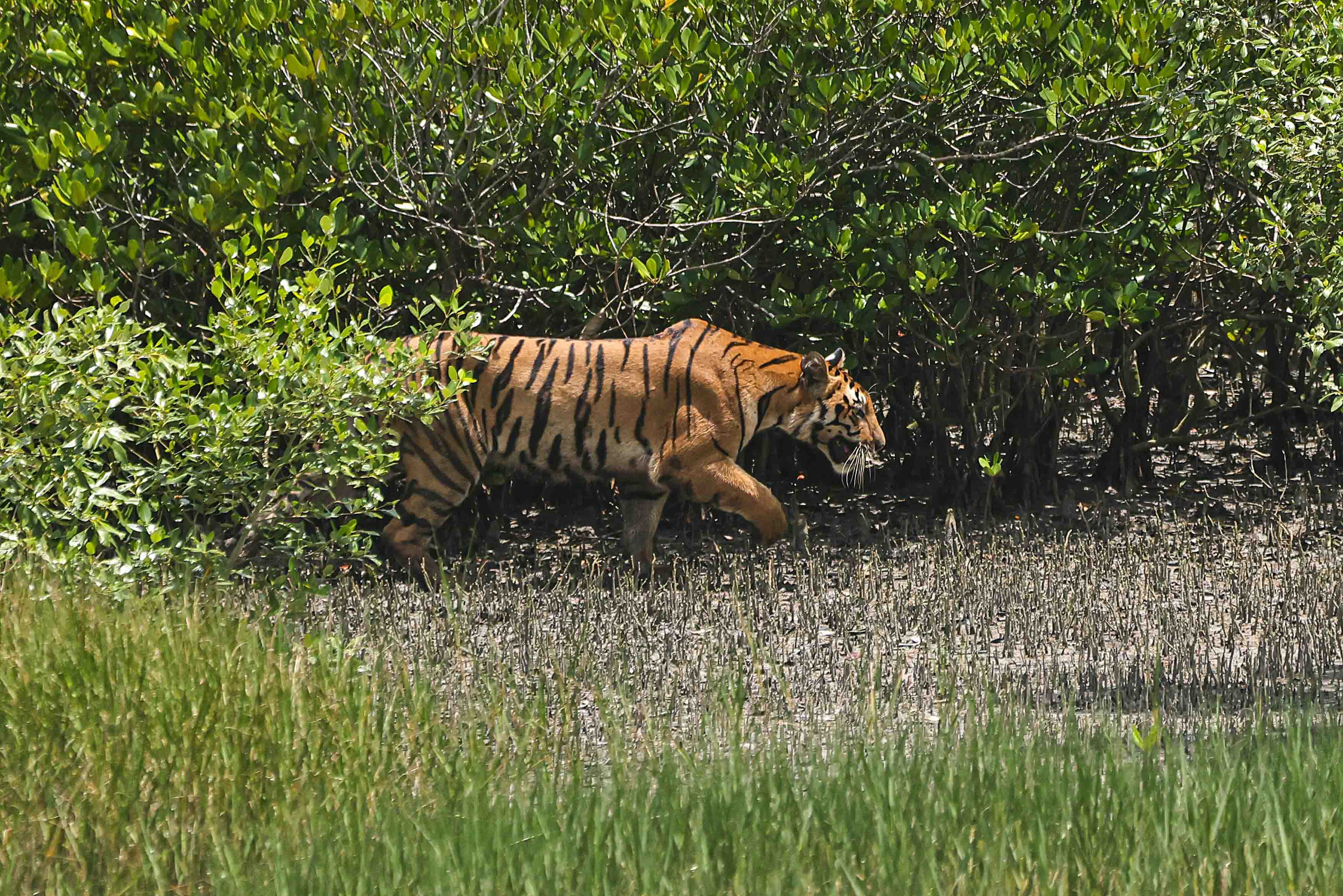
Spotting the Royal Bengal Tiger of Sundarbans is the ultimate dream for many wildlife lovers. These magnificent cats live deep inside the mangrove forests, making every sighting special. With patience and the right timing, visitors often get unforgettable encounters.
Best Time to Visit
The best season to spot the Royal Bengal Tiger of Sundarbans is from November to March. During these months, the weather stays pleasant and cool. Water levels remain stable, and visibility improves inside the forest creeks. Tourists also avoid the harsh summer heat and heavy monsoon rains. Early mornings and late afternoons are the most rewarding hours for tiger sightings.
Prime Locations in India
The Indian side of Sundarbans offers several hotspots for tiger tracking.
Sundarbans National Park – The heart of tiger territory, with dense mangrove channels and prime hunting grounds.
Sajnekhali Wildlife Sanctuary – Famous for tiger sightings and also home to saltwater crocodiles and spotted deer.
Dobanki Watchtower – Offers a canopy walk through the forest, giving a better view of elusive tigers.
Netidhopani Watchtower – Known for both history and tiger presence, ideal for patient photographers.
Prime Locations in Bangladesh
The Bangladeshi Sundarbans also provides excellent opportunities.
Sundarbans Reserve Forest – A UNESCO World Heritage site and one of the best places to experience wild tigers, crocodiles, and rare birds.
Tips for a Successful Safari
Always choose government-approved boat safaris or watchtower visits. These routes maximize safety and improve chances of spotting wildlife. Apart from the Royal Bengal Tiger of Sundarbans, you may also see saltwater crocodiles, fishing cats, wild boars, and over 250 bird species. Carry binoculars, maintain silence, and stay alert to sudden movements in the mangroves.
The Sundarbans is more than a tiger reserve. It is a living paradise where every creek and shadow tells a story of survival. For many, a glimpse of the Royal Bengal Tiger of Sundarbans becomes the memory of a lifetime.
📸 Photography Tips: Capturing the Royal Bengal Tiger of Sundarbans
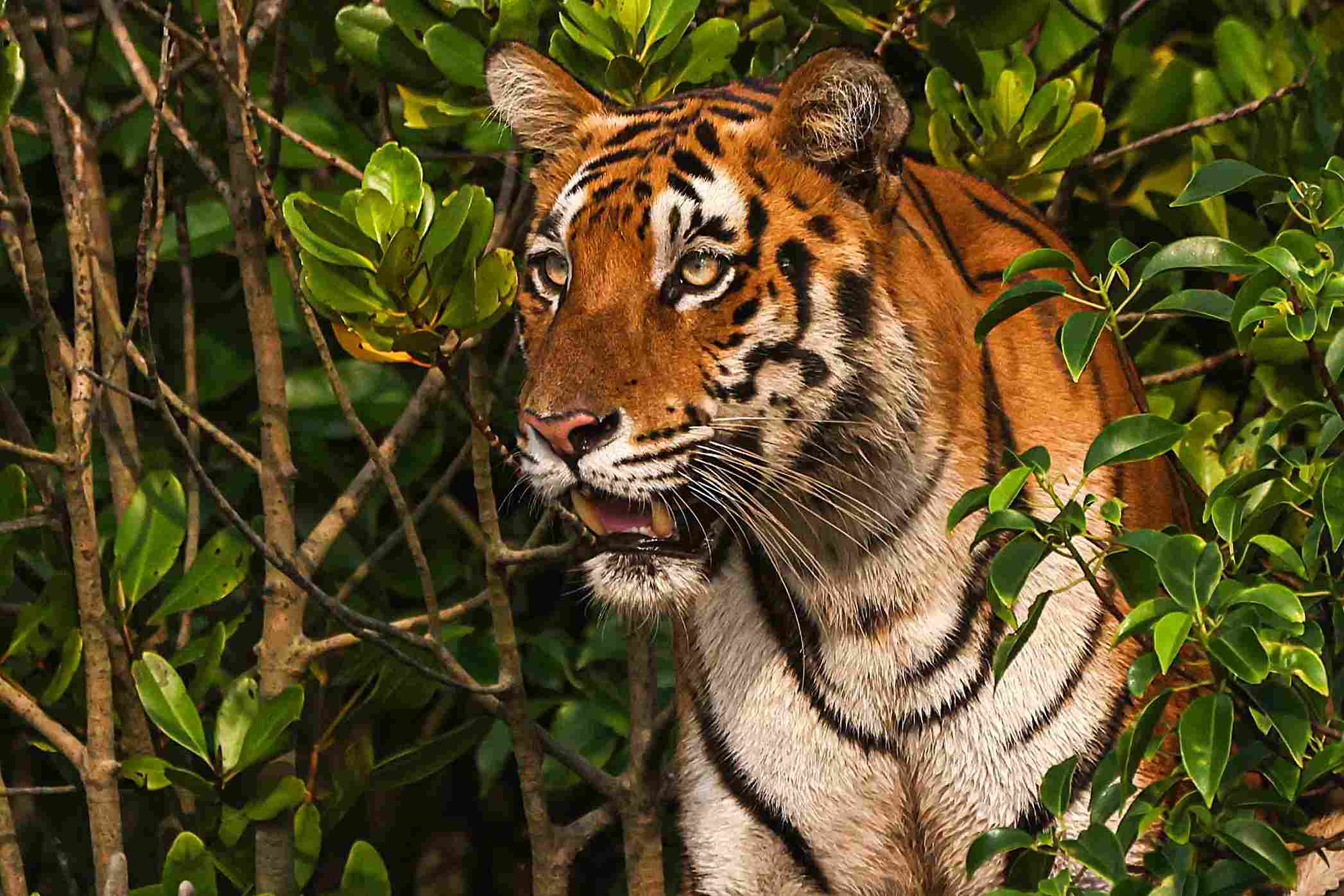
Photographing the Royal Bengal Tiger of Sundarbans is one of the most rewarding yet challenging experiences for wildlife enthusiasts. Unlike other tiger reserves, the Sundarbans requires photographers to adapt to its boat-based safaris, tidal waterways, and dense mangrove vegetation. Here are some pro tips:
Choose the Right Season
The best time for tiger photography is November to March, when the weather is pleasant and visibility is clearer.
Winter mornings often bring mist over the rivers, creating dramatic backdrops for tiger shots.
Opt for Boat Safaris
Unlike jeep safaris in other tiger reserves, Sundarbans photography is mostly from boats.
Position yourself at the front or upper deck of the boat for an unobstructed view.
Carry a bean bag or tripod clamp for stability since boats can sway.
Use the Right Camera Gear
Telephoto lenses (400mm–600mm) are essential to capture distant shots across rivers and creeks.
Keep a wide-angle lens handy for landscapes, showcasing the tiger within its unique mangrove habitat.
Use high ISO settings during low light but balance noise reduction in post-processing.
Master the Art of Patience
Spotting a Royal Bengal Tiger in Sundarbans is rare. Be ready to wait hours, even days.
Use this time to photograph other wildlife like saltwater crocodiles, fishing cats, or exotic birds, adding variety to your collection.
Focus on Storytelling
Instead of just close-up tiger portraits, capture environmental shots showing the tiger swimming, camouflaged in mangroves, or resting by the creek.
Such images highlight the uniqueness of Sundarbans tigers and stand out in wildlife photography portfolios.
Respect Nature and Safety
Avoid loud noises or flashy gear that could disturb wildlife.
Never demand risky maneuvers from boatmen just for a closer shot. Safety comes first—for both humans and tigers.
 Pro Tip: Use burst mode (continuous shooting) to capture sudden tiger movements like jumping into water or ambushing prey.
📖 Folklore and Legends of the Royal Bengal Tiger of Sundarbans
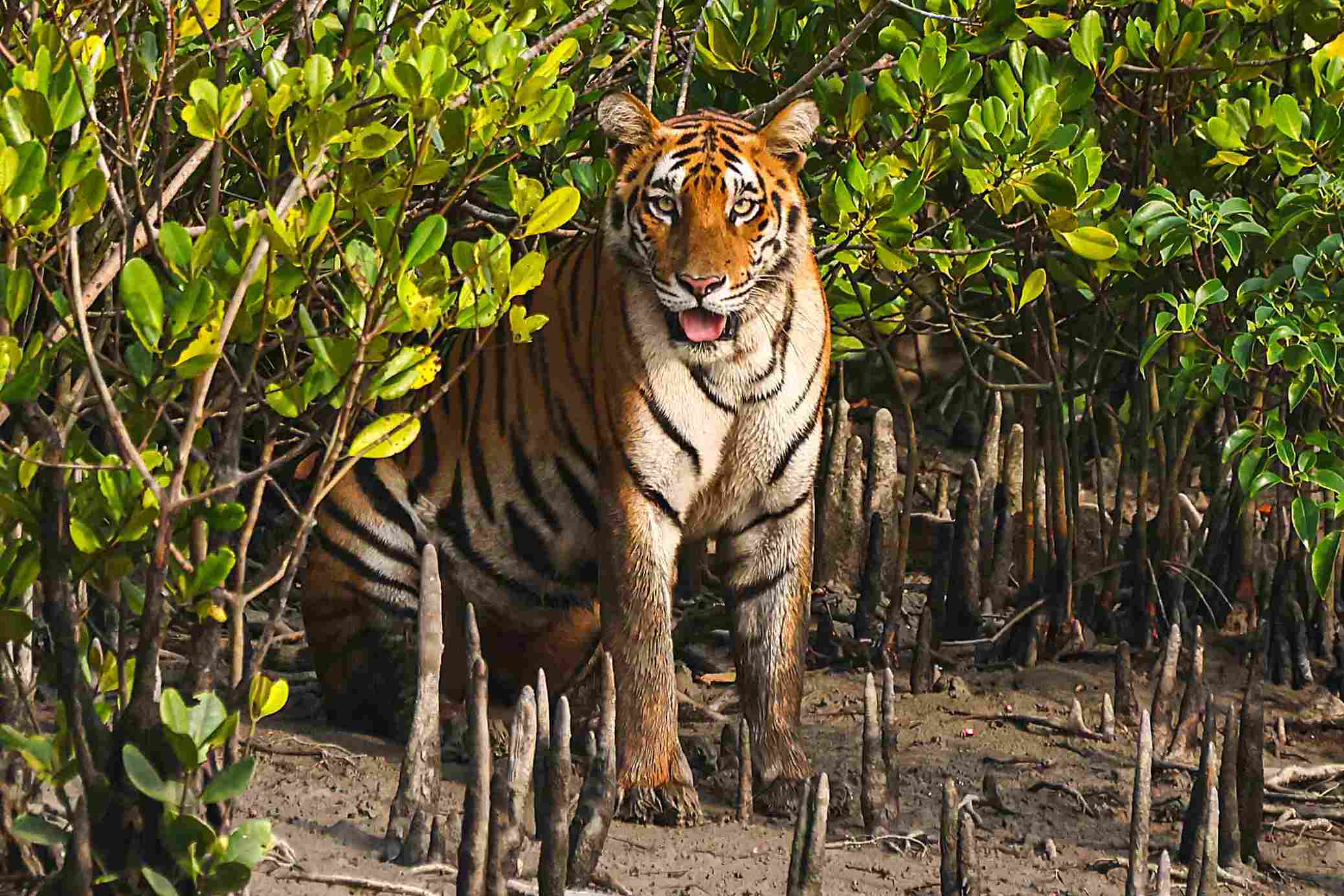
The Royal Bengal Tiger of Sundarbans is not just a predator—it is a living legend deeply woven into the folklore, spirituality, and daily lives of local communities. For centuries, the people of Bengal have revered and feared these “man-eating tigers,” giving rise to myths, deities, and stories that continue to influence human-tiger relationships today.
1. Bonbibi: The Forest Goddess
One of the most enduring legends of the Sundarbans revolves around Bonbibi, the guardian spirit of the forest. According to folklore, Bonbibi protects honey collectors, fishermen, and woodcutters who enter the mangroves. Locals often invoke her name before venturing into tiger territory, believing she keeps them safe from tiger attacks. In many villages, shrines dedicated to Bonbibi stand at the forest’s edge, adorned with offerings of honey, rice, and flowers.
*The worship of Bonbibi is unique because it unites both Hindus and Muslims of the Sundarbans, reflecting a rare example of secular faith rooted in shared survival.
2. Dakshin Rai: The Tiger Demon
In contrast to Bonbibi, Dakshin Rai is portrayed as a demon king who takes the form of a tiger. Folklore describes him as the ruler of the Sundarbans’ wilderness, demanding respect and offerings from those who enter his domain. Stories often depict Bonbibi defeating Dakshin Rai, symbolizing the balance between human survival and the raw power of nature.
3. The Tiger as a Spirit and Ancestor
Among local communities, the tiger of Sundarbans is sometimes seen as a spiritual ancestor or a reincarnation of forest spirits. Fishermen whisper prayers before launching boats, and honey gatherers carry amulets to ward off tiger attacks. The belief is that tigers are not ordinary animals but mystical guardians of the mangroves, enforcing rules set by nature itself.
4. Symbolism in Culture and Literature
From folk songs and ballads to modern Bengali literature, the Royal Bengal Tiger of Sundarbans is often portrayed as a symbol of courage, wilderness, and human vulnerability. These stories reflect both fear and reverence, highlighting the tiger’s role as a bridge between the natural and spiritual worlds.
5. Why These Legends Matter
Folklore and legends surrounding the Sundarbans tiger serve more than cultural curiosity—they foster respect for the forest and its creatures. By embedding tigers in spiritual beliefs, local communities develop a cultural framework that discourages overexploitation and emphasizes coexistence. In this way, myths and legends indirectly support tiger conservation by reminding people that the mangroves are sacred and must be respected.
❓ FAQ Section: Royal Bengal Tiger of Sundarbans
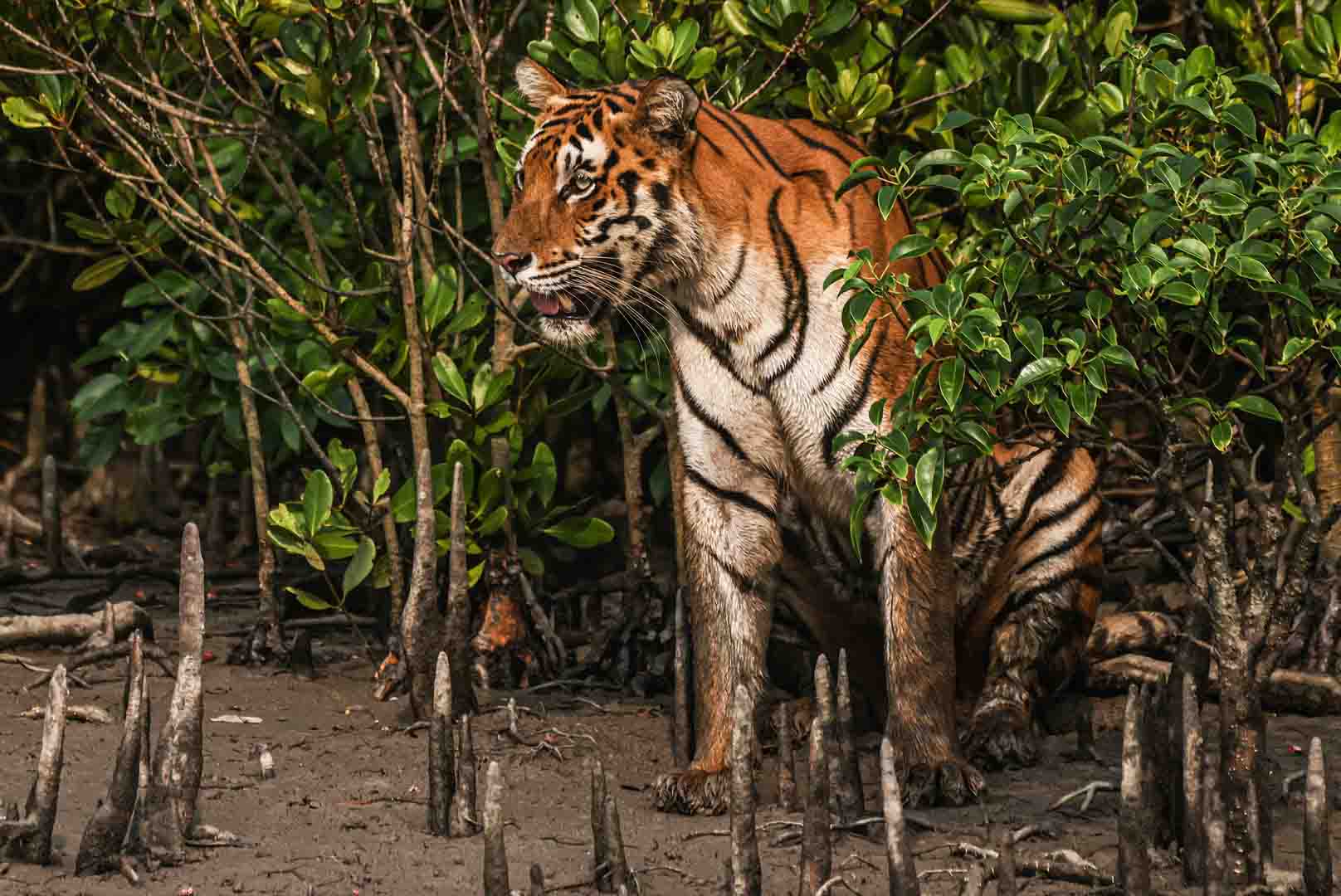
1. How many Royal Bengal Tigers are left in Sundarbans?
As of recent estimates, the Sundarbans hosts around 100–120 tigers in India and around 114 in Bangladesh. These numbers fluctuate due to habitat loss, prey availability, and conservation efforts.
2. Why are Sundarbans tigers called “man-eaters”?
The Royal Bengal Tiger of Sundarbans has historically been labeled a man-eater because of occasional human-tiger conflicts. Reasons include scarcity of prey, habitat encroachment, and fishermen entering tiger territories. However, these incidents are decreasing thanks to stricter protection and awareness programs.
3. What makes the Sundarbans tiger different from other Royal Bengal Tigers?
They are smaller in size, making it easier to navigate muddy terrains.
Known as expert swimmers, they can cross several kilometers of tidal rivers.
Adapted to saline water and aquatic hunting, unlike other tiger populations.
4. When is the best time to spot a Royal Bengal Tiger in Sundarbans?
The ideal time is November to March, when weather conditions are favorable and tiger activity increases near water channels.
5. Is it safe to visit Sundarbans for tiger photography?
Yes, visiting the Sundarbans through authorized boat safaris is safe. Guides and forest officials ensure strict safety protocols, and human-tiger encounters are extremely rare.
6. Why are Sundarbans tigers important for the ecosystem?
They are the apex predators of the mangrove forest, keeping prey populations like deer and boar in check. Their survival indicates a healthy mangrove ecosystem, which in turn protects coastal communities from cyclones and floods.
7. Can tourists increase their chances of spotting a tiger?
While there’s no guarantee, choosing early morning or late afternoon safaris, hiring experienced guides, and spending 2–3 days in the forest can significantly increase your chances.
🎬 Conclusion
The Royal Bengal Tiger of Sundarbans is far more than a rare wildlife sighting—it is the beating heart of the mangrove ecosystem, a guardian of coastal resilience, and a cultural icon woven into the identity of Bengal. Its survival secures not just biodiversity but also the livelihoods and safety of millions who depend on the protective shield of the mangroves against cyclones, floods, and rising seas.
Yet, these magnificent “swimming tigers” face escalating threats from climate change, shrinking habitats, and human conflict. Protecting them is no longer a choice but a necessity—for when the tiger thrives, the Sundarbans thrives, and when the Sundarbans thrives, so do the people of this region.
For travelers, photographers, and conservationists, witnessing the Royal Bengal Tiger of Sundarbans is a once-in-a-lifetime encounter with raw wilderness. But beyond the thrill lies a responsibility: to raise awareness, support conservation initiatives, and become stewards of nature’s greatest treasures. In safeguarding this tiger, we preserve not only a species but also the legacy of an ecosystem that stands as one of Earth’s last great natural fortresses.
Join the mission to protect the Royal Bengal Tiger of Sundarbans—share this article, support conservation programs, and plan a responsible eco-tour to witness the king of mangrove forests in its natural realm.
Recent Comments