

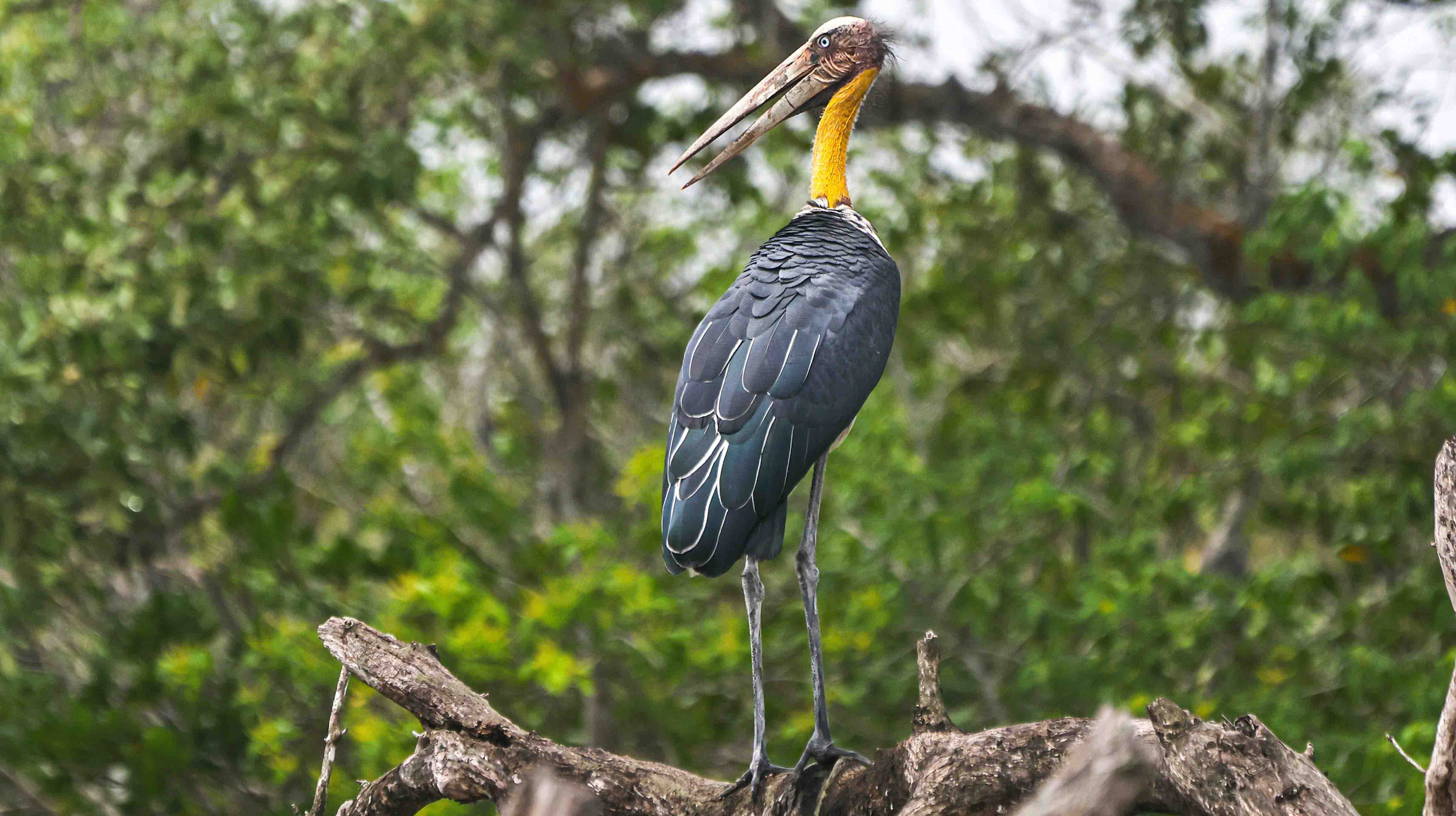
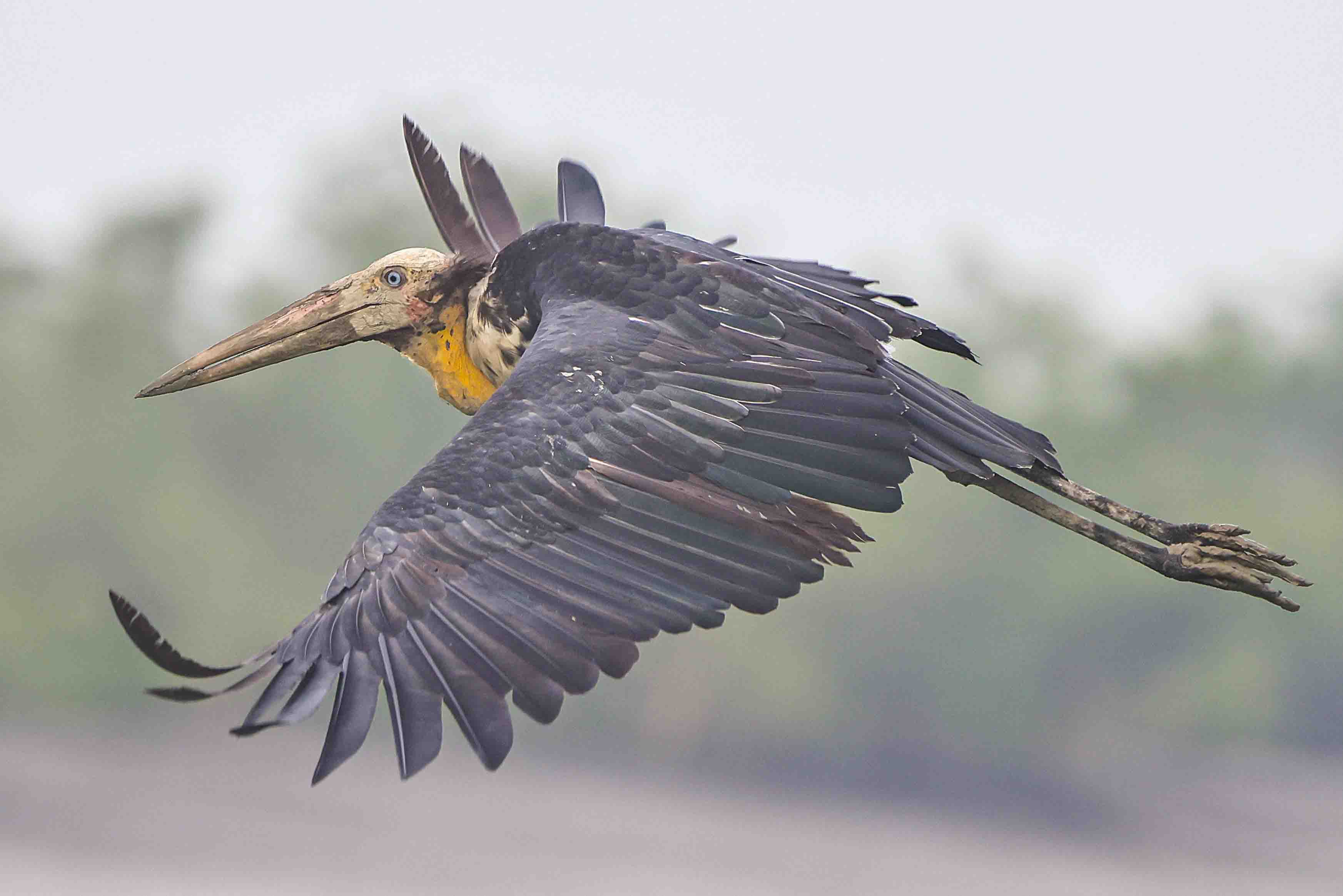
The Lesser Adjutant Stork (Leptoptilos javanicus), locally called Madantak (মদনটাক), stands as one of the most fascinating wetland birds of South and Southeast Asia. With its bald head, piercing yellow bill, and towering frame, the bird commands attention in every landscape it inhabits.
You often find the Lesser Adjutant Stork patrolling marshes, paddy fields, riverbanks, and mangrove forests. Its slow, deliberate movements and watchful eyes give it an almost ancient presence. Despite its vulture-like look, this stork plays a vital ecological role. It hunts fish, frogs, reptiles, and large insects while also scavenging carrion, keeping wetlands clean and balanced.
Birdwatchers admire the species not just for its unusual appearance but also for its behavior. The Lesser Adjutant Stork often soars high on broad wings, scanning the land below for food. At nesting sites, pairs display remarkable cooperation, building large stick nests on tall trees near water.
Sadly, this striking bird faces severe threats. Wetland drainage, mangrove destruction, pollution, and human disturbance shrink its habitats year after year. As a result, populations are falling across much of its range, placing the Lesser Adjutant Stork on the global conservation priority list.
This guide highlights everything you need to know: its unique physical traits, feeding habits, nesting behavior, cultural importance, conservation challenges, and expert photography tips. Whether you are a birder, researcher, or wildlife photographer, the Lesser Adjutant Stork offers endless fascination and urgent reasons for protection.

The Lesser Adjutant Stork stands tall and powerful in Asian wetlands. With a height of nearly 4.5 feet and a wingspan over 2.5 meters, it commands attention wherever it appears.
Key Features for Identification
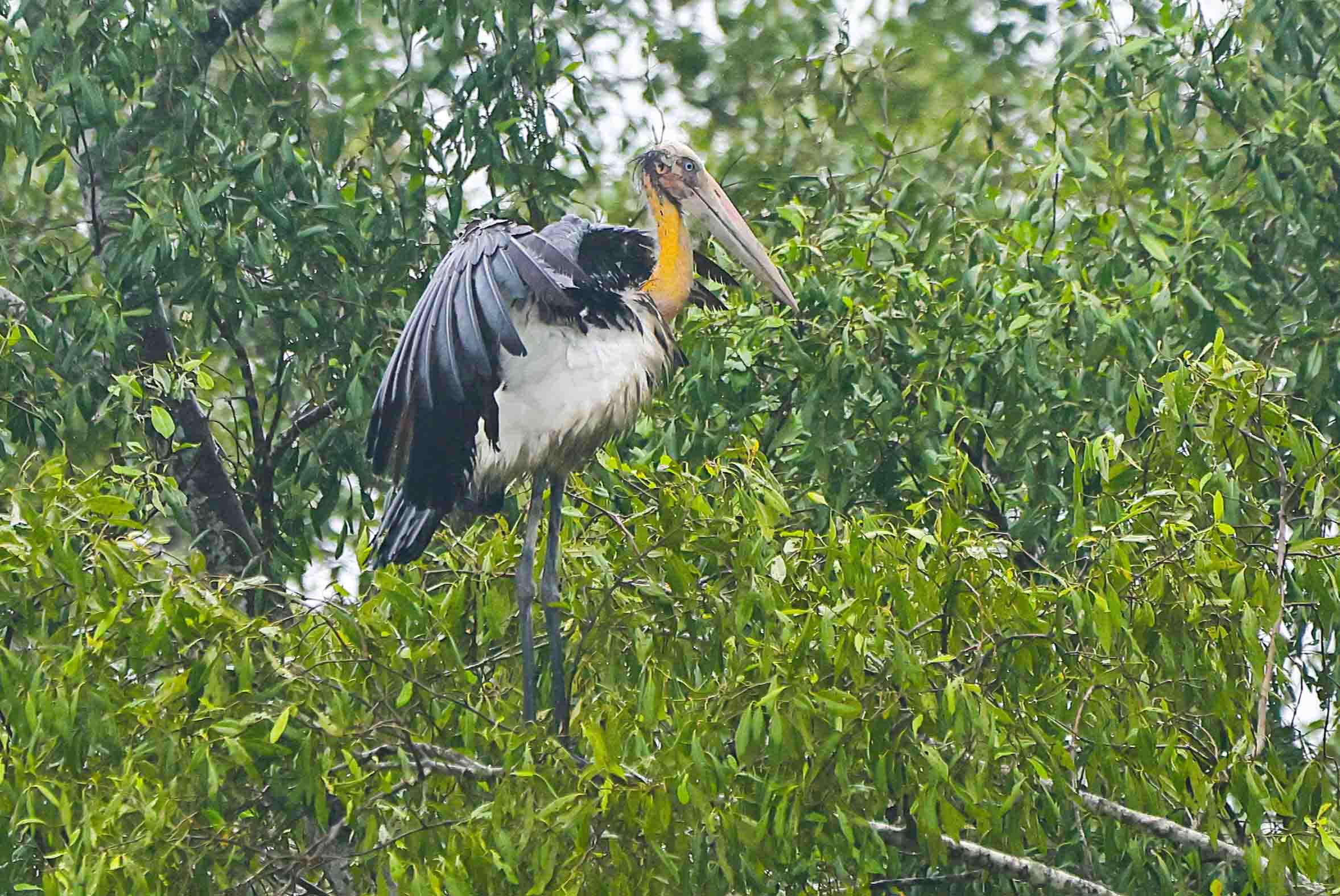
Head and Neck: The bald, rough-skinned head and neck help the Lesser Adjutant Stork stay clean while feeding on carrion, fish, or amphibians.
Bill: Its long, heavy, yellowish bill works like a spear, designed to catch fish, frogs, snakes, and other slippery prey.
Plumage: Dark grey to black wings contrast with pale underparts, giving the bird a rugged yet striking appearance.
Legs: Long, strong legs make wading in shallow wetlands easy. These legs provide balance while stalking prey in muddy terrain.
Flight Pattern: The Lesser Adjutant Stork glides with slow, broad wingbeats. Its flight resembles other large storks, yet its majestic silhouette is unmistakable.
Lesser vs. Greater Adjutant
Unlike the Greater Adjutant Stork, its larger cousin, the Lesser Adjutant lacks the hanging throat pouch. However, both share the bald head and commanding presence that make adjutants unique.
Adapted for Survival
The Lesser Adjutant Stork’s physical traits are not just striking—they are survival tools. Its sharp vision, sturdy build, and strong bill allow it to thrive in wetlands, forests, and floodplains. These features also help it play a vital role as both a scavenger and predator in the ecosystem.
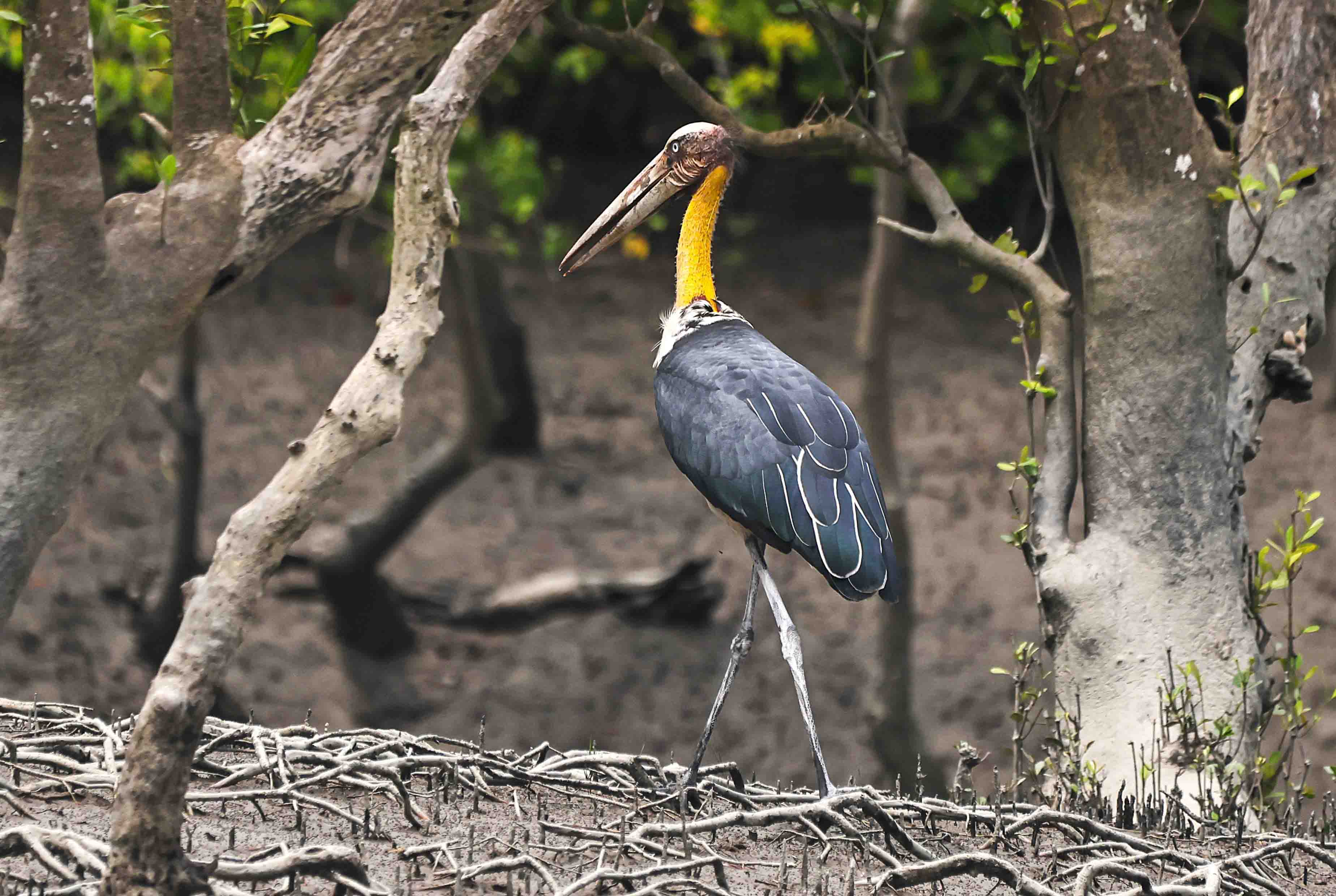
The Lesser Adjutant Stork thrives in wetlands that provide abundant food and safe roosting areas. Its presence signals healthy ecosystems.
Preferred Habitats
Freshwater wetlands and marshes: Prime feeding grounds rich in fish, amphibians, and crustaceans.
Mangrove forests: Stronghold populations live in the Sundarbans, where tidal creeks support their diet.
Floodplains and river basins: Seasonal floods attract large gatherings of storks.
Rice fields and farmland: They forage in agricultural landscapes, feeding on pests and leftover fish.
Geographic Range
India: Populations remain in Assam, Bihar, Odisha, West Bengal, and the northeast, including the Sundarbans mangroves.
Bangladesh and Nepal: Large wetlands and floodplains host breeding and wintering groups.
Southeast Asia: Found in Cambodia, Laos, Thailand, and Indonesia, though numbers are declining in parts of the range.
Seasonal Movements
The Lesser Adjutant Stork shifts habitats with food availability. During monsoons, it moves to flooded plains. In the dry season, it prefers riverbeds and marshes where prey is concentrated. These movements ensure survival in dynamic landscapes.
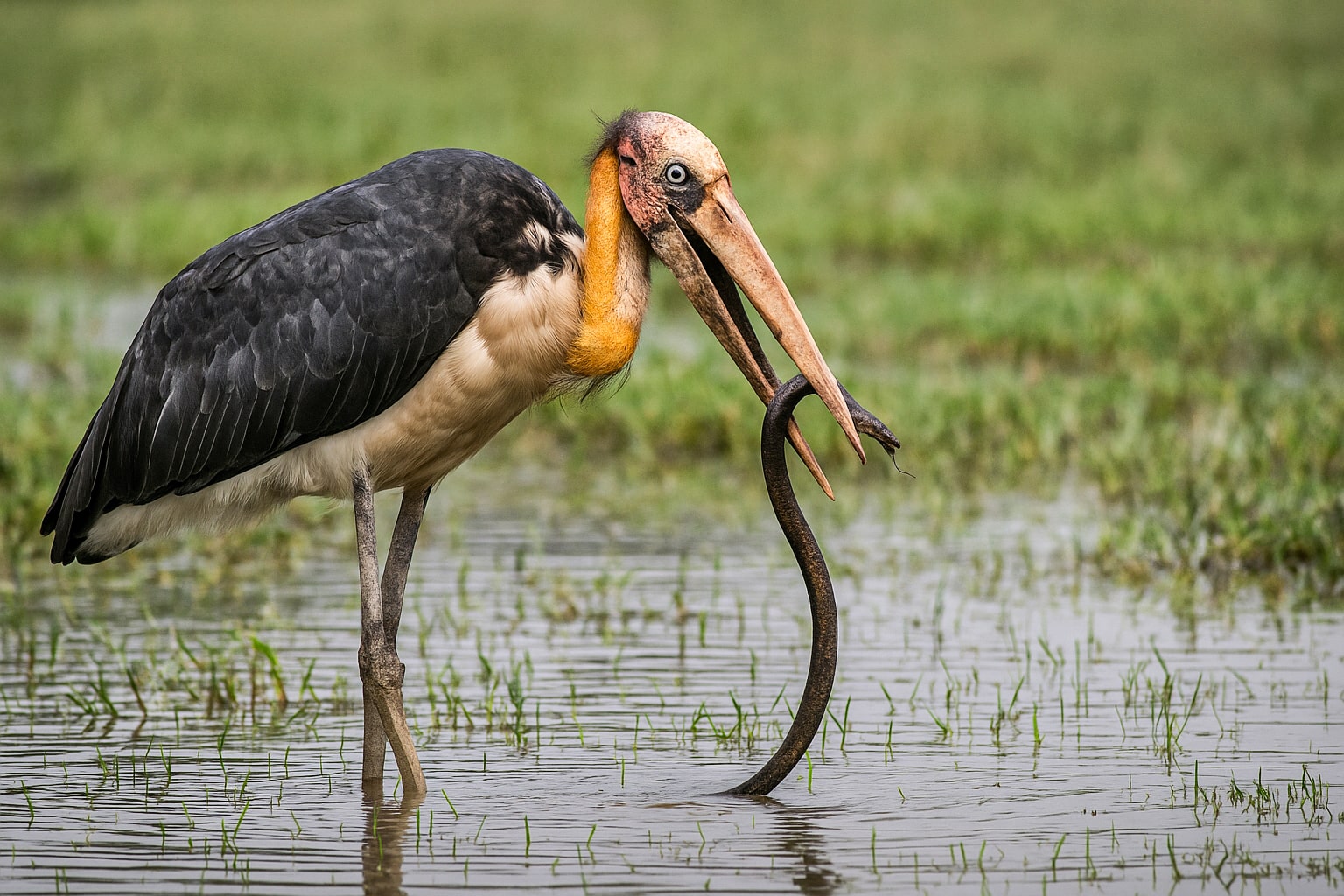
The Lesser Adjutant Stork is an opportunistic feeder with a wide and adaptable diet. Its feeding habits make it a vital bird of Asian wetlands.
Primary Prey: This stork hunts fish, frogs, crabs, snakes, and aquatic invertebrates, striking fast with its long, heavy bill.
Foraging Style: It often stands motionless in shallow water, then seizes prey in a sudden, precise attack.
Scavenger Role: The Lesser Adjutant Stork also consumes carrion, cleaning wetlands and reducing the spread of disease.
Adaptive Feeding: Near human settlements, it sometimes feeds on garbage and waste, showing both adaptability and ecological risk.
Breeding Diet: During breeding season, adults bring protein-rich prey to nests, ensuring rapid growth of their chicks.
Ecological Importance: By hunting live prey and scavenging, the Lesser Adjutant Stork balances ecosystems and recycles nutrients.
These behaviors highlight its dual role as a predator and scavenger. However, feeding on polluted garbage exposes the Lesser Adjutant Stork to toxins, plastics, and pathogens. Protecting natural wetlands is essential for healthier foraging grounds.
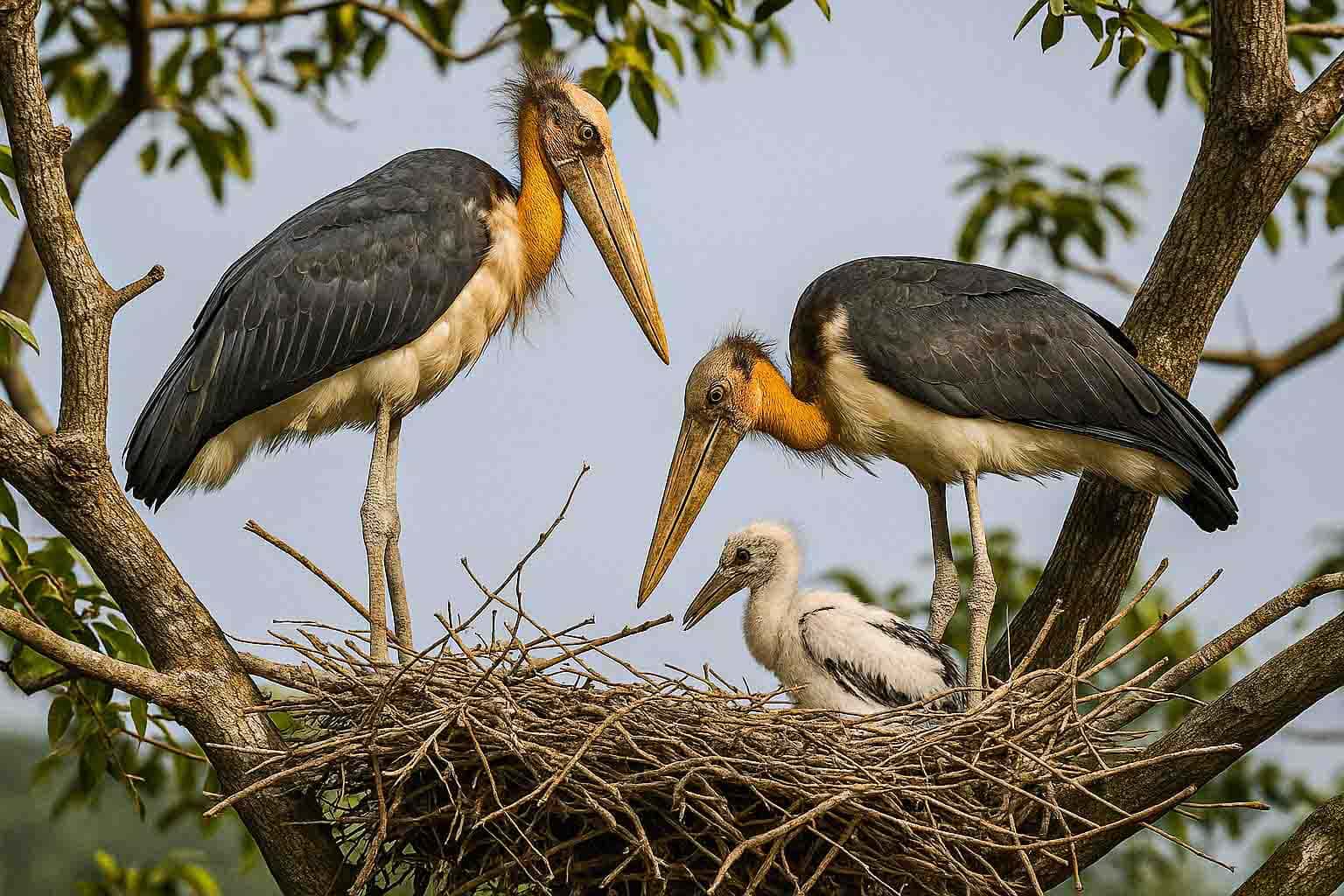
The Lesser Adjutant Stork begins its breeding season from November to March, when wetlands turn into vibrant nesting grounds.
Nesting Sites: These storks prefer tall trees near wetlands. They often form colonial nesting colonies, sometimes alongside painted storks and openbills.
Nest Structure: Each pair builds a large stick nest, lining it with grass, twigs, and fresh leaves for comfort and insulation.
Eggs: A typical clutch contains 2–4 eggs. These eggs are white and well-camouflaged within the nest.
Parental Care: Both parents share duties. They take turns incubating the eggs and later feeding the chicks with fish, frogs, and small reptiles.
Pair Bond: The Lesser Adjutant Stork displays a strong pair bond. Parents coordinate feeding and defense, ensuring maximum chick survival.
Chick Development: Chicks hatch with sparse down. They grow rapidly and fledge in about two months, though parents continue to feed them.
Importance of Breeding Colonies
Breeding colonies are critical for survival. They offer safety in numbers and promote genetic diversity. However, threats loom large. Tree felling, wetland loss, and human disturbance often destroy these nesting habitats.
Protecting these colonies is vital. By conserving wetlands and tall nesting trees, we safeguard the future of the Lesser Adjutant Stork and its role in maintaining wetland ecosystems.
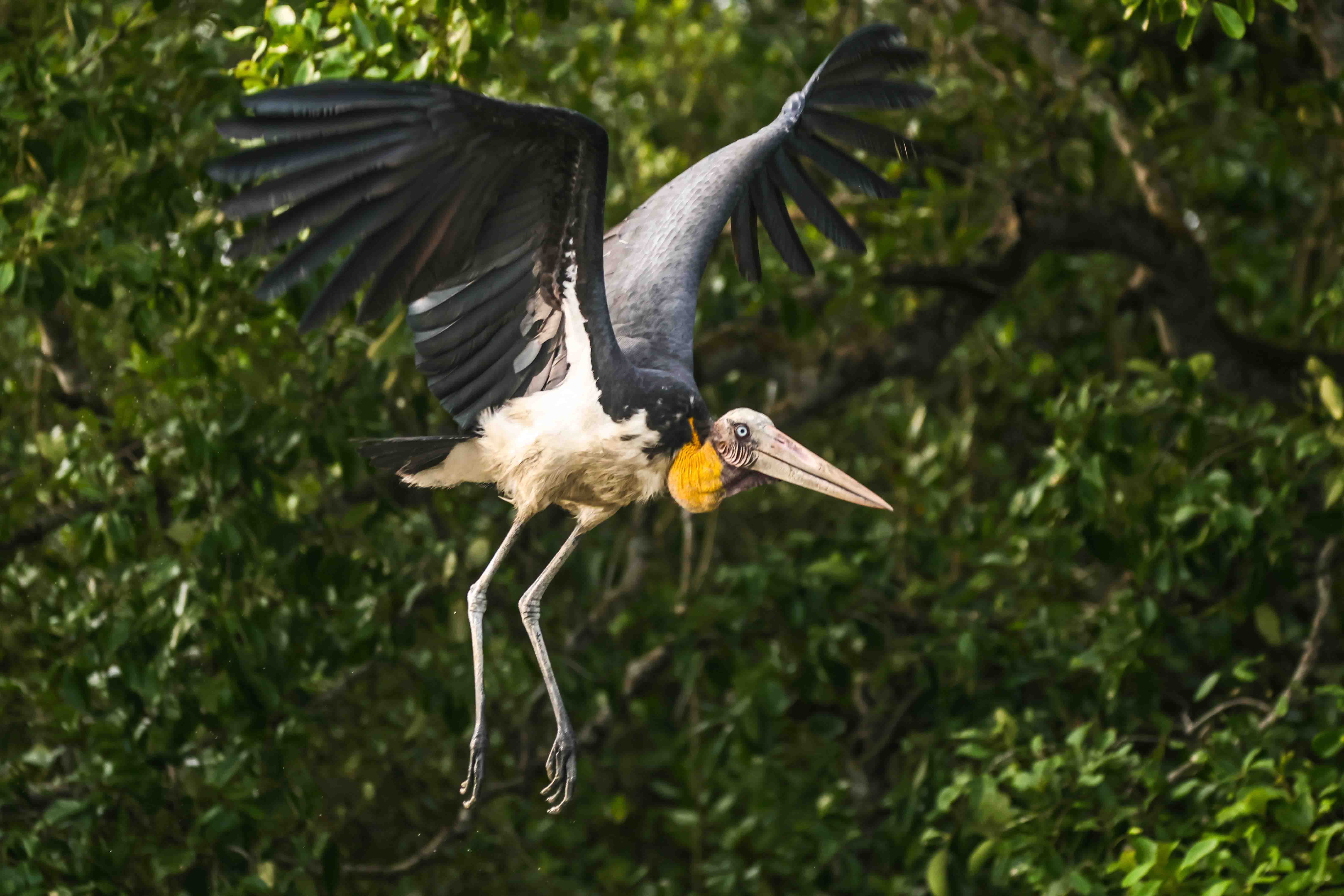
The Lesser Adjutant Stork (Leptoptilos javanicus) is currently classified as Vulnerable on the IUCN Red List. Its global population is estimated at fewer than 10,000 mature individuals, with most concentrated in India, Nepal, Bangladesh, Cambodia, and parts of Southeast Asia. Over the past decades, the species has suffered severe declines, and without immediate intervention, it faces a real risk of sliding toward Endangered status.
Major Threats
Habitat Destruction:
Expanding agriculture, urbanization, and aquaculture projects drain wetlands and cut down tall nesting trees. The loss of mangroves, floodplains, and swamp forests has left fewer safe breeding grounds.Logging of Nesting Trees:
These storks rely on towering trees near wetlands. Logging for timber and firewood directly removes their nesting sites, often forcing colonies to abandon long-established breeding grounds.Human Disturbance:
Nesting colonies often lie near villages. Fishing, cattle grazing, firewood collection, and settlement expansion disturb parents, sometimes causing chick mortality.Hunting and Poaching:
In some areas, Lesser Adjutant Storks are still hunted for meat, fat, or traditional practices. Chicks and eggs are also vulnerable to poaching.Pollution and Pesticides:
Industrial effluents and agricultural chemicals poison wetlands. This reduces fish and amphibian populations, the stork’s primary diet, leading to food scarcity.Climate Change:
Erratic rainfall, droughts, and rising temperatures shrink wetlands. Shifts in monsoon cycles also affect the timing of the breeding season, reducing hatching success.
Why Protecting the Lesser Adjutant Stork Matters
The Lesser Adjutant Stork is not just a bird—it is a keystone species of Asian wetlands. By preying on fish, amphibians, reptiles, and carrion, it regulates aquatic populations and reduces disease spread. Its presence signals a healthy, functioning wetland ecosystem.
Without this species, wetlands risk imbalance, leading to unchecked growth of certain species, loss of biodiversity, and weakened ecological resilience. Protecting the stork directly supports the conservation of rivers, floodplains, and mangrove ecosystems that millions of people also depend on.
Conservation Efforts in Action
Protected Wetland Reserves: Governments and NGOs have created wildlife sanctuaries and wetland reserves in India, Cambodia, and Bangladesh to secure breeding grounds.
Community Involvement: In Assam and Cambodia, local villagers adopt nesting trees, ensuring protection from felling or disturbance.
Awareness Campaigns: Conservation groups run education programs highlighting the ecological role of the Lesser Adjutant Stork. These campaigns reduce hunting and promote coexistence.
Scientific Monitoring: Researchers track breeding success, migratory movements, and population numbers, providing critical data for conservation planning.
International Support: Organizations such as BirdLife International and the IUCN Stork Specialist Group push for stronger policies and wetland protection across Asia.
Call to Action
Saving the Lesser Adjutant Stork means saving Asia’s wetlands. Protecting tall nesting trees, restoring degraded swamps, and empowering local communities can reverse the decline of this vulnerable bird. Every action counts—whether it’s supporting conservation groups, spreading awareness, or advocating for wetland protection policies.
The future of the Lesser Adjutant Stork rests in our hands. If we protect its habitat today, we secure not just the survival of this stork, but also the health of wetlands that sustain countless species—including us.

The Lesser Adjutant Stork is more than just a vulnerable wetland bird—it is a symbol of ecosystem health. Documenting its presence, behavior, and breeding patterns is not only fascinating for birdwatchers but also vital for conservation. Every photograph, field note, or citizen science record adds to our collective understanding of this species, helping scientists and conservationists monitor populations, identify threats, and safeguard critical habitats.
Why Documentation is Powerful
Scientific Value: Field observations, photographs, and videos of the Lesser Adjutant Stork provide crucial data on distribution, breeding success, and migration.
Raising Awareness: Visual stories shared on social media or conservation platforms inspire others to care about this vulnerable species.
Protecting Habitats: Well-documented colonies often gain attention from authorities, encouraging the creation of protected areas and legal safeguards.
Cultural Shift: When communities see the Lesser Adjutant Stork celebrated in photographs and stories, they become more willing to protect nesting trees and wetlands.
How You Can Help Protect the Lesser Adjutant Stork
Contribute Observations: Upload sightings to citizen science platforms like eBird or local bird monitoring groups.
Practice Ethical Photography: Capture images from a distance, avoid disturbing nests, and always respect breeding colonies.
Support Conservation Groups: Donate, volunteer, or spread the word about NGOs working to protect wetlands and storks.
Engage Communities: Share your photos and stories locally. Encourage schools, villagers, and youth groups to value and protect the stork.
Advocate for Wetlands: Use your voice to promote policies that stop wetland drainage, logging, and pollution. Even a single petition signature or social share matters.
A Shared Responsibility
Protecting the Lesser Adjutant Stork requires collective effort. Scientists need accurate field data, conservationists need public support, and local communities need awareness. By documenting and sharing your encounters with this magnificent stork, you become part of a global movement that safeguards not only a species but also the wetlands that sustain life for countless birds, fish, animals, and humans.
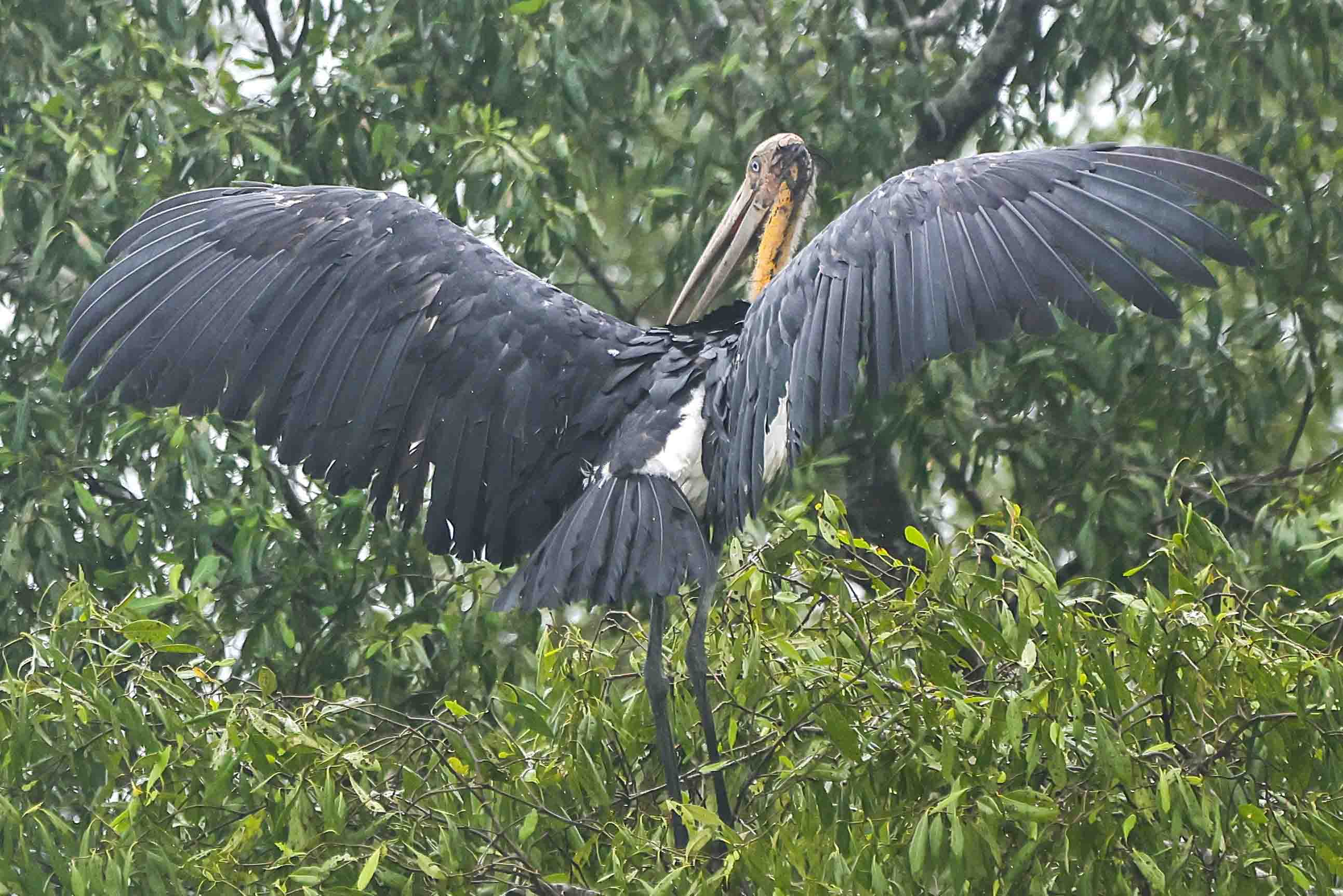
In Bengal and Northeast India, the Madantak (মদনটাক) often inspires mixed feelings. Its bald head and carrion-feeding habits give it a grim, vulture-like image, sometimes linked with mystery or misfortune in folklore.
However, ecologists highlight its positive ecological role—as a cleaner of wetlands and a controller of aquatic pests. Shifting the narrative from fear to respect is vital for its protection.
Q1. What is the conservation status of the Lesser Adjutant Stork?
The Lesser Adjutant Stork is listed as Vulnerable on the IUCN Red List. Its population is declining due to wetland loss, logging of tall nesting trees, pollution, and human disturbance. Conservation programs in India, Bangladesh, and Southeast Asia are working to protect its habitats and breeding colonies.
Q2. Where can the Lesser Adjutant Stork be found?
This stork inhabits South and Southeast Asia, with strong populations in India, Nepal, Bangladesh, Cambodia, Thailand, and Myanmar. It thrives in wetlands, floodplains, mangroves, and rice fields, where food and tall nesting trees are abundant.
Q3. What does the Lesser Adjutant Stork eat?
The Lesser Adjutant Stork feeds mainly on fish, frogs, snakes, and small reptiles. It also eats insects and carrion, playing a vital role in keeping wetlands clean and balanced. Its feeding behavior makes it a key wetland guardian species.
Q4. How does the Lesser Adjutant Stork breed?
Breeding usually takes place from November to March. Storks build large stick nests high on tall trees near wetlands, often in colonies with painted storks and openbills. A pair lays 2–4 eggs, and both parents share incubation and chick feeding duties, reflecting their strong pair bond.
Q5. Why is the Lesser Adjutant Stork important to wetlands?
The Lesser Adjutant Stork helps regulate aquatic populations by feeding on fish, frogs, and reptiles. It also cleans wetlands by scavenging on carrion. Its presence is a strong indicator of healthy wetlands and rich biodiversity.
Q6. What are the main threats to the Lesser Adjutant Stork?
Key threats include wetland drainage for agriculture, logging of nesting trees, human disturbance at colonies, pollution from pesticides, and climate change. Hunting for meat and eggs remains a problem in some areas.
Q7. How can people help conserve the Lesser Adjutant Stork?
Anyone can contribute by:
Sharing documented sightings through platforms like eBird.
Supporting wetland conservation groups.
Practicing ethical photography without disturbing nests.
Raising awareness in local communities about the stork’s ecological role.
Q8. How is the Lesser Adjutant Stork different from the Greater Adjutant Stork?
Both belong to the Leptoptilos genus, but the Greater Adjutant Stork is much rarer and restricted to Assam (India) and Cambodia. The Lesser Adjutant Stork is more widespread but still vulnerable. It is smaller, with a less pronounced neck pouch and slightly different plumage.
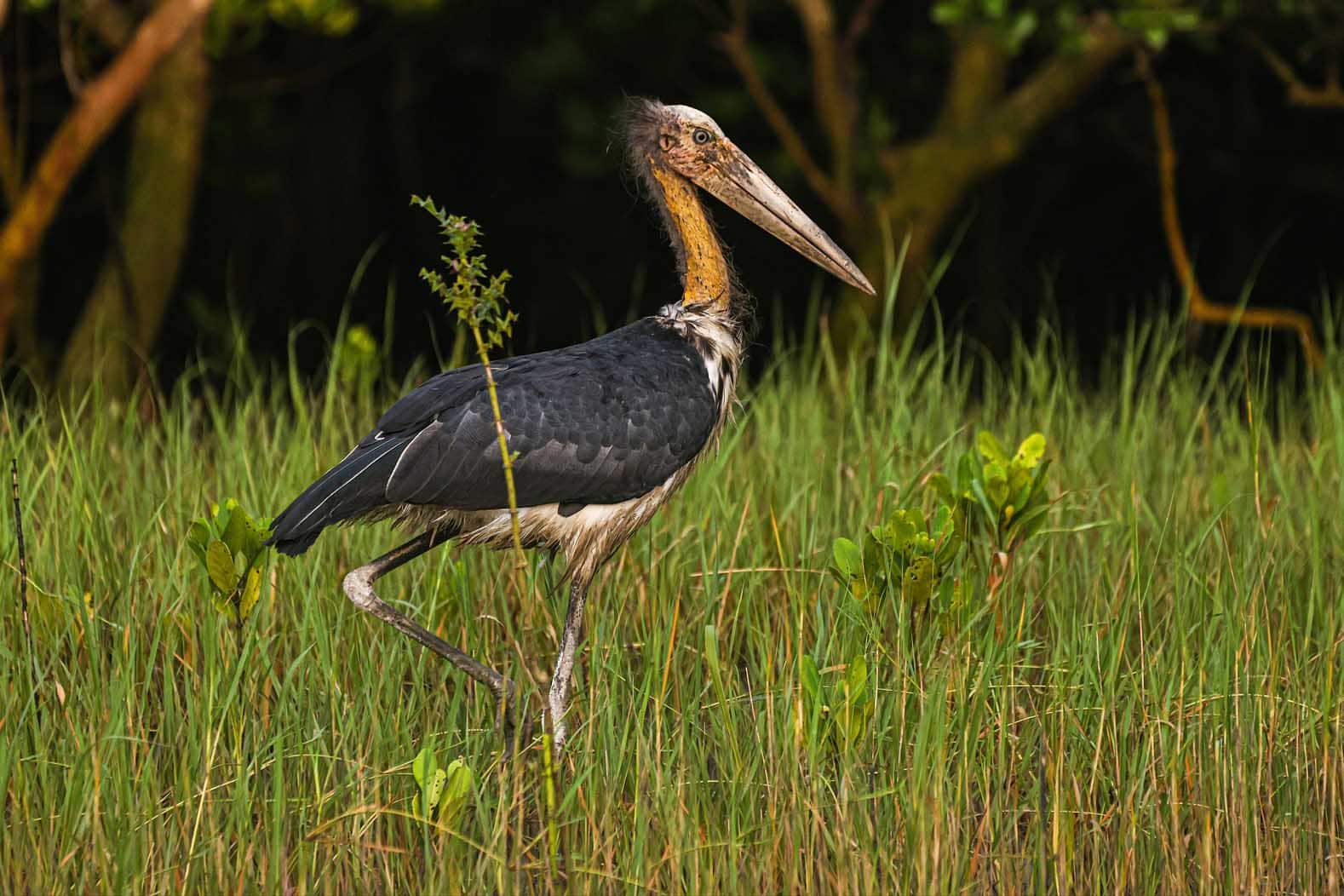
The Lesser Adjutant Stork (Madantak) stands tall as a true guardian of wetlands. This stork may not dazzle with bright colors, but its presence signals a healthy ecosystem. Where the Lesser Adjutant thrives, wetlands remain alive and balanced.
These storks feed on fish, amphibians, reptiles, and carrion. By cleaning the wetlands, they reduce disease and support other species. Their watchful stance reminds us that every swamp and marsh holds life worth protecting.
Yet, the Madantak Bird faces threats from habitat loss, pollution, and human disturbance. When wetlands vanish, this sentinel disappears too. Saving the stork means saving countless creatures and the people who depend on wetlands for food, water, and livelihoods.
Conservation offers hope. Protecting nesting sites, restoring wetlands, and supporting local communities make real change possible. Eco-tourism and awareness programs turn this bird from overlooked to celebrated.
✨ Every action matters. Share stories of the Lesser Adjutant Stork. Support wetland conservation projects. Carry binoculars on your next wetland trip—you may spot this majestic giant, standing tall against the fading horizon.
The Lesser Adjutant Stork is not just a bird—it is a symbol of survival, resilience, and balance. Protecting it today ensures that future generations will witness Asia’s wetlands guarded by this silent sentinel.
Recent Comments