

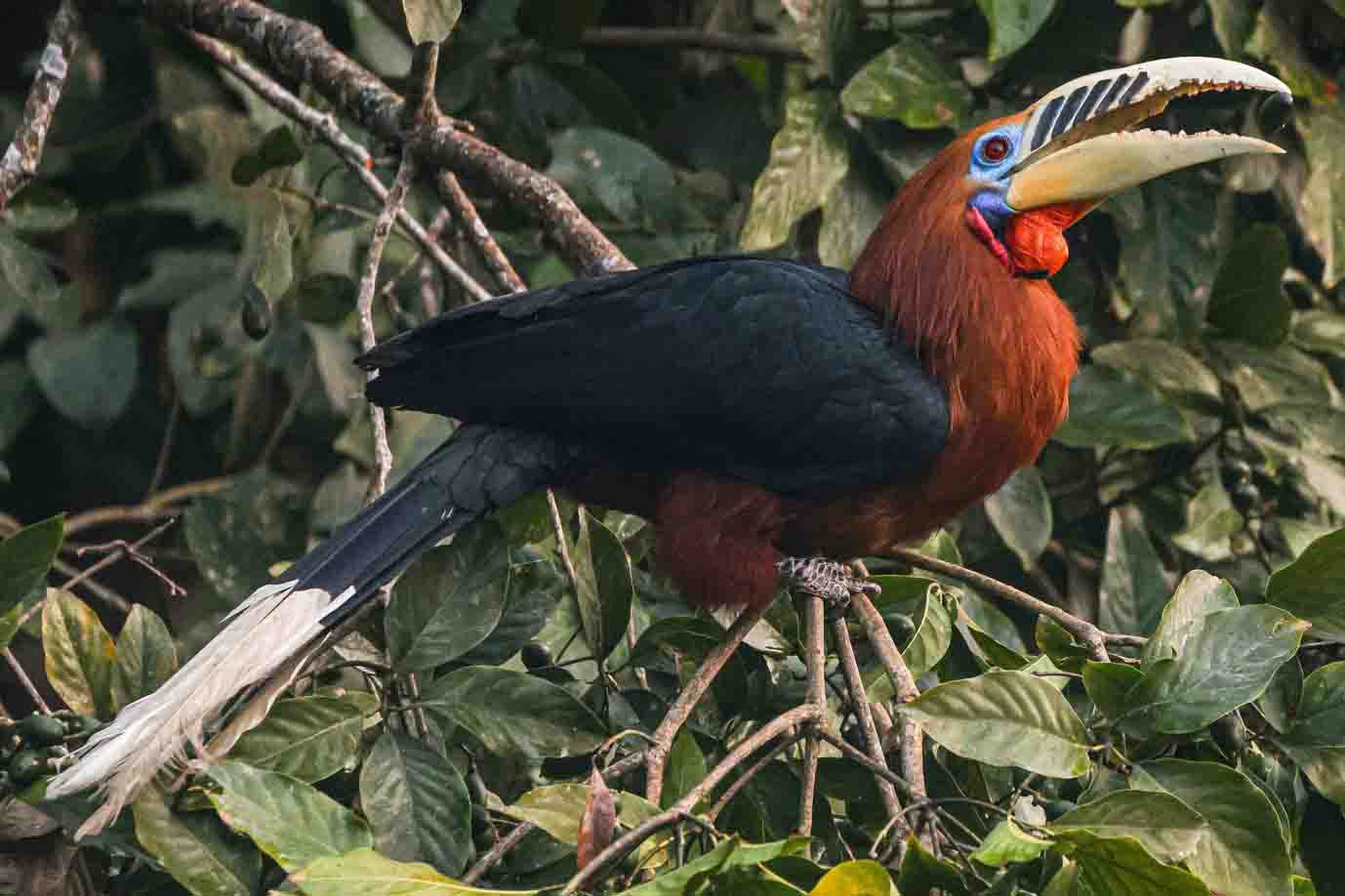
The Rufous-necked Hornbill (Aceros nipalensis), often overshadowed by the more widely known Great Indian Hornbill, is one of the most spectacular and vulnerable hornbill species of Asia. Endemic to the Eastern Himalayas and parts of Southeast Asia, this magnificent bird is instantly recognizable by its vivid colors, long casque-topped bill, and the striking sexual dimorphism between males and females. Once widespread, the Rufous-necked Hornbill is now facing severe threats from deforestation, hunting, and habitat fragmentation, making it an urgent subject of both conservation and photography.
For birdwatchers, photographers, and conservationists, the Rufous-necked Hornbill is more than just a bird — it is a living symbol of the fragile forest ecosystems of Arunachal Pradesh, Nagaland, Bhutan, and beyond.
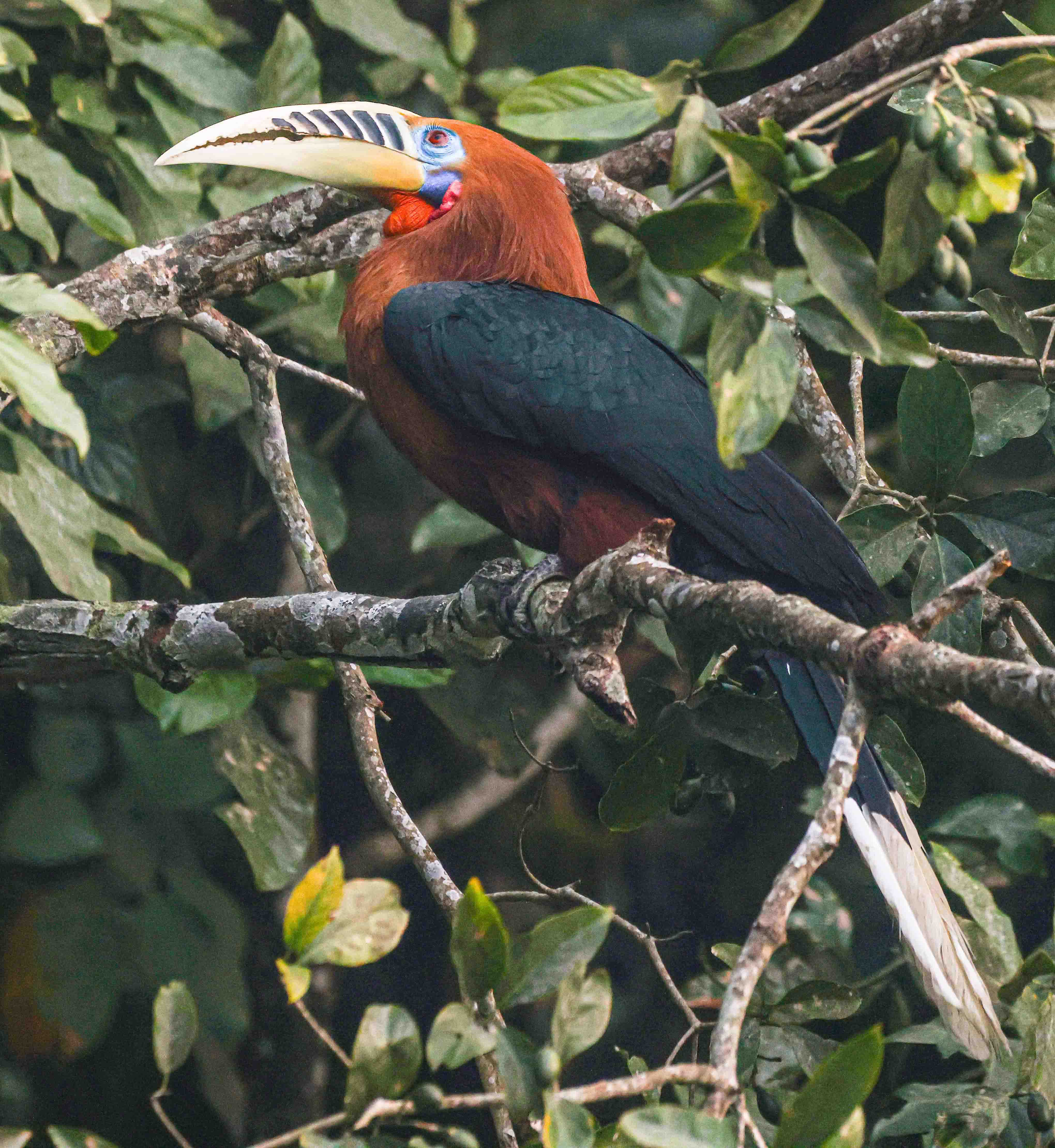
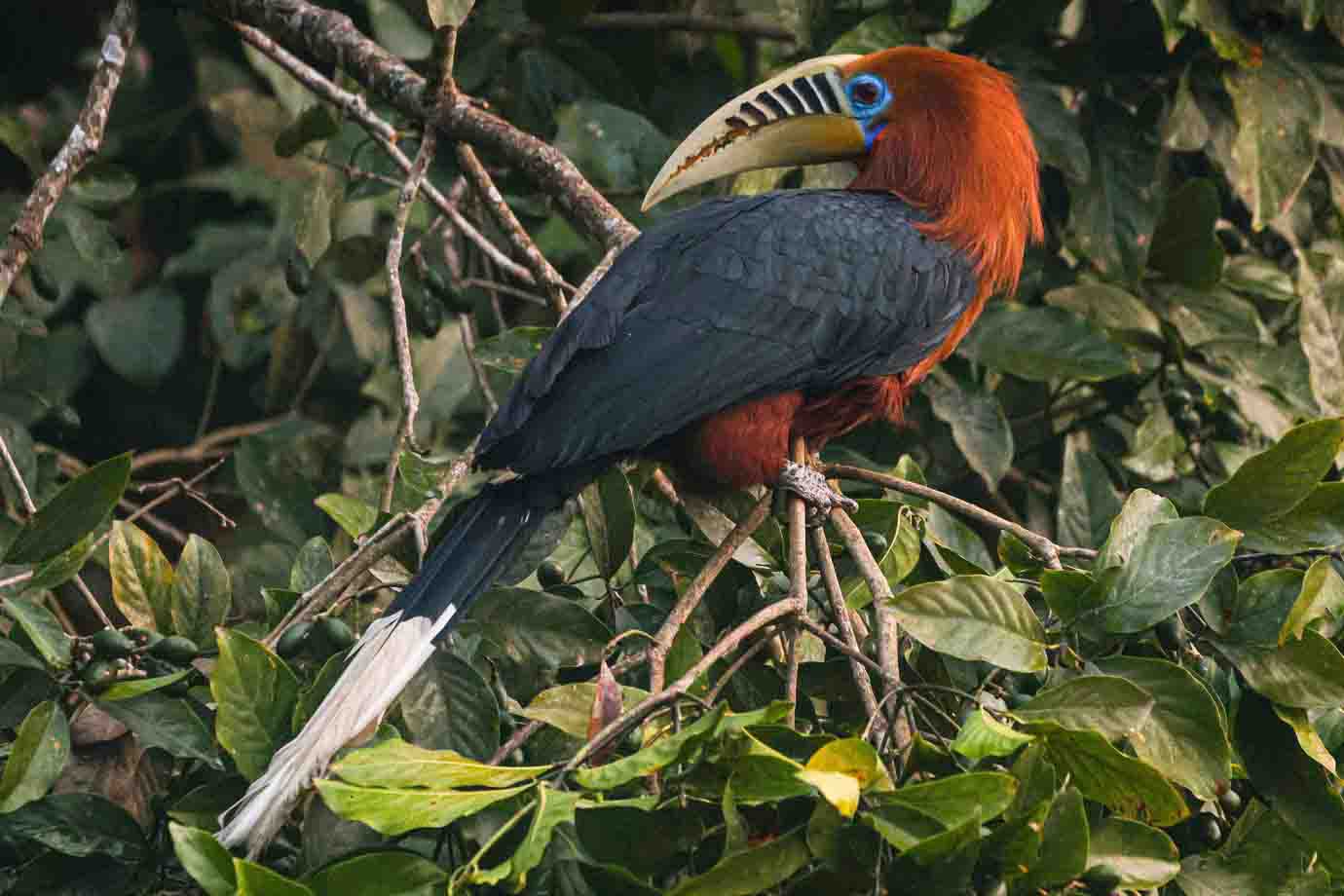
Male
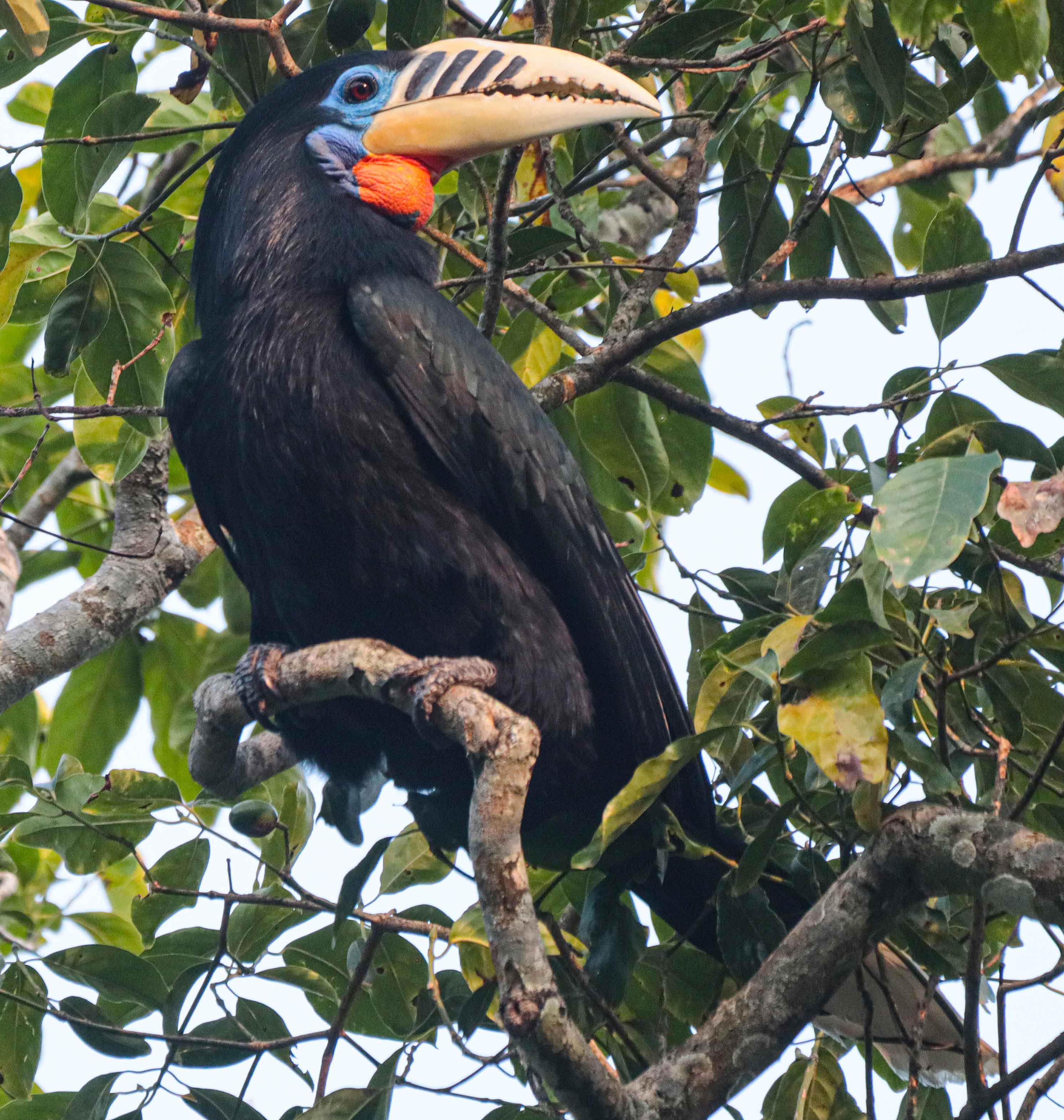
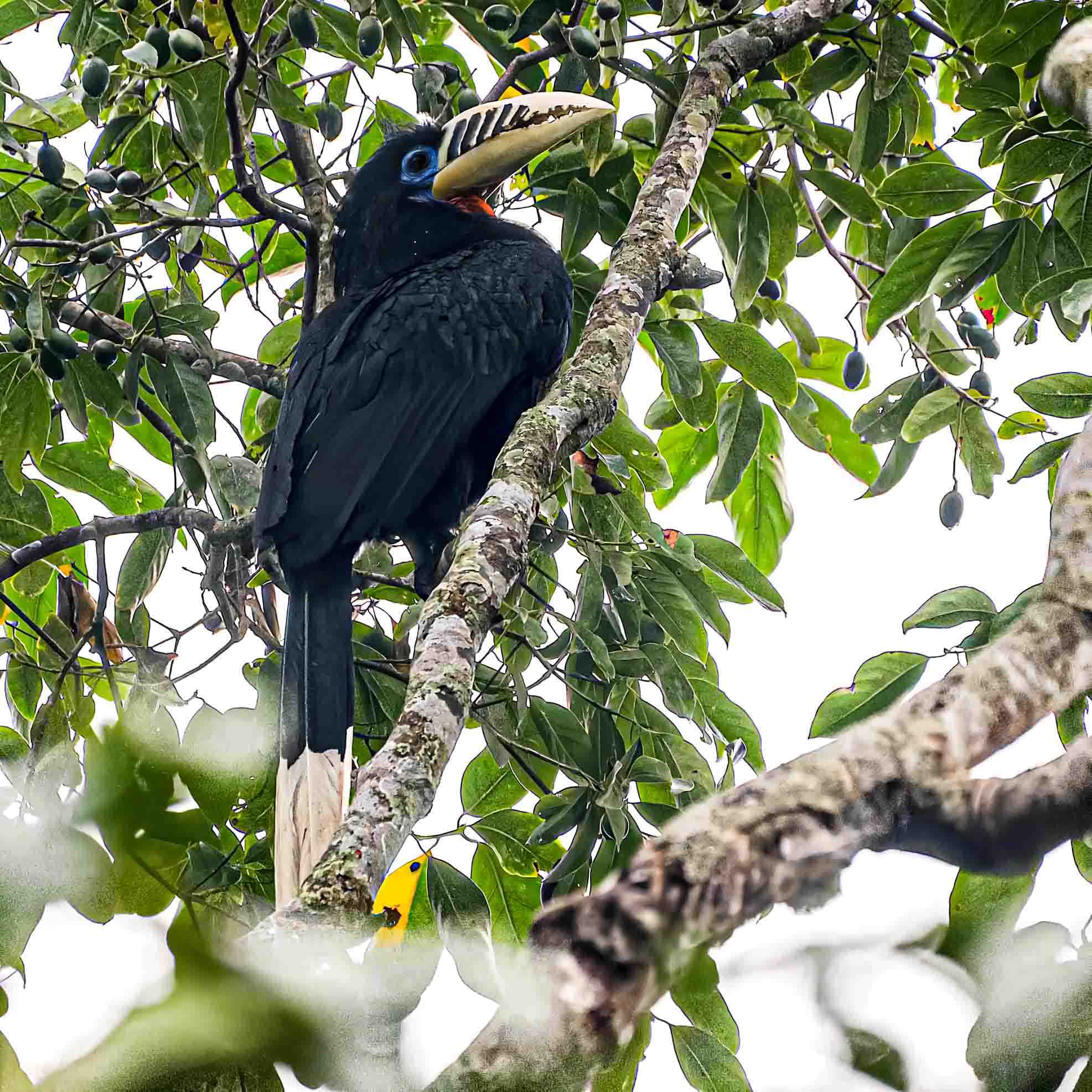
Female
The rufous-necked hornbill (Aceros nipalensis) belongs to the family Bucerotidae, which includes some of the most iconic tropical birds. It is one of the largest and most striking hornbill species found across the forests of Northeast India, Bhutan, Myanmar, Thailand, and Laos.
Taxonomically, it falls under the genus Aceros, though recent genetic studies suggest it is closely related to the Buceros group. This classification highlights its evolutionary connection to other large Asian hornbills, including the great hornbill and wreathed hornbill.
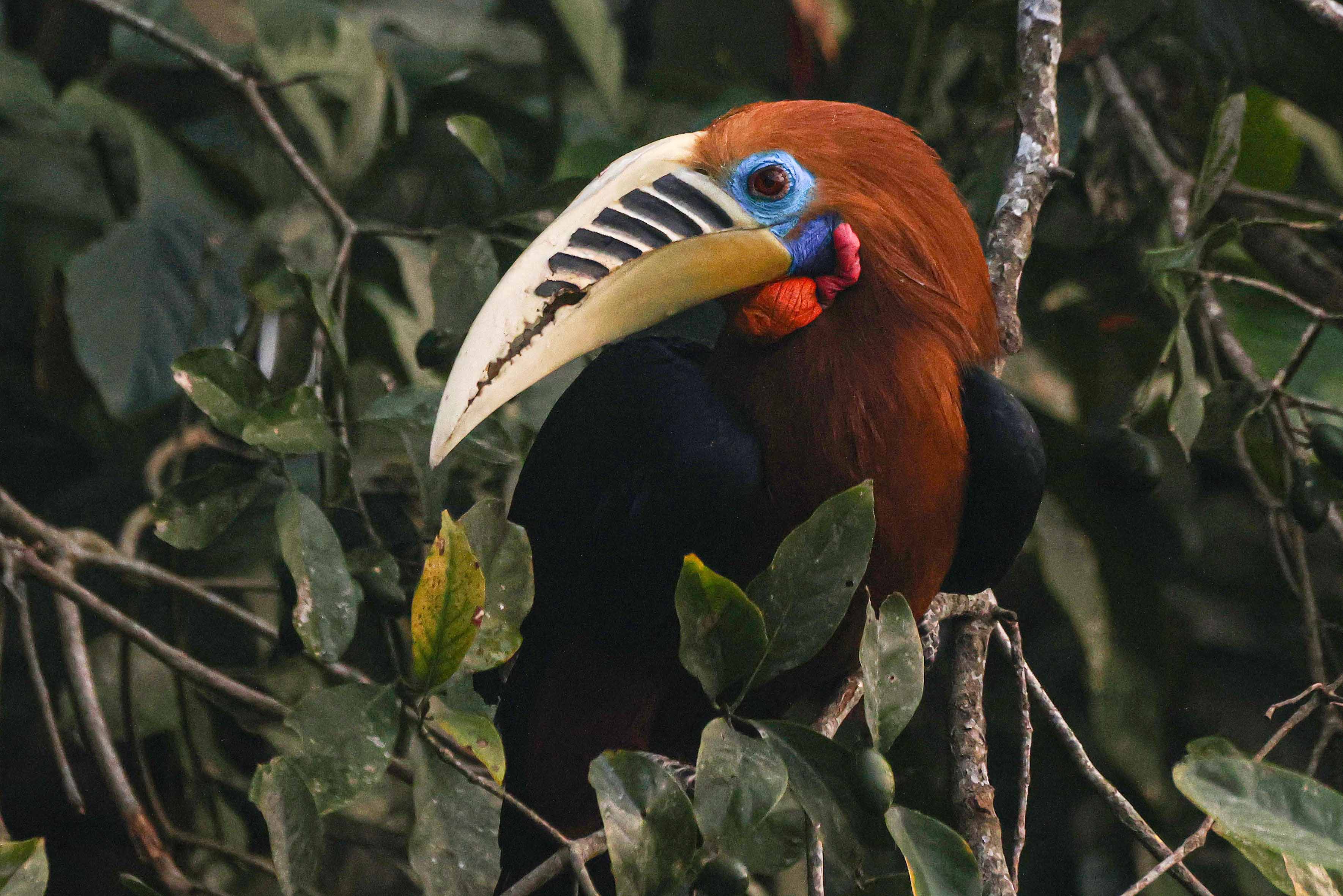
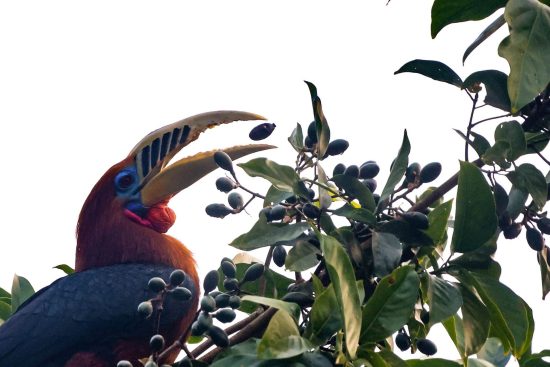
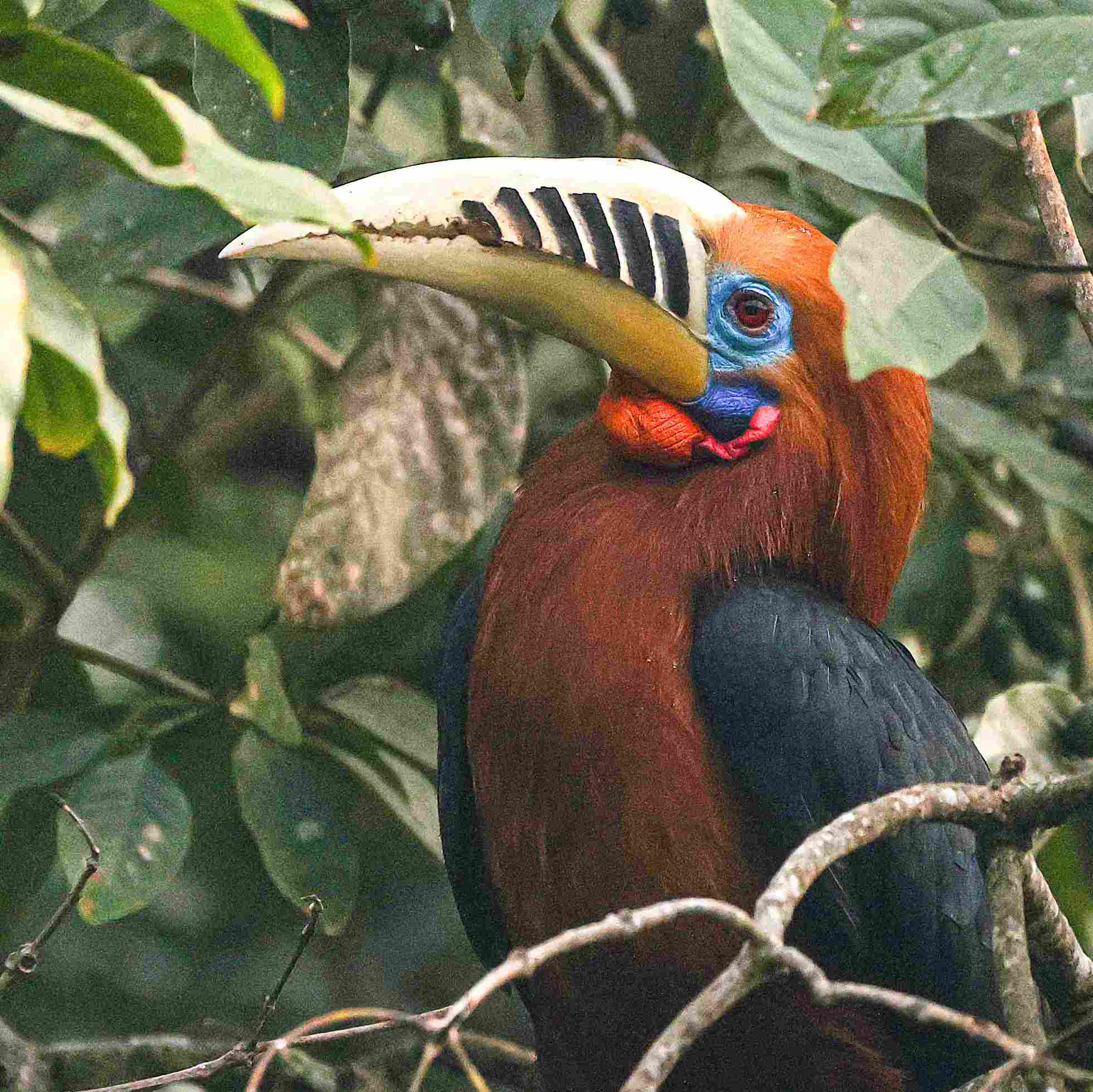
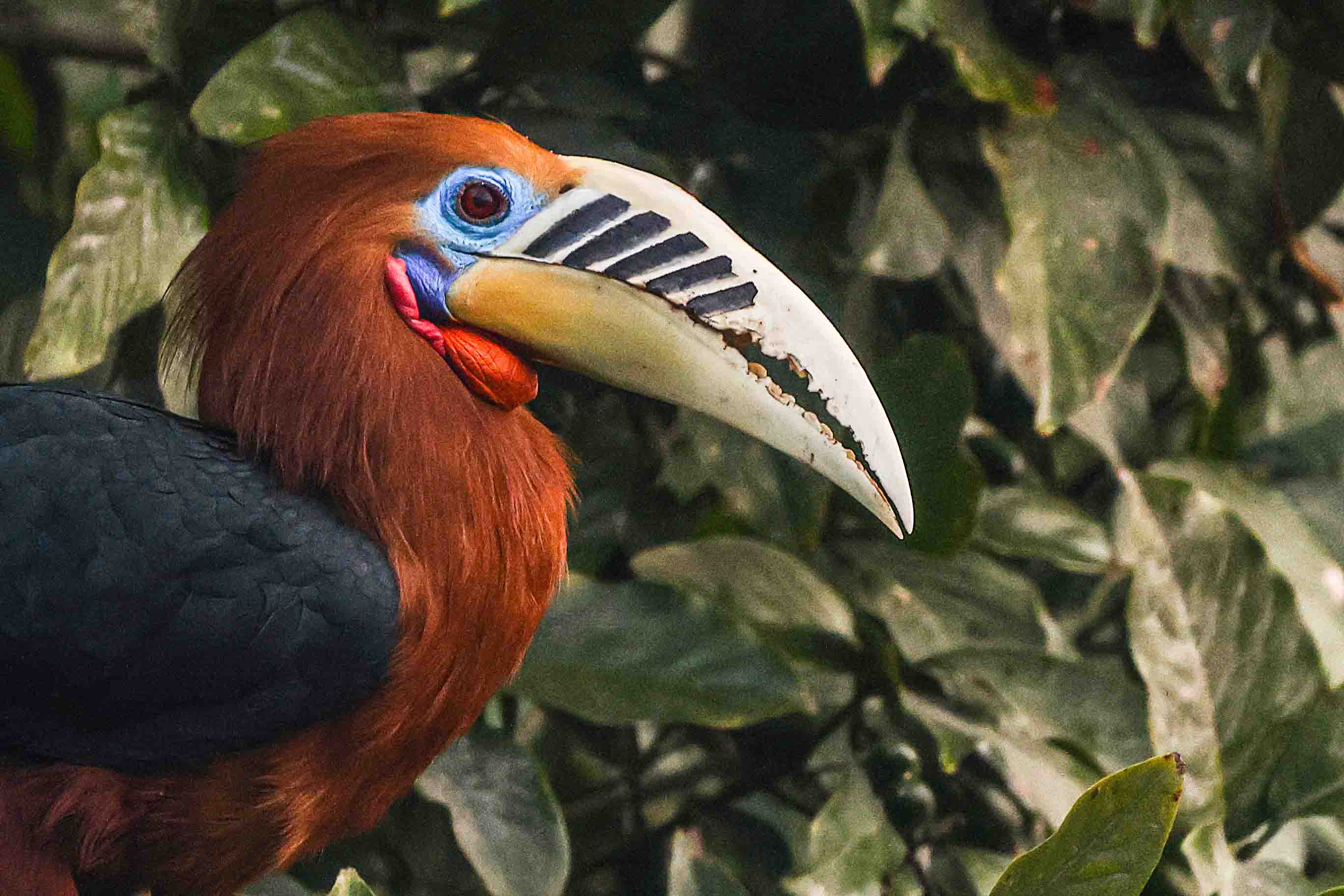
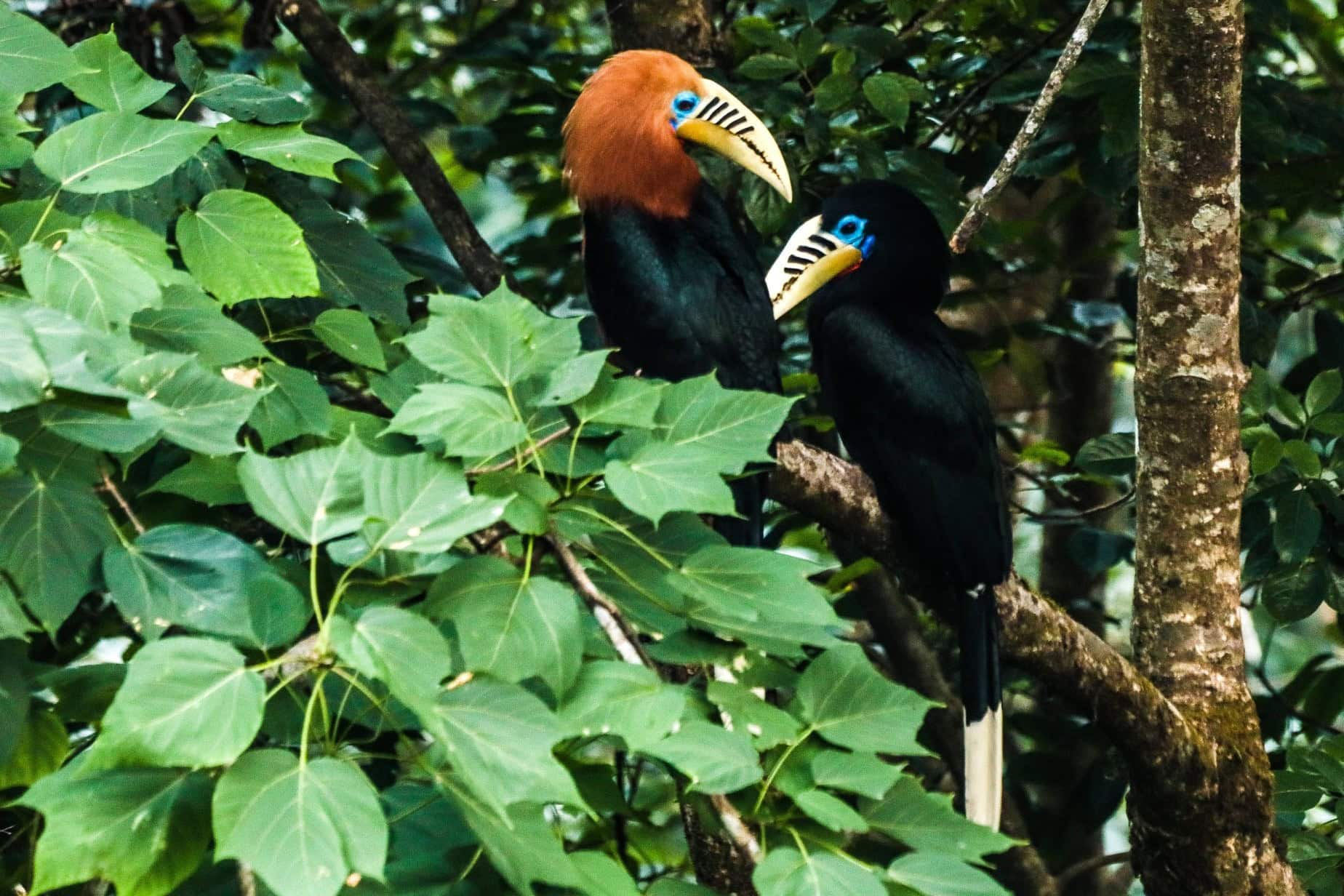
The rufous-necked hornbill is instantly recognizable by its vivid rufous-colored neck and head, which give the species its name. Males have a bright rufous neck, head, and underparts, paired with a shiny blue-black back, wings, and tail. Their large pale yellow bill carries a prominent casque, a hollow structure that helps produce calls and display dominance.
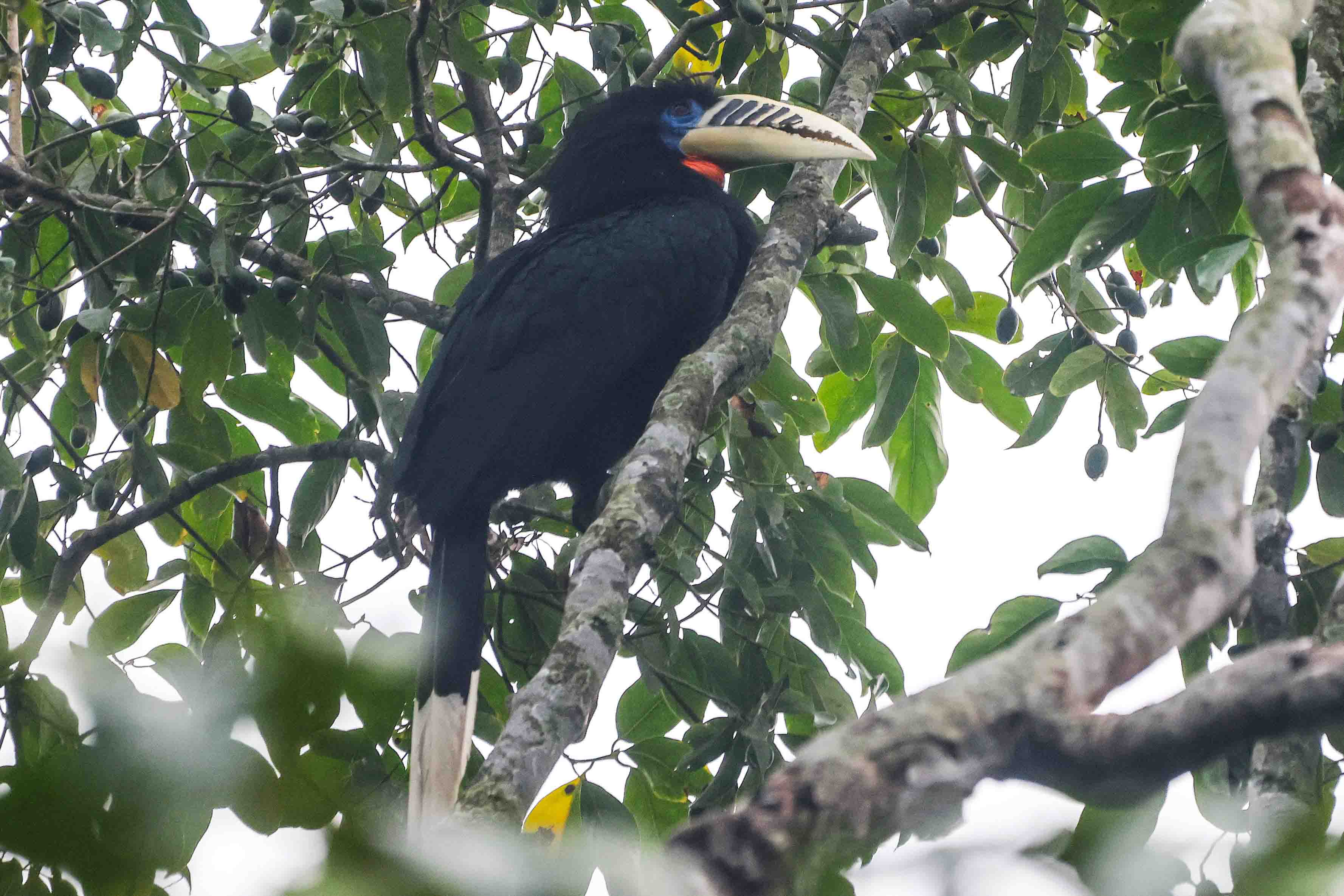
Females look different. They are almost entirely black, with a white-tipped tail and a bluish face patch, making sexual dimorphism very distinct. Juveniles resemble females but lack the casque, which develops gradually as they mature.
A fully grown rufous-necked hornbill measures about 100–120 cm in length with a wingspan that can exceed 150 cm. Their deep wingbeats and slow, gliding flight pattern are unmistakable, often heard before they are seen in dense forests.
Their bill is long and slightly curved, designed for plucking fruits, crushing seeds, and catching insects or small reptiles. The strong neck muscles support this heavy bill, allowing efficient foraging. The eyes, set deep within a bare patch of blue skin, give the bird a sharp and intelligent appearance.
In flight, the rufous-necked hornbill commands attention. Its rhythmic wingbeats echo through the forest canopy, signaling its presence long before sighting. Whether perched high on a fig tree or gliding across forest valleys, its beauty and grace make it one of the most majestic hornbills in Asia.
Pro Tip for Photographers: Look for them near fruiting trees during early morning or late afternoon. Their bright plumage and slow flight make them perfect subjects for close, detailed shots.
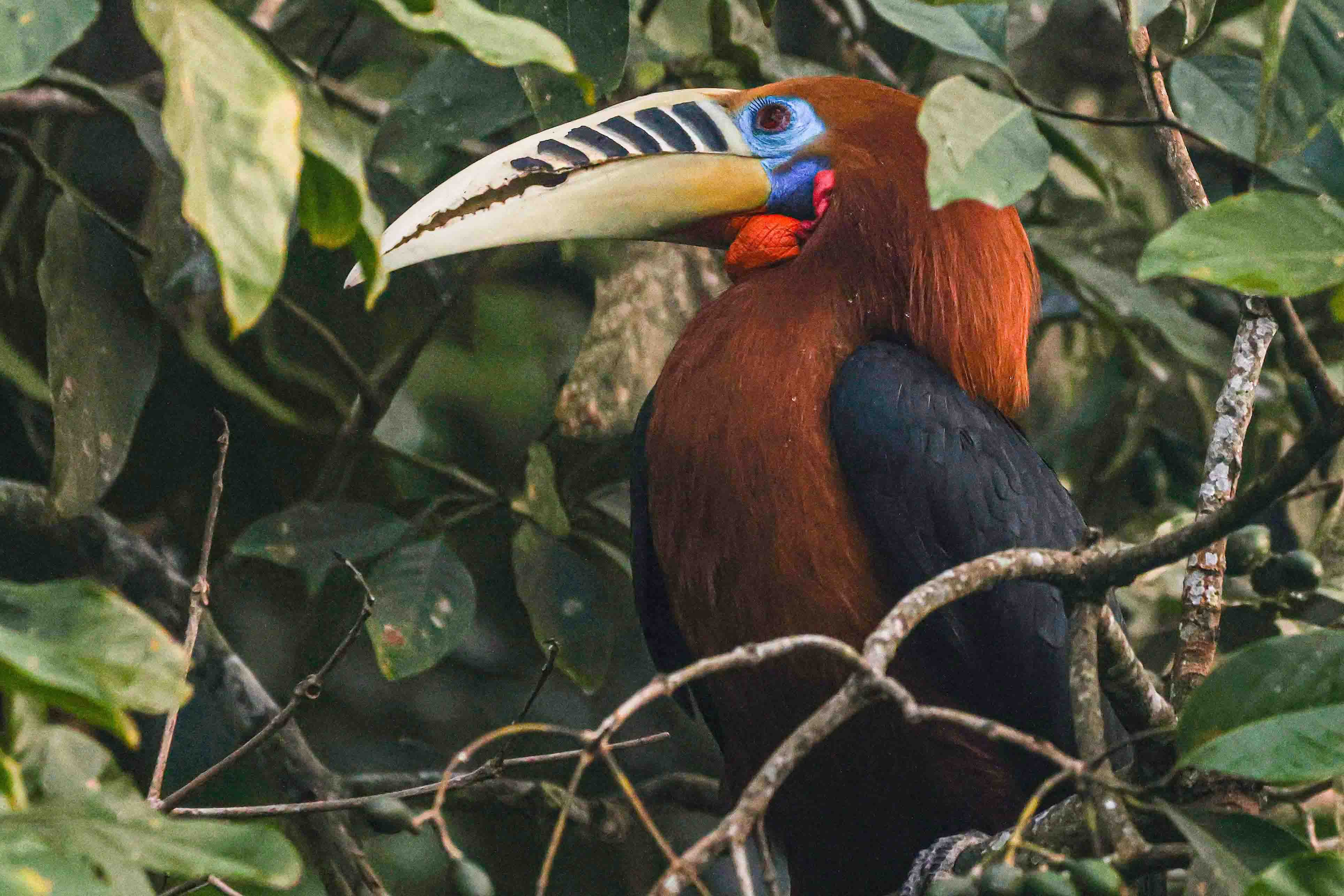
The Rufous-necked Hornbill thrives in evergreen and semi-evergreen forests rich in fruit-bearing trees. It usually lives between 200–1,800 meters above sea level, where tall, mature trees dominate. These habitats provide food, nesting cavities, and safe roosting spaces.
India: Strongholds include Latpanchar (Darjeeling), Arunachal Pradesh, Nagaland, and Assam. Latpanchar, the highest village in Mahananda Wildlife Sanctuary, has become a prime birding destination. Photographers flock here during the nesting season, when sightings are frequent and rewarding.
Bhutan: The species thrives in subtropical forests, serving as a key indicator of forest health.
Myanmar and Thailand: Populations occur in patchy forest corridors, often isolated by agriculture and logging.
The Rufous-necked Hornbill depends heavily on large old-growth trees with natural cavities for nesting. When these trees vanish due to logging or shifting cultivation, the species suffers. Unlike adaptable birds, hornbills cannot survive in fragmented habitats.
This dependence makes the Rufous-necked Hornbill highly vulnerable to deforestation. Protecting intact forests ensures the survival of both the hornbill and countless other species that share its home.
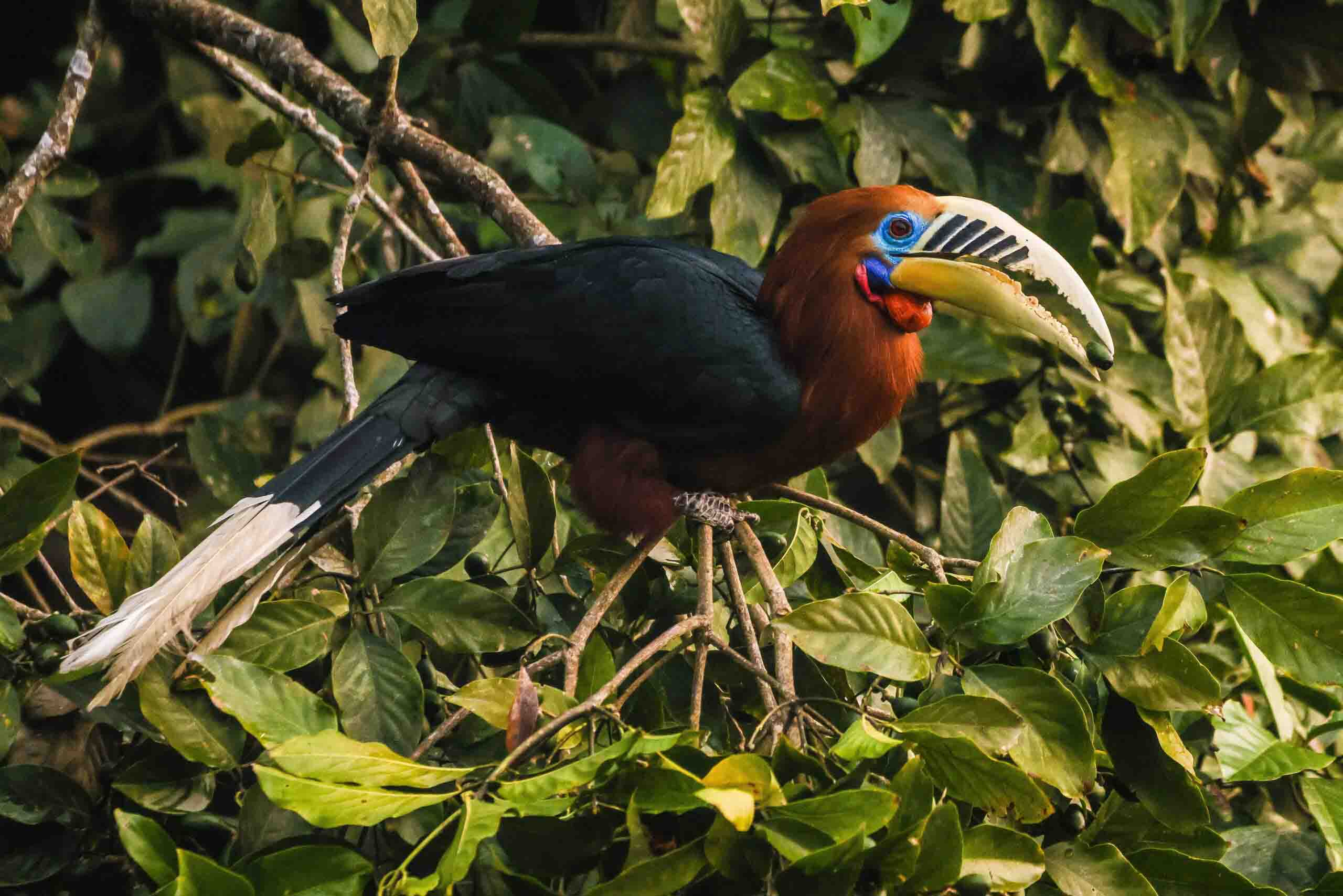
The Rufous-necked Hornbill is primarily frugivorous, making it one of the most important seed dispersers in the Eastern Himalayan forests. By feeding on a wide variety of fruits, it helps regenerate forest ecosystems and maintain biodiversity balance.
Primary Diet: Fleshy fruits such as figs, berries, nutmeg, and other native tree species form the bulk of its diet.
Occasional Food: Although fruits dominate, the Rufous-necked Hornbill also consumes insects, small reptiles, and even bird eggs, especially during the breeding season when extra protein is essential.
Breeding Behavior: During nesting, males increase their intake of protein-rich prey and deliver a mix of fruits and small animals to the female and chicks sealed inside tree cavities.
Ecological Role: As the hornbill flies long distances carrying seeds in its gut, it scatters them across the forest floor, ensuring natural regeneration and continuity of tree populations.
This unique feeding and behavioral pattern highlights the Rufous-necked Hornbill’s role as a keystone species in forest health and ecosystem balance.
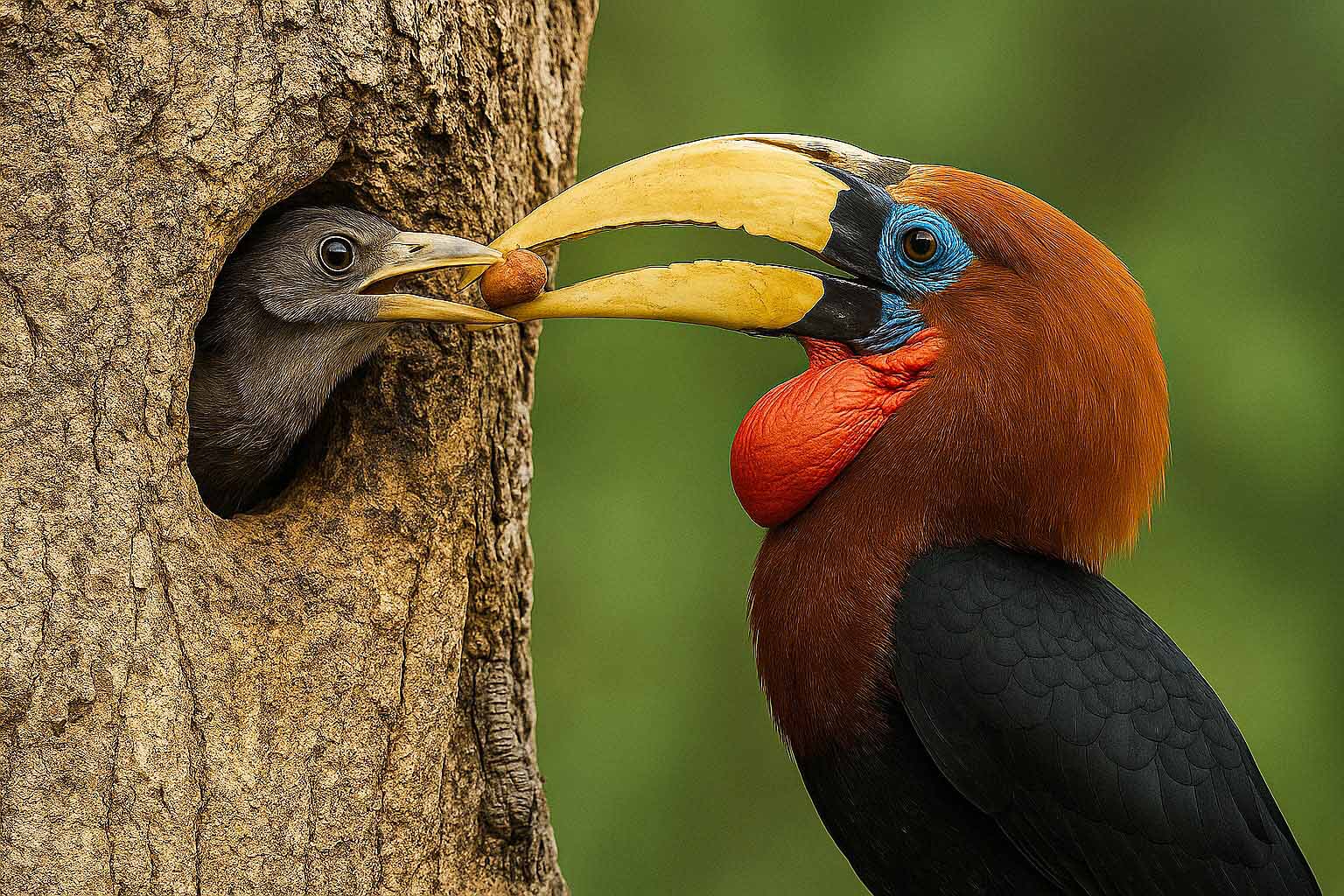
The Rufous-necked Hornbill follows one of the most remarkable nesting strategies in the bird world.
Breeding Season: Nesting usually occurs from April to July, with activity peaking in the summer months.
Nest Site: They choose large tree cavities located 10–30 meters above the ground. These mature trees are essential for their survival.
Sealing the Nest: The female enters the cavity, and the male helps seal it using mud, fruit pulp, and droppings. Only a narrow slit remains open.
Incubation: The female stays sealed inside for 75–90 days. She lays 1–2 eggs and cares for them in safety.
Food Supply: The male tirelessly delivers fruits, insects, and small prey through the slit. This food sustains both the female and the chicks.
Molting and Emergence: The female molts her feathers during this time. Once the chicks grow, she breaks out, and both parents work together to feed them until independence.
This extraordinary breeding behavior protects the Rufous-necked Hornbill family from predators. However, it also ties them to habitats with old-growth forests. Logging and deforestation reduce these critical nesting trees, placing the species under increasing threat.
Conserving large trees is vital. Without them, the Rufous-necked Hornbill cannot reproduce successfully, and forest regeneration suffers. Their breeding cycle highlights the deep link between hornbill survival and healthy forests.
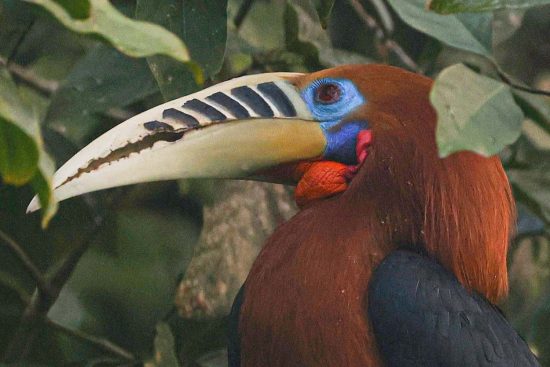
The Rufous-necked Hornbill (Aceros nipalensis) is currently classified as Vulnerable on the IUCN Red List, highlighting the urgent need for conservation. Once widely distributed across the forests of the Eastern Himalayas and Southeast Asia, its numbers have declined drastically due to a combination of habitat loss, hunting, and climate pressures. This magnificent bird, with its vivid rufous head and striking casque, is not just a symbol of wilderness but also a crucial seed disperser that sustains forest ecosystems. Protecting the Rufous-necked Hornbill means protecting entire landscapes of biodiversity.
Major Threats to the Rufous-necked Hornbill
Deforestation and Habitat Fragmentation: Large-scale logging, shifting cultivation, and infrastructure projects in Northeast India, Bhutan, and Myanmar are destroying the tall, mature forests the species depends on.
Loss of Nesting Trees: These hornbills require centuries-old, tall trees with natural cavities for nesting. The felling of such trees has created a serious shortage of breeding sites.
Hunting and Poaching: Traditionally hunted for their casque, feathers, and meat, Rufous-necked Hornbills still face local hunting pressures despite growing awareness campaigns.
Climate Change: Changes in fruiting cycles due to rising temperatures and erratic rainfall threaten the bird’s primary food source, impacting both survival and reproduction.
Conservation Efforts and Initiatives
Despite these challenges, several dedicated programs are helping to secure the future of the Rufous-necked Hornbill:
Hornbill Nest Adoption Program (Nagaland): Local communities and NGOs work together to protect hornbill nests by monitoring, preventing hunting, and raising awareness.
Community-Based Conservation in Arunachal Pradesh: Villagers actively reduce hunting and promote eco-tourism, creating alternative income sources while safeguarding hornbills.
Protected Areas: Key strongholds for the species include Pakke Tiger Reserve, Eaglenest Wildlife Sanctuary, Namdapha National Park, and Mahananda Wildlife Sanctuary.
Ecotourism and Awareness Campaigns: Birdwatching tourism in places like Latpanchar (Darjeeling) and Pakke Reserve has turned the Rufous-necked Hornbill into an ambassador for conservation.
Research and Monitoring: Continuous studies on hornbill nesting, feeding, and population trends are helping policymakers design better conservation strategies.
Why Conservation Matters
The Rufous-necked Hornbill is more than just a bird—it is a keystone species. By dispersing seeds of large forest trees, it ensures the survival of diverse Himalayan ecosystems. Protecting this hornbill safeguards not only its future but also the livelihoods of forest-dependent communities, the balance of fragile mountain ecosystems, and the overall biodiversity of the Eastern Himalayas.
The Rufous-necked Hornbill holds a special place in the cultural identity of communities across Northeast India. In regions like Nagaland and Arunachal Pradesh, the bird is revered as a symbol of fertility, strength, and continuity of life. Its striking casque and feathers were historically used in traditional attire and ornaments, linking the bird deeply to tribal heritage.
Traditional Beliefs: Among Naga and Arunachali tribes, hornbills are often featured in folklore, songs, and rituals symbolizing prosperity and resilience.
Challenges of the Past: Unfortunately, this cultural reverence once came with heavy hunting pressure, as the casque and feathers were highly prized.
Modern Conservation Shift: Today, cultural festivals such as Nagaland’s Hornbill Festival celebrate the bird as a living icon. These events raise awareness, encourage eco-tourism, and transform community perception from hunters to protectors.
Local Pride: The Rufous-necked Hornbill is now a flagship species for conservation in the Eastern Himalayas, bridging traditional heritage with modern ecological awareness.
By combining ecological importance with cultural symbolism, the Rufous-necked Hornbill serves as a powerful reminder of the bond between people and nature.
Photographing the Rufous-necked Hornbill is both challenging and deeply rewarding. Its shy behavior, tall forest habitat, and vibrant plumage make it a dream subject for bird photographers. To help you succeed, here are field-tested, SEO-rich photography tips:
1. Best Locations for Rufous-necked Hornbill Photography
Latpanchar (Darjeeling, West Bengal): Famous for nesting season (April–July).
Pakke Tiger Reserve & Eaglenest Wildlife Sanctuary, Arunachal Pradesh: Known hotspots for hornbill sightings.
Namdapha National Park & Nameri National Park: Dense forest settings ideal for capturing natural behaviors.
👉 Pro Tip: Focus on fruiting fig trees and nesting cavities — these are hotspots where Rufous-necked Hornbills repeatedly return, offering the best chances for action shots.
2. Best Time for Photography
Early mornings (6–9 AM): Soft golden light, active feeding flights.
Late afternoons (3–5 PM): Gentle light, more predictable perching behavior.
Breeding season (April–July): Males deliver food to females and chicks — dramatic photo opportunities.
3. Recommended Gear
Camera: DSLR or mirrorless with fast autofocus and high burst rate.
Lenses:
- 400mm–600mm telephoto for close-ups of casque and feeding.
- 70–200mm for environmental storytelling shots of hornbills against Himalayan forests.
Tripod/Monopod: Essential for stability during long waits near nesting trees.
Binoculars: Useful for spotting hornbills before lifting your camera.
4. Ideal Camera Settings
Shutter Speed: 1/2000s or faster for in-flight captures.
Aperture: f/5.6–f/8 for sharp focus and depth of field.
ISO: 400–1600 depending on forest light.
Focus Mode: Continuous autofocus (AI Servo/AF-C).
Burst Mode: Always ON to capture wing beats and feeding sequences.
5. Field Techniques
Listen before you see: Rufous-necked Hornbills have loud wing beats and calls that echo through the canopy.
Stay patient & hidden: Use camouflage clothing or natural cover; sudden movements will scare them away.
Work with guides: Local bird guides in Arunachal and Latpanchar know exact nesting trees and fruiting zones.
Avoid disturbance: Never approach too close to active nests — use long lenses instead.
6. Creative Photography Ideas
In-flight drama: Capture hornbills gliding between canopy layers.
Courtship feeding: A male offering fruit to a female makes a powerful frame.
Nesting behavior: Male delivering food at sealed cavities (shoot from distance).
Silhouettes: Against sunrise or sunset skies for an artistic composition.
Environmental portraits: Show hornbills perched against tall Himalayan forests to tell a conservation story.
7. Post-processing Tips
Enhance contrast: Bring out casque ridges and plumage textures.
Color correction: Maintain natural tones — hornbills already have striking colors.
Selective sharpening: Focus on the casque, eye, and bill for impact.
Noise reduction: Forest photography often requires higher ISO — clean up carefully.
8. Ethical Photography
The Rufous-necked Hornbill is a Vulnerable species. Responsible practices are non-negotiable:
Never use playback calls or baiting.
Avoid flash, especially near nests.
Keep a safe distance and let behavior unfold naturally.
Share your photos with awareness captions to promote conservation.
✨ With patience, preparation, and ethical practices, your Rufous-necked Hornbill photography can not only create breathtaking images but also contribute to its global conservation story.
Documenting the Rufous-necked Hornbill creates more than memories—it drives awareness, conservation, science, and local livelihoods.
Awareness: Your photos show the Rufous-necked Hornbill’s rarity and declining numbers, urging people to act for its survival.
Conservation: Images support campaigns, influence forest policies, and encourage eco-tourism that funds habitat protection.
Science: Every documented sighting helps researchers map populations, track migration, and study nesting behavior.
Community: Bird photography brings eco-tourists. Local guides earn income, reducing hunting pressure and promoting sustainable conservation.
When you share photos of the Rufous-necked Hornbill, you spotlight a vulnerable species. Platforms like NatGeo and BBC Earth often showcase striking wildlife images, expanding global reach. Your efforts not only celebrate the bird’s beauty but also strengthen campaigns to preserve the Eastern Himalayan forests it calls home.
The survival of the Rufous-necked Hornbill depends on people working together. You can make a difference:
Support NGOs and Eco-Tourism: Fund groups that protect hornbill habitats and join eco-tourism projects in Northeast India.
Promote Awareness: Share photographs, blogs, and stories of the Rufous-necked Hornbill on social media to inspire conservation.
Choose Responsibly: Avoid buying products linked to deforestation, such as unsustainable timber and palm oil.
Adopt a Nest: Join Hornbill Nest Adoption Programs that protect nesting trees and ensure chick survival.
Plant Native Trees: Restore degraded areas with fig, nutmeg, and other fruiting trees preferred by hornbills.
Educate Communities: Encourage local schools and villages to celebrate the hornbill as a cultural and ecological icon.
Support Research: Back scientific studies that monitor hornbill populations and track their seasonal movements.
Each step strengthens conservation and secures a future for the Rufous-necked Hornbill in the Eastern Himalayas.
Q1. Where is the Rufous-necked Hornbill found?
The Rufous-necked Hornbill (Aceros nipalensis) is found in the Eastern Himalayas and Southeast Asia. In India, it occurs in Latpanchar (Darjeeling), Arunachal Pradesh, Nagaland, and Assam. It also inhabits Bhutan, Myanmar, and northern Thailand, thriving in evergreen and semi-evergreen forests between 200–1,800 meters.
Q2. Why is the Rufous-necked Hornbill important to the ecosystem?
The Rufous-necked Hornbill is a keystone seed disperser. By feeding on large fruits like figs and nutmeg and carrying seeds across long distances, it plays a vital role in forest regeneration and biodiversity conservation. Without hornbills, many tree species would struggle to reproduce naturally.
Q3. What makes the Rufous-necked Hornbill unique?
This species is unique for its sexual dimorphism — males have a bright rufous-orange neck and head, while females are entirely black. Their extraordinary nesting behavior, where the female seals herself inside a tree cavity for 3 months, is one of the most fascinating adaptations in the bird world.
Q4. Why is the Rufous-necked Hornbill classified as Vulnerable?
The IUCN Red List classifies it as Vulnerable due to deforestation, habitat fragmentation, and hunting for meat and feathers. The loss of old-growth trees, essential for nesting, poses the greatest threat to its survival.
Q5. When is the best time to photograph the Rufous-necked Hornbill?
The best time to photograph this hornbill is during the breeding season (April–July) when males actively deliver food to nesting females and chicks. Early mornings and late afternoons provide ideal light and higher chances of sightings around fruiting trees.
Q6. How can photographers and birdwatchers help conserve this species?
By practicing ethical photography, supporting community-based conservation programs like the Hornbill Nest Adoption Program, and sharing awareness-driven images, photographers can directly contribute to the protection of the Rufous-necked Hornbill and its forest habitats.
The Rufous-necked Hornbill is more than just a strikingly beautiful bird — it is a guardian of the Eastern Himalayan forests, a vital seed disperser, and a cultural symbol for indigenous communities. Its survival is directly linked to the health of evergreen forests, which provide life to countless other species.
Protecting the Rufous-necked Hornbill means preserving entire ecosystems that sustain biodiversity, mitigate climate change, and support local communities. With threats like deforestation and hunting looming large, urgent conservation action is essential.
As a birder, wildlife photographer, or nature enthusiast, you hold the power to make a difference. Every photograph, article, or awareness campaign adds momentum to the fight for its survival. The next time you trek through Latpanchar, Pakke, or Eaglenest, remember — capturing the Rufous-necked Hornbill on camera is not just about art, but also about storytelling for conservation.
🌿 In saving the Rufous-necked Hornbill, we save the forests — and in saving the forests, we save ourselves.
Recent Comments