

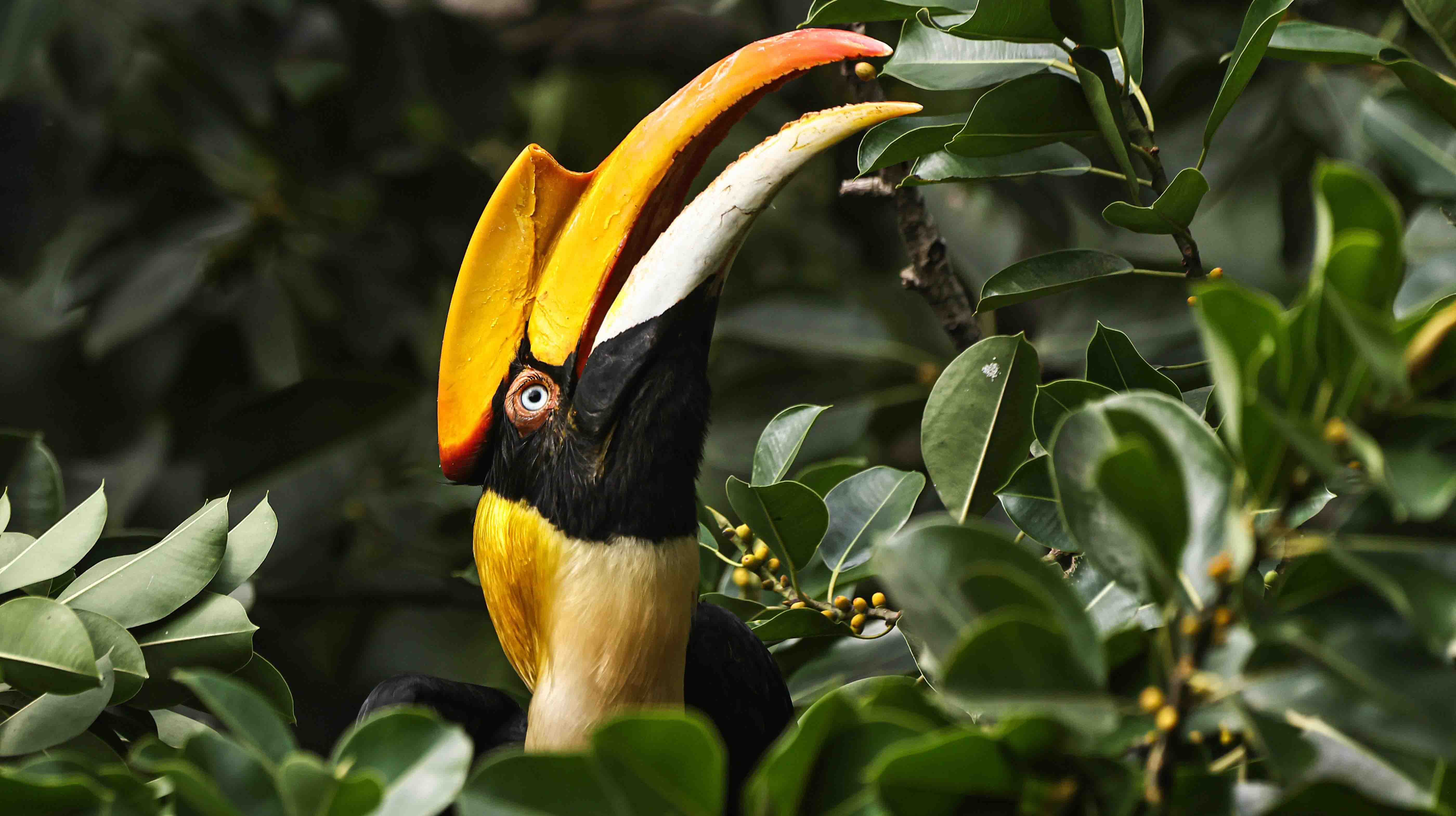
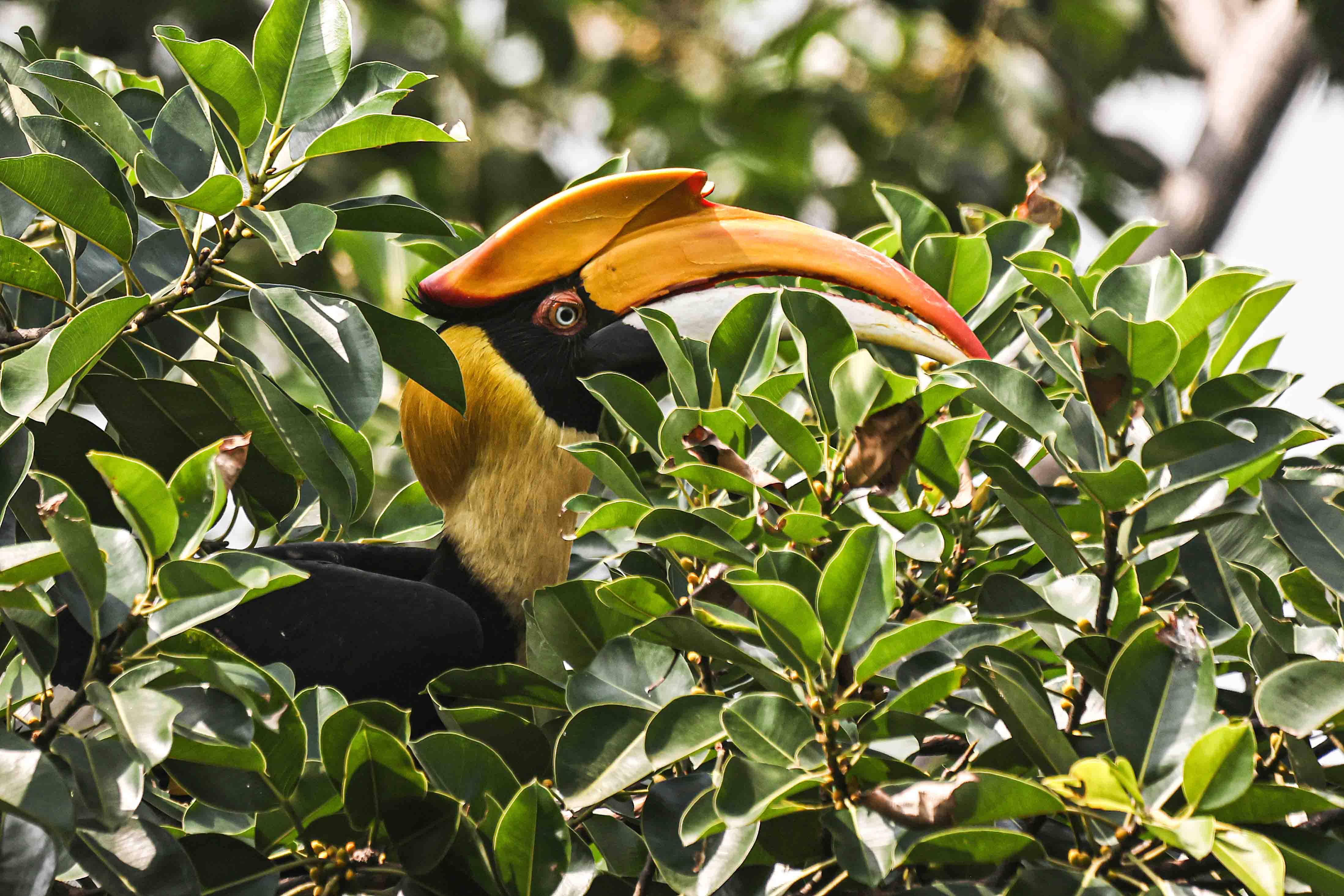
The Great Indian Hornbill (Buceros bicornis) is one of the most iconic and charismatic birds of the Indian subcontinent and Southeast Asia. With its massive yellow casque, powerful wingbeats, and striking plumage, it has fascinated birdwatchers, photographers, and forest communities for centuries. Often called the “Guardian of the Forest Canopy,” this hornbill plays a vital role in maintaining tropical ecosystems by dispersing seeds of fruiting trees like figs, ensuring the regeneration of rainforests.
Beyond its ecological role, the Great Indian Hornbill is deeply embedded in indigenous folklore, tribal art, and conservation movements. Sadly, its population is under pressure due to deforestation, hunting, and habitat fragmentation, making it a Vulnerable species on the IUCN Red List.
In this article, we’ll explore everything about this magnificent bird — from its physical features and unique nesting habits to cultural significance, conservation challenges, and expert photography tips for capturing it in the wild.
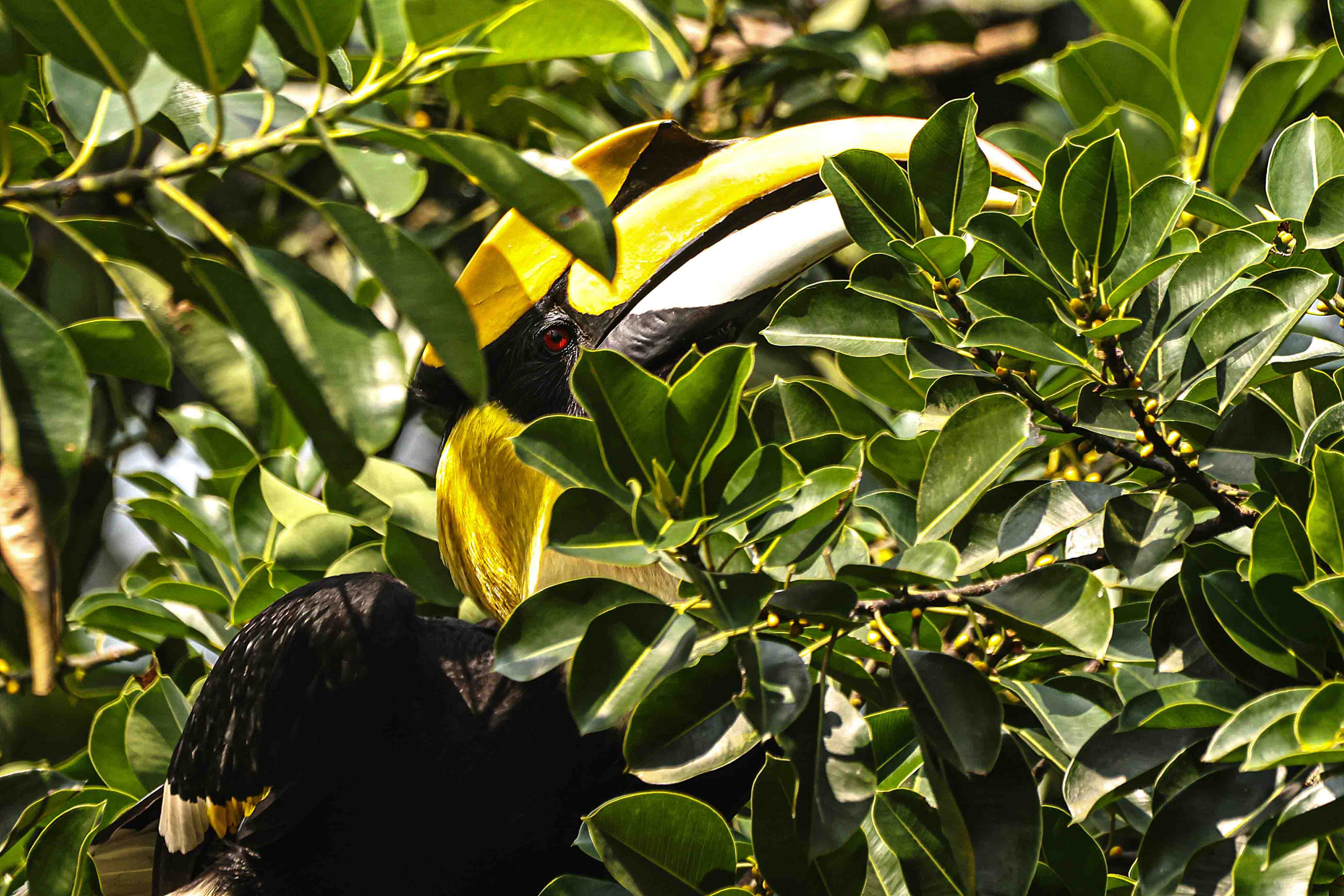
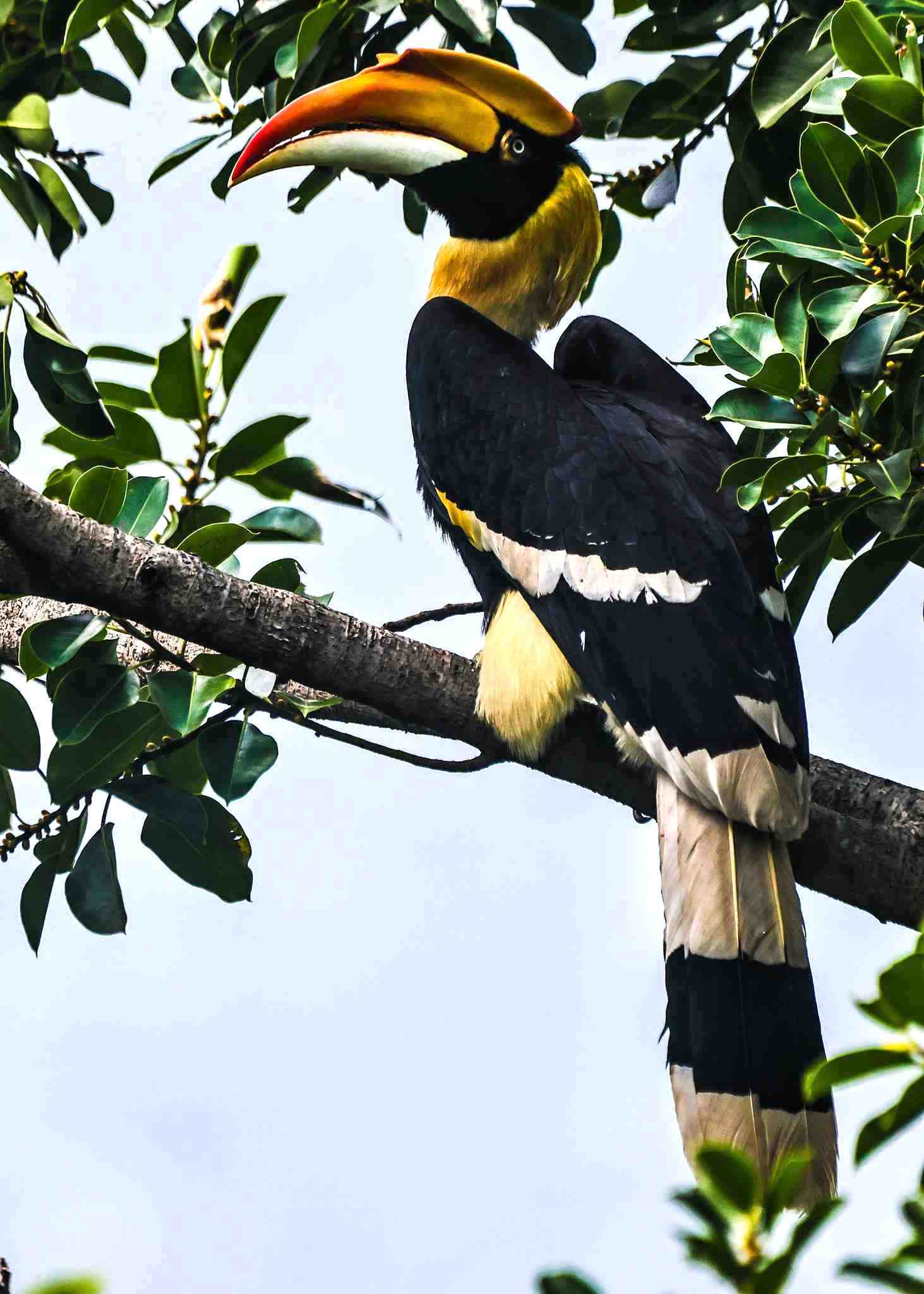
Male
The Great Indian Hornbill thrives in the dense canopies of tropical and subtropical forests, where tall, mature trees provide both food and safe nesting cavities. These forests are essential for their survival, as the species relies heavily on fruit-bearing trees, especially figs, which dominate its diet.
Western Ghats (South India): Found in Kerala, Karnataka, and Tamil Nadu, the Great Indian Hornbill is most commonly associated with the evergreen and semi-evergreen forests of this biodiversity hotspot.
Northeast India: States like Assam, Arunachal Pradesh, Nagaland, and Manipur harbor rich hornbill diversity. Here, the Great Indian Hornbill coexists with other hornbill species, making the region a critical stronghold for their population.
Southeast Asia: Beyond India, the Great Indian Hornbill is distributed across Thailand, Myanmar, Malaysia, and Indonesia, where dense tropical rainforests support their feeding and breeding needs.
These hornbills prefer undisturbed, old-growth forests with towering trees that can host natural cavities for nesting. While their range occasionally overlaps with human settlements, the Great Indian Hornbill avoids degraded habitats and is highly sensitive to deforestation.
The species’ dependence on large forest tracts makes it a powerful indicator of forest health. Protecting its habitat is not only vital for the Great Indian Hornbill but also for countless other wildlife species that share the same ecosystem.
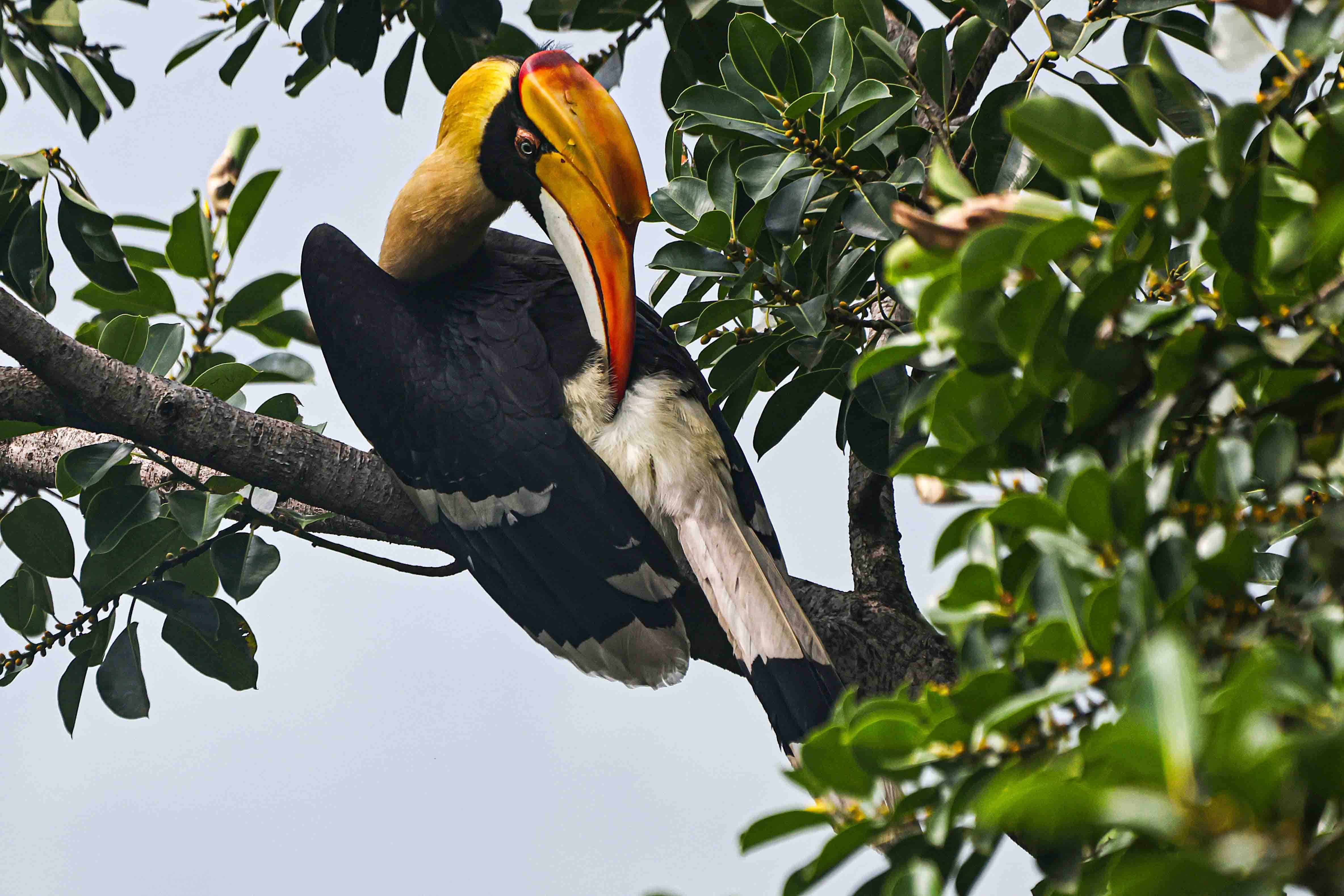
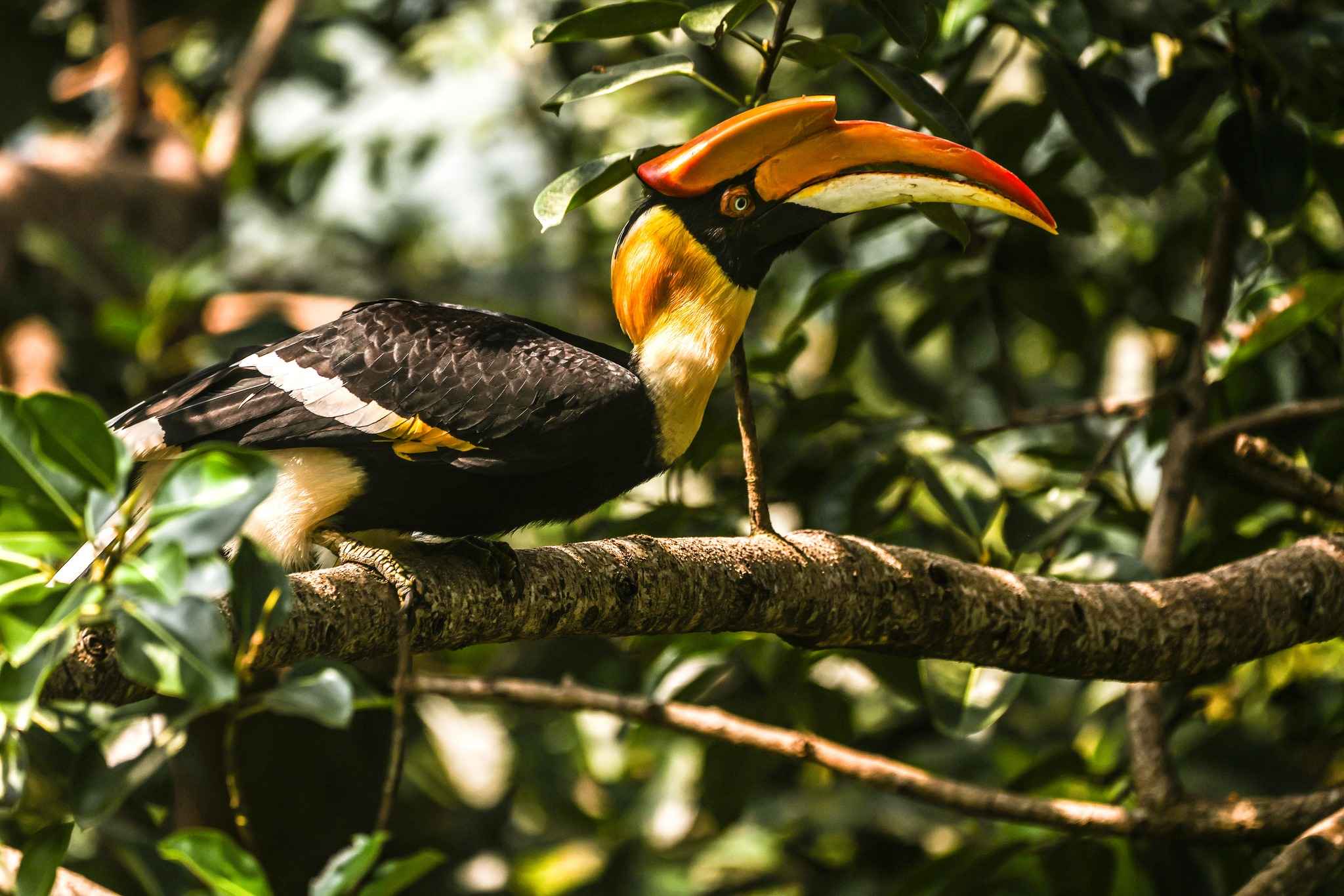
Female
The Great Indian Hornbill is one of the largest hornbills in Asia. Its majestic size and striking appearance make it unforgettable in the wild.
Size: Adults grow up to 120 cm long with a wingspan of 1.5–1.8 meters. Their massive build dominates the forest canopy.
Beak and Casque: They feature a large, curved yellow bill with a bright casque. The casque amplifies calls and signals fitness during mating.
Plumage: Their plumage is bold and contrasting — black and white feathers highlighted with golden-yellow on the wings and tail.
Male vs. Female: Males have larger casques and more vibrant colors. Females show smaller casques with less vivid hues.
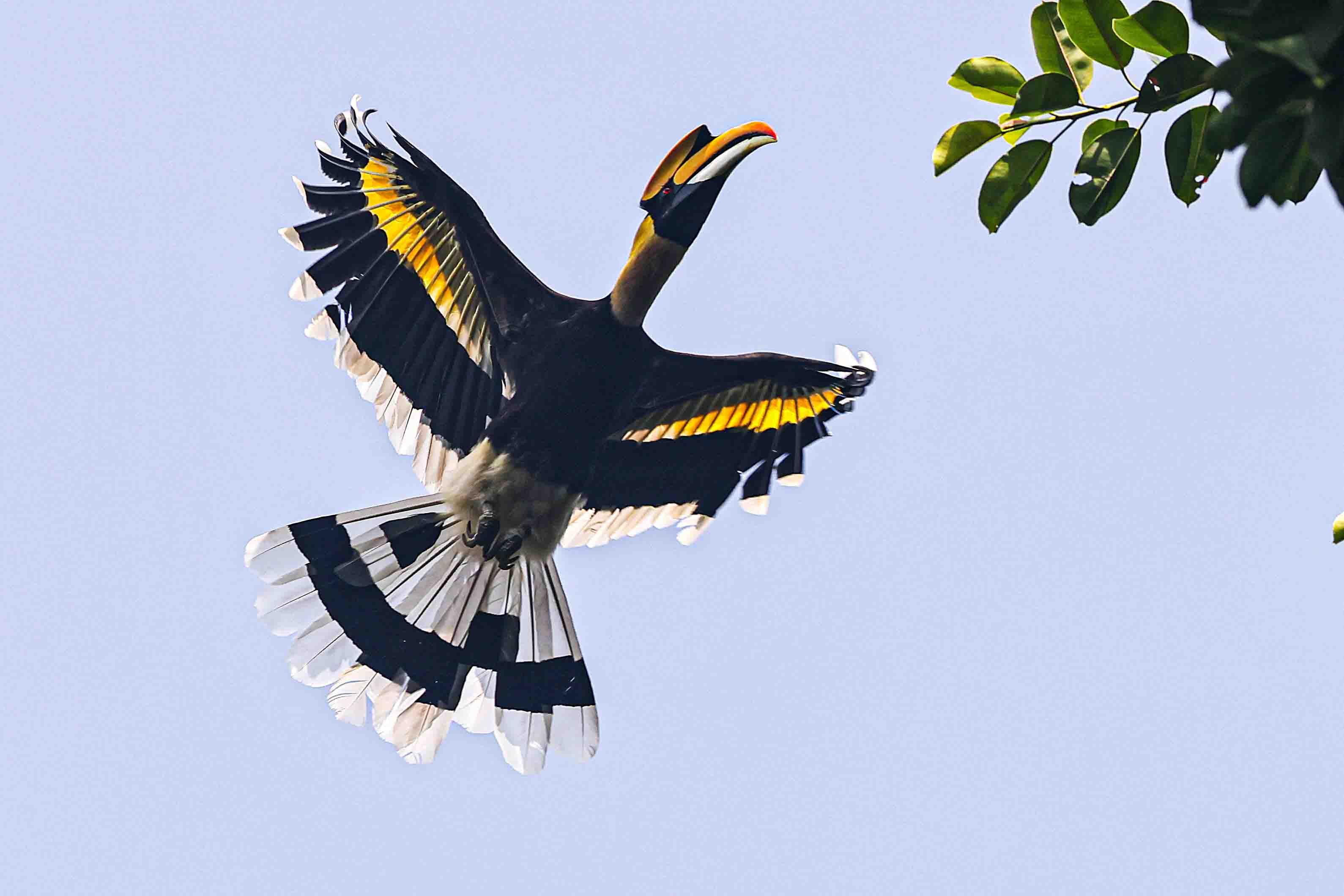
Flight: Their powerful wingbeats create a loud whooshing sound, often compared to a helicopter passing through the forest.
Calls: They produce deep grunts, roars, and barking notes that echo across the treetops.
Social Life: The Great Indian Hornbill is monogamous. They are usually seen in pairs or small family groups. At fruiting trees, larger flocks may gather to feed.
Adaptations: Their casque, strong wings, and curved beaks give them dominance in the canopy and aid survival.
The Great Indian Hornbill’s physical traits reflect its strength, adaptability, and role as a keystone species in tropical forests.
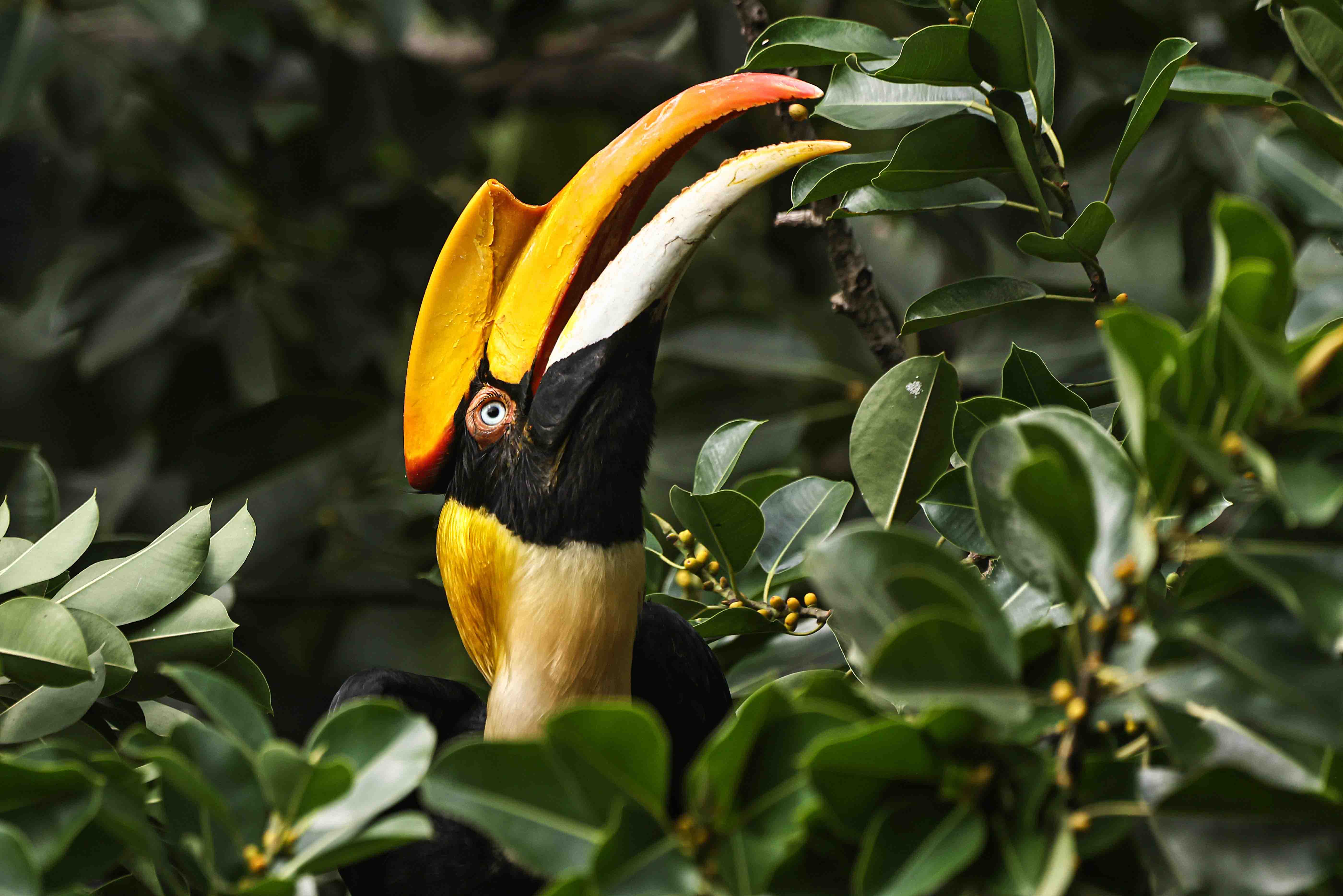
The Great Indian Hornbill is primarily frugivorous, playing a vital role in shaping the tropical rainforests of India and Southeast Asia. Its favorite food is figs, which provide both nutrition and water, especially during dry seasons. However, its diet is not limited to figs alone.
Fruits & Berries: Along with figs, the Great Indian Hornbill consumes a wide variety of berries, drupes, and other fleshy wild fruits, making it a key fruit-eating bird in the canopy.
Animal Prey: While fruits dominate their diet, they occasionally feed on insects, small reptiles, rodents, and even bird eggs, especially when chicks need protein-rich food during the breeding season.
Keystone Seed Disperser: By swallowing fruits whole and flying long distances before excreting the seeds, the Great Indian Hornbill acts as a powerful “farmer of the forest.” This process ensures forest regeneration, supports biodiversity, and maintains the balance of tropical ecosystems.
Ecological Importance: Without the Great Indian Hornbill’s seed dispersal, many tree species would struggle to reproduce and spread, threatening the very survival of rainforests.
In essence, the Great Indian Hornbill’s feeding behavior not only sustains its own survival but also underpins the health and continuity of entire forest landscapes, making it an irreplaceable keystone species.
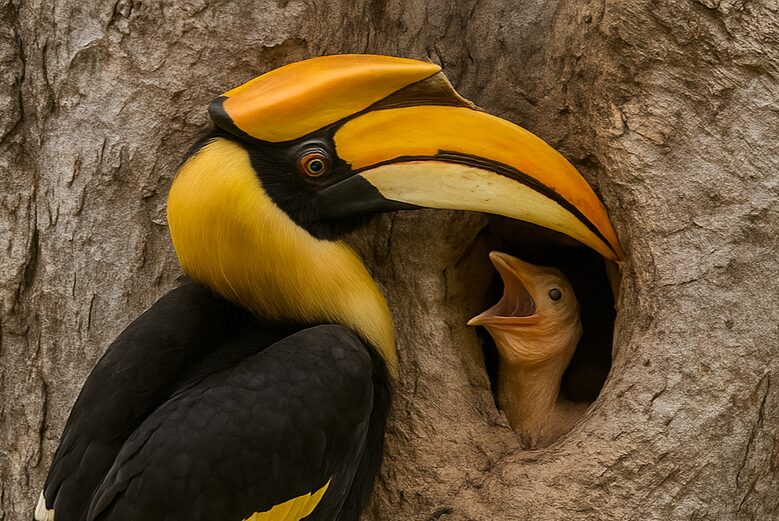
The Great Indian Hornbill shows one of the most remarkable nesting behaviors in the bird world.
Nesting Season: Breeding usually happens from January to April, when fig trees fruit abundantly.
Tree Cavity: The female enters a large natural cavity of a tall forest tree. She seals the entrance with mud, droppings, and food pulp. Only a narrow slit remains open.
Female Confinement: She stays inside for 3–4 months, safe from predators but completely dependent on the male.
Male’s Role: The male works tirelessly. He delivers fruits, insects, and small animals through the slit to feed both the female and chicks.
Chicks: Once the chicks grow, the female breaks the seal. She then helps the male feed the young until they are ready to fledge.
Sexual Dimorphism: Males and females differ in appearance. Males have larger casques and red eyes, while females usually have smaller casques and pale bluish-white eyes.
Conservation Note: This nesting strategy makes them highly vulnerable. If nesting trees are cut, the female and chicks lose their only protection.
The Great Indian Hornbill’s breeding behavior highlights its dependence on old-growth forests and the critical need for conservation.
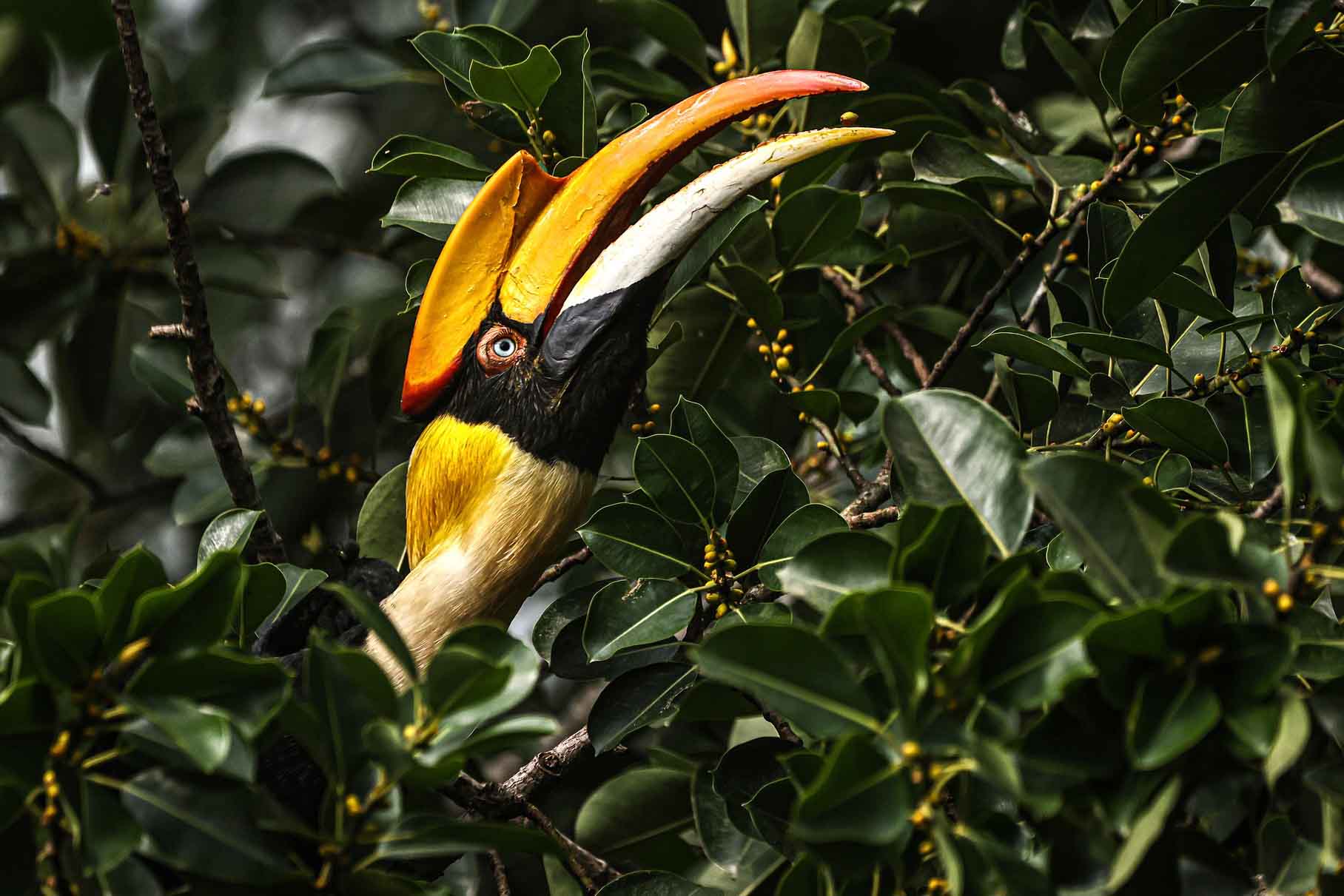
Photographing the Great Indian Hornbill is one of the most rewarding experiences in wildlife photography. Its sheer size, striking casque, and dramatic flight make it a dream subject for bird photographers. However, this species is shy, lives in dense forests, and requires patience, skill, and planning to capture.
Below are expert, field-tested tips to help you photograph this magnificent bird successfully:
1. Best Locations for Hornbill Photography
Western Ghats: Periyar Tiger Reserve, Thattekad Bird Sanctuary, Dandeli Wildlife Sanctuary.
Northeast India: Pakke Tiger Reserve, Namdapha National Park, Kaziranga National Park.
Southeast Asia: Khao Sok (Thailand) and Taman Negara (Malaysia).
👉 Pro Tip: Focus on fruiting fig trees — hornbills revisit them regularly, providing multiple photography opportunities.
2. Best Time for Photography
Breeding season (January–April): Male hornbills are most active as they bring food to females sealed in nesting cavities.
Early morning & late afternoon: Offers soft golden light, more bird activity, and better chances for clean shots in low-light forests.
3. Recommended Gear
Camera: DSLR or mirrorless with fast autofocus.
Lenses:
- 400mm–600mm telephoto for close-up details.
- 70–200mm for environmental and storytelling shots.
Tripod/Monopod: For long waits near fruiting trees.
Binoculars: Essential for spotting before lifting your camera.
4. Camera Settings for Sharp Shots
Shutter Speed: 1/2000s or faster for flight photography.
Aperture: f/5.6–f/8 for sharpness and depth of field.
ISO: 400–1600 depending on canopy light.
Focus Mode: Continuous autofocus (AI-Servo/AF-C).
Burst Mode: Always ON to capture wing flaps or feeding action.
5. Field Techniques
Listen before you see: Their loud wing beats and grunting calls often give away their location.
Position wisely: Stay near nesting trees or salt licks without disturbing them.
Use natural hides: Camouflage clothing, blinds, or tree cover work best.
Stay patient: Sometimes you may wait hours for just a few seconds of action.
6. Creative Photography Ideas
In-flight drama: Capture hornbills soaring across the canopy with wings wide open.
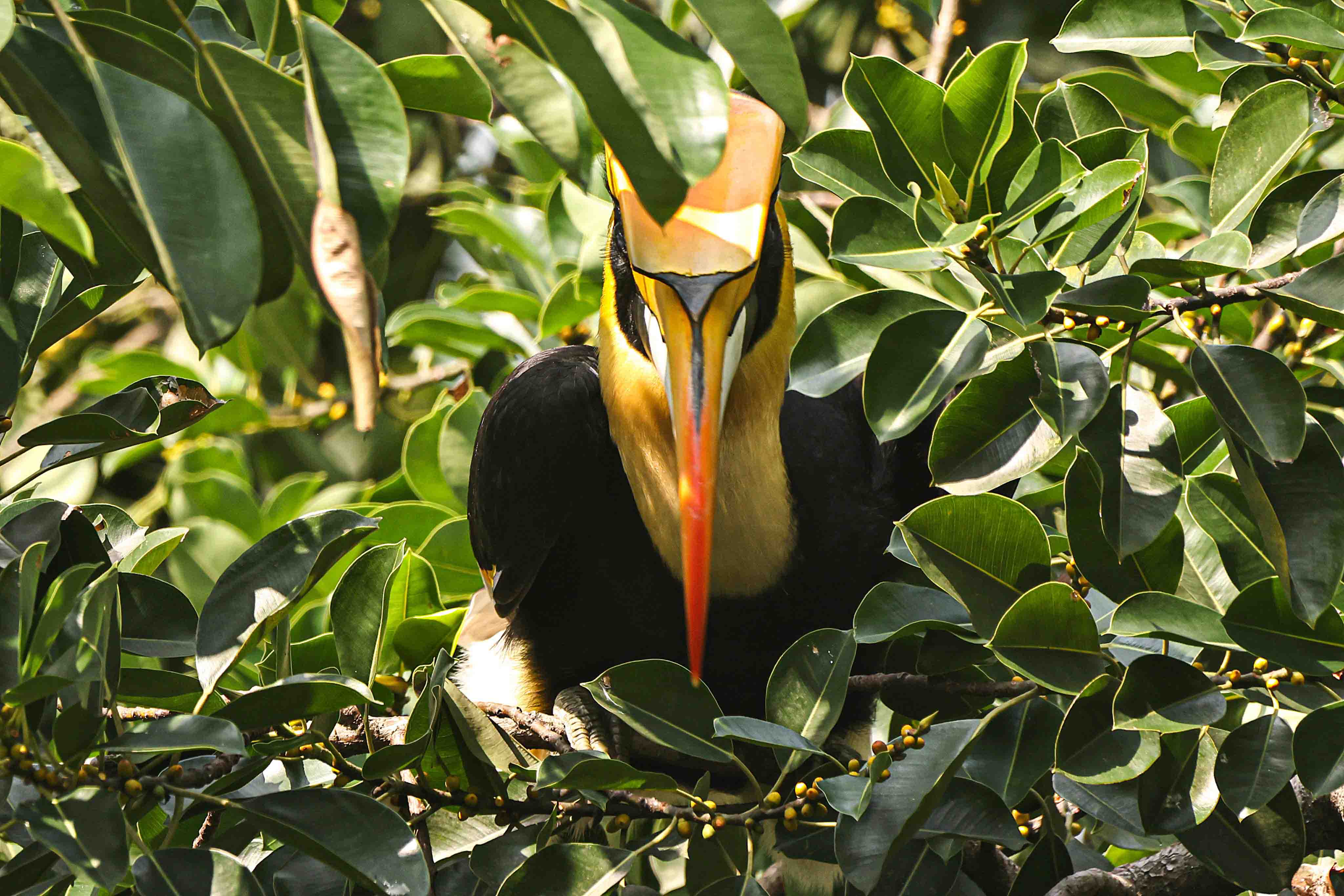
Close-up portraits: Focus on the casque and striking eyes.
Environmental storytelling: Frame hornbills perched on tall trees or fruiting figs.
Silhouette shots: Against sunrise or sunset skies for artistic impact.
Interaction moments: Males feeding females at nesting sites create rare, powerful frames.
7. Post-processing Tips
Enhance contrast: To bring out casque details and plumage texture.
Color balance: Keep tones natural — hornbills already have dramatic colors.
Selective sharpening: Apply to the eye and casque for visual impact.
Noise reduction: Especially in forest low-light conditions.
8. Ethical Photography
The Great Indian Hornbill is a Vulnerable species. Respecting its space is just as important as capturing the perfect shot.
Never disturb nesting trees.
Avoid playback calls or baiting.
Maintain a safe distance and let natural behavior unfold.
✨ With the right patience, gear, and respect for the bird’s habitat, your photographs will not only showcase the beauty of the Great Indian Hornbill but also inspire others to protect this majestic species.
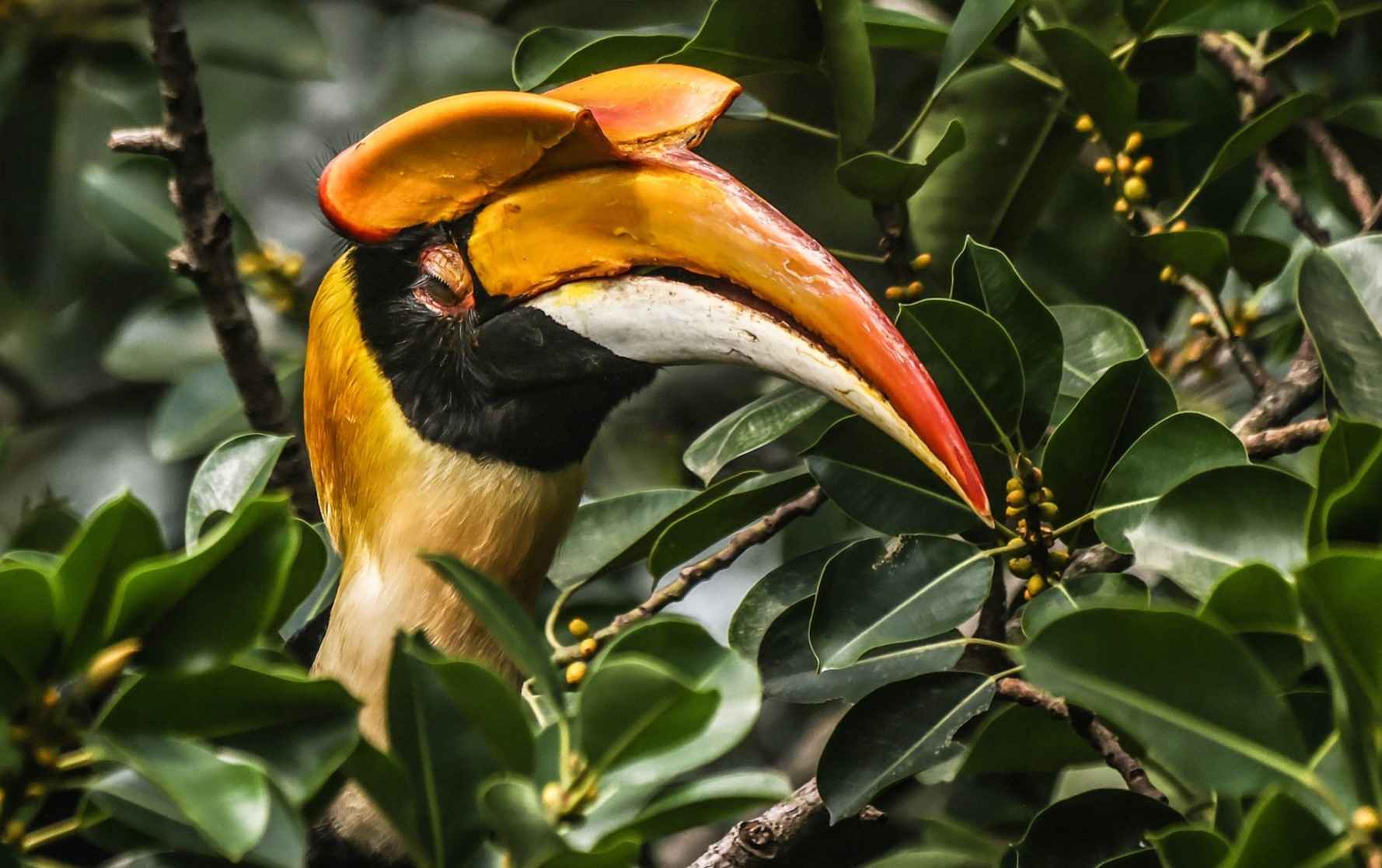
The Great Indian Hornbill (Buceros bicornis), one of the most iconic hornbills of the Indian subcontinent, is currently listed as Vulnerable on the IUCN Red List. This classification reflects a worrying decline in its population, primarily due to human activities that are rapidly degrading its forest habitats. Known for its massive casque, booming calls, and ecological importance as a seed disperser, the Great Indian Hornbill is a keystone species in tropical and subtropical forests. Protecting it means safeguarding entire ecosystems that support countless other forms of life.
Major Threats Facing the Great Indian Hornbill
Habitat Loss and Deforestation: Expanding agriculture, large-scale logging, and conversion of forests into plantations are destroying the hornbill’s natural home, especially in the Western Ghats and Northeast India.
Fragmentation of Nesting Sites: These hornbills rely on tall, centuries-old trees with natural cavities for nesting. Logging and forest fragmentation reduce the availability of such crucial nesting sites.
Hunting and Poaching: In some areas, the Great Indian Hornbill is hunted for its casque (used in ornaments), vibrant feathers, and even for meat. This has caused severe local declines.
Low Reproductive Rate: With females laying only 1–2 eggs per breeding season and staying sealed inside the nest cavity for months, population recovery is naturally slow, making them more vulnerable to threats.
Climate Change: Shifts in fruiting cycles and changing rainfall patterns affect the availability of figs and other forest fruits, which are the bird’s primary food source.
Conservation Efforts in Place
Despite these challenges, several conservation initiatives are helping protect the Great Indian Hornbill:
Legal Protection: The species is protected under Schedule I of the Indian Wildlife Protection Act, 1972, offering it the highest level of legal safeguards.
Protected Areas: Strongholds of the Great Indian Hornbill include Periyar Tiger Reserve (Kerala), Namdapha National Park (Arunachal Pradesh), and Kaziranga National Park (Assam).
Hornbill Nest Adoption Programs: In Arunachal Pradesh and Nagaland, local communities work with NGOs to protect nesting trees, monitor nests, and reduce hunting.
Hornbill Festivals: Annual cultural celebrations in Nagaland highlight the hornbill’s importance, raising awareness and strengthening community-based conservation.
Research and Monitoring: Ongoing ecological studies on breeding, feeding, and habitat use are helping shape conservation strategies across India.
Why Conservation is Crucial
The Great Indian Hornbill is more than just a striking bird—it is a forest gardener, dispersing seeds of large fruiting trees across vast landscapes. Its survival is directly linked to the health of tropical forests in India and Southeast Asia. By conserving the Great Indian Hornbill, we are not only protecting a cultural and ecological icon but also ensuring the stability of ecosystems that provide clean air, water, and livelihoods for millions of people.
The Great Indian Hornbill is not only a keystone species of the rainforest but also a bird deeply rooted in the cultural traditions of India and Southeast Asia. Revered for its striking size, vibrant casque, and powerful flight, it holds symbolic meaning in the lives of many indigenous communities.
Tribal Symbolism: In the tribal cultures of Northeast India—especially among the Naga, Nyishi, and Adi tribes—the Great Indian Hornbill is celebrated as a symbol of strength, fertility, and prosperity. Its presence in folklore, songs, and traditional dances reflects the deep bond between people and this majestic bird.
Traditional Use: Historically, hornbill feathers and casques were used in ceremonial attire and ornaments, signifying honor and social status. However, this cultural practice also contributed to population decline due to overhunting.
Modern Transformation: Today, awareness campaigns and community-driven conservation efforts have helped change perceptions. Events like Nagaland’s Hornbill Festival celebrate the bird as a living cultural icon, shifting its role from hunted species to one of pride and protection.
National Symbolism: The Great Indian Hornbill is recognized as the state bird of Kerala and Arunachal Pradesh, highlighting its importance in both regional identity and national biodiversity heritage.
The cultural significance of the Great Indian Hornbill beautifully complements its ecological importance, making it a true flagship species that bridges human heritage with the urgent need for wildlife conservation.
The Great Indian Hornbill is more than just a striking bird of the rainforest canopy — it is a cultural symbol, an ecological guardian, and one of the most fascinating species in India’s forests. Beyond its size and beauty, this hornbill has unique traits that make it truly unforgettable. Here are some captivating facts every wildlife lover should know.
Fascinating Facts
- Largest Hornbill of India – The Great Indian Hornbill is the biggest hornbill species in India, measuring up to 4 feet in length with an impressive 5-foot wingspan.
- The Loud Wingbeat – Its wingbeats are so loud they can be heard from over half a kilometer away, often mistaken for a helicopter passing by.
- Fruit-Loving Giant – Although massive, the Great Indian Hornbill is primarily frugivorous, with figs making up nearly 70% of its diet.
- Seed Disperser of the Forests – This bird is known as a “farmer of the forest” because it swallows fruits whole and disperses seeds across wide distances, ensuring the survival of tropical trees.
- Unique Courtship Rituals – Males often bring fruits to females as part of elaborate courtship displays, cementing their lifelong pair bonds.
- Amazing Nesting Behavior – The female Great Indian Hornbill seals herself inside a tree cavity for months, relying entirely on the male to feed her and their chicks through a narrow slit.
- Cultural Icon of Northeast India – Tribes in Nagaland and Arunachal Pradesh celebrate this bird in festivals and folklore, where it symbolizes strength, fertility, and grandeur.
- Color-Changing Casque & Bill – During mating season, the casque and beak of the male turn brighter yellow and red due to secretions from an oil gland.
- Long Lifespan – In the wild, the Great Indian Hornbill can live for 35–40 years, and even longer in captivity.
- Conservation Concern – Despite being admired, it is classified as Vulnerable on the IUCN Red List due to habitat loss and hunting for its casque and feathers.
Closing Notes
These Great Indian Hornbill facts remind us why this bird is often called the “guardian of the forest canopy.” From its booming wingbeats to its role in seed dispersal, it is a species worth protecting and celebrating. Learning about such unique behaviors not only deepens our appreciation but also strengthens the call for conservation of India’s rainforests and their magnificent wildlife.
Great Indian Hornbill (Female)
Q1. Why is the Great Indian Hornbill important to the forest ecosystem?
The Great Indian Hornbill is a keystone species because it disperses seeds of large fruiting trees like figs. By flying long distances and spreading seeds, it ensures continuous regeneration of tropical rainforests, maintaining biodiversity and forest health.
Q2. Where is the Great Indian Hornbill found in India?
The Great Indian Hornbill is mainly found in the Western Ghats (Kerala, Karnataka, Tamil Nadu) and Northeast India (Assam, Arunachal Pradesh, Nagaland, Manipur). It also occurs in parts of Southeast Asia, including Thailand and Malaysia.
Q3. What are the unique physical features of the Great Indian Hornbill?
This hornbill is famous for its bright yellow casque on top of its large curved beak, striking black-and-white plumage, and wingspan of up to 1.8 meters. Its loud wingbeats, often compared to the sound of a helicopter, make it one of the most recognizable birds of the canopy.
Q4. What does the Great Indian Hornbill eat?
The Great Indian Hornbill is primarily frugivorous, feeding mainly on figs, berries, and other forest fruits. It also eats small reptiles, rodents, and insects, especially during the breeding season when chicks need extra protein.
Q5. How does the Great Indian Hornbill nest?
The female hornbill seals herself inside a tree cavity using mud, droppings, and food pulp, leaving only a small slit. She remains inside for nearly four months while the male provides food. This nesting strategy protects her and the chicks from predators.
Q6. Why is the Great Indian Hornbill classified as Vulnerable?
The species faces threats from deforestation, logging, and hunting for its casque and feathers. The loss of tall nesting trees and fragmented habitats reduces breeding opportunities, leading to declining populations.
Q7. What conservation efforts protect the Great Indian Hornbill?
The hornbill is listed under Schedule I of the Wildlife Protection Act (India). It is a Vulnerable species on the IUCN Red List. Community-based programs like the Hornbill Nest Adoption Program and awareness festivals like Nagaland’s Hornbill Festival play a vital role in its conservation.
Q8. How can wildlife photographers capture the Great Indian Hornbill?
The best way to photograph the Great Indian Hornbill is to visit hotspots like Periyar Tiger Reserve, Thattekad Bird Sanctuary, Pakke Tiger Reserve, and Namdapha National Park during the breeding season. Use a 400mm–600mm telephoto lens, keep a respectful distance, and wait near fruiting fig trees where hornbills frequently feed.
Q9. What is the cultural significance of the Great Indian Hornbill?
In many tribal communities of Northeast India, the hornbill is a symbol of bravery, honor, and fertility. In Nagaland, it is celebrated in the Hornbill Festival. It promotes both cultural heritage and wildlife conservation.
Q10. How can I help in conserving the Great Indian Hornbill?
You can help by supporting eco-tourism, avoiding products linked to deforestation, spreading awareness about hornbill conservation, and donating to NGOs that protect hornbill habitats and nesting trees.
The Great Indian Hornbill is more than just a majestic bird — it is a symbol of healthy forests, indigenous culture, and ecological balance. Its powerful presence and dramatic behaviors remind us of the intricate connections between species and ecosystems.
But its declining numbers highlight the fragility of our rainforests and the urgent need for conservation. Protecting hornbills means protecting entire forests — and with them, countless other species and human communities that depend on these ecosystems.
✨ Call to Action: If this article inspired you, share it with fellow bird lovers and photographers. Support hornbill conservation projects and next time you trek through the forests of the Western Ghats or Northeast India, keep your binoculars ready. You may just witness the breathtaking flight of the Great Indian Hornbill — the true Guardian of the Forest Canopy.
Recent Comments