

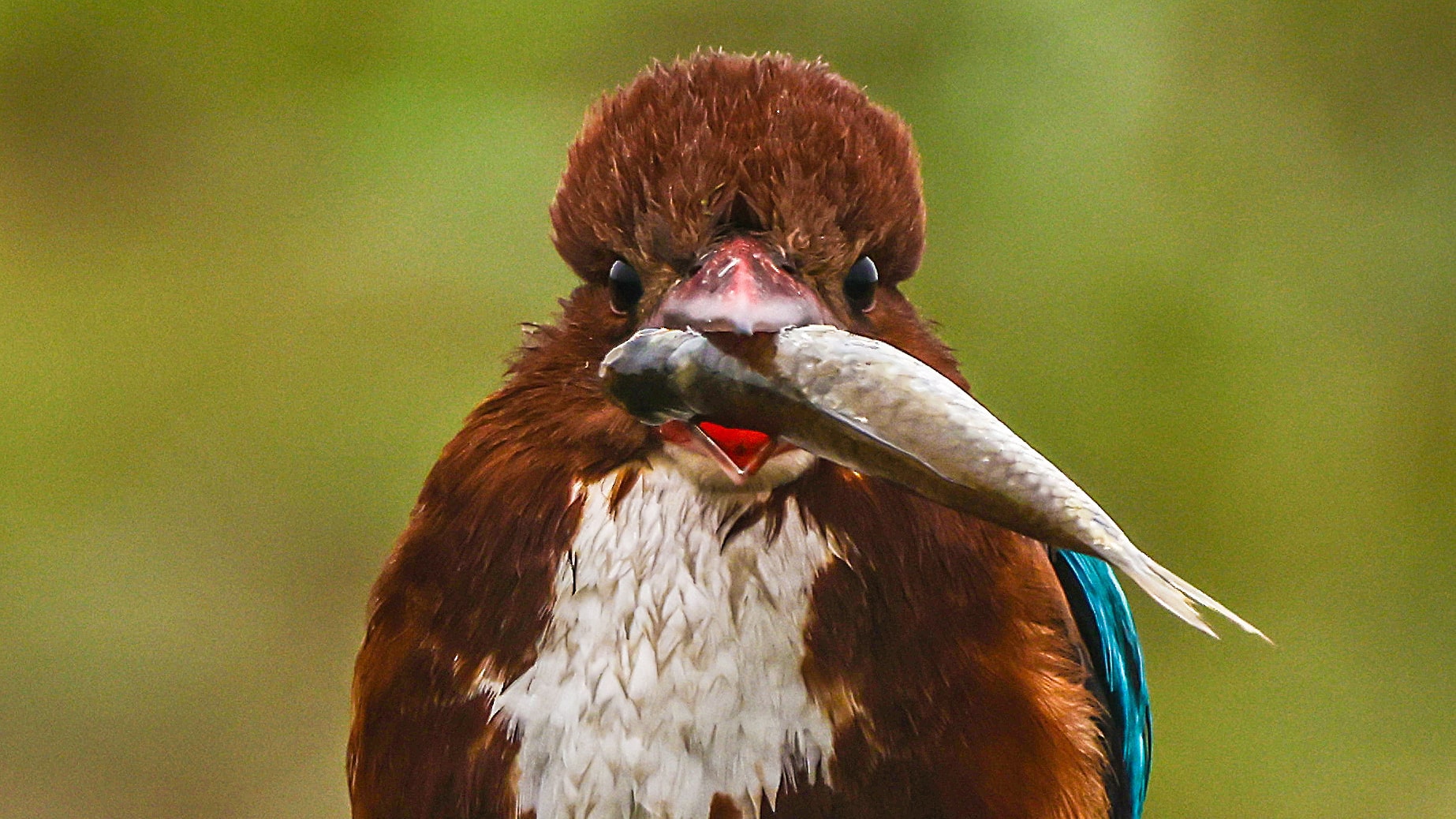
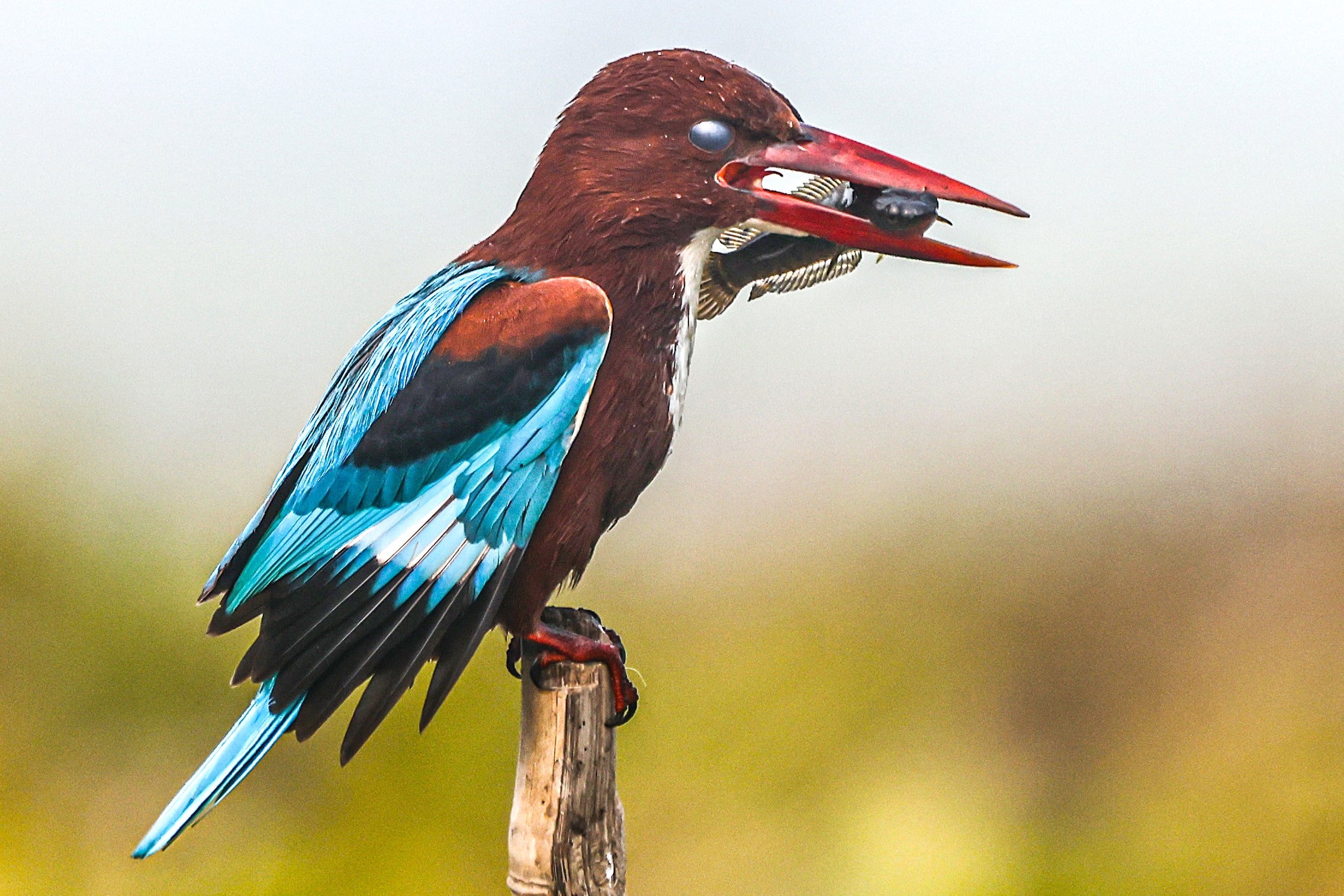
The White-throated Kingfisher (Halcyon smyrnensis), also known as the White-breasted Kingfisher, is one of the most vibrant and easily recognizable birds in Asia. With its dazzling blue wings, chestnut-brown body, and striking white throat, this species is a true jewel of wetlands, agricultural fields, forests, and even urban backyards. Unlike many kingfishers that rely heavily on rivers and lakes for hunting, the White-throated Kingfisher is remarkably adaptable—often spotted perched on wires, poles, and branches across villages, towns, and open countryside.
Native to a vast range stretching from the Middle East and Indian subcontinent to Southeast Asia and the Philippines, this bird thrives in diverse habitats. Its diet is just as versatile: from grasshoppers, beetles, and earthworms to frogs, lizards, fish, and even small rodents, making it an opportunistic predator and an essential natural pest controller.
Beloved by birdwatchers, nature lovers, and wildlife photographers, the White-throated Kingfisher is not only a feast for the eyes but also a keystone species in maintaining ecological balance. Although currently listed as a species of Least Concern by the IUCN, it faces growing pressures from habitat loss, pollution, and pesticide use—reminding us that even common birds need conservation attention.
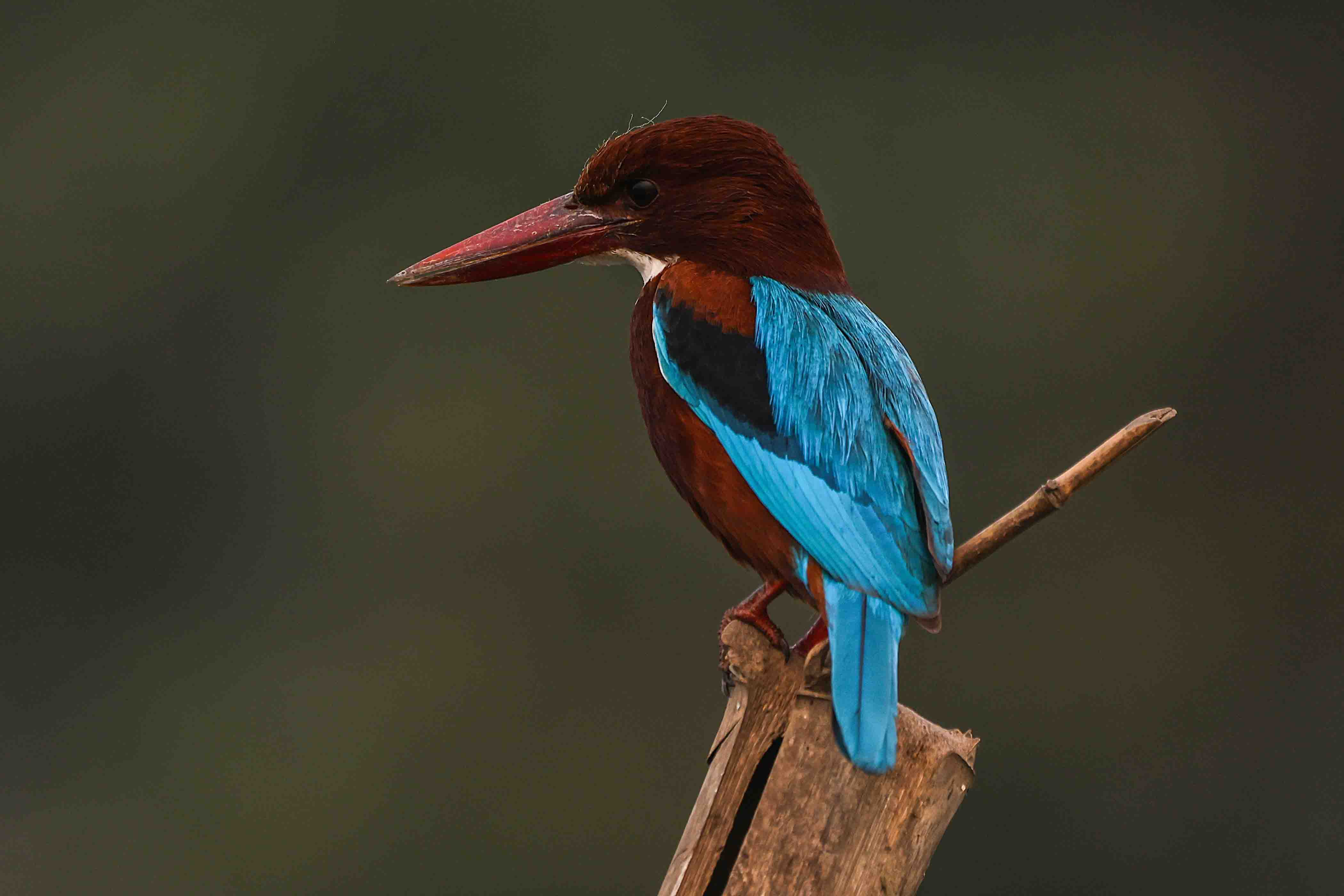
The White-throated Kingfisher is a striking and easily recognizable bird found across Asia. It measures 25–30 cm in length, making it a medium-sized member of the kingfisher family.
Scientific Name: Halcyon smyrnensis
Body Size: A compact body with a wingspan of about 40–45 cm.
Coloration: The wings and tail shine in bright turquoise-blue, contrasting with a rich chestnut-brown head and underparts. Its snowy-white throat and breast give the bird its name.
Beak: The long, heavy red beak is designed for catching prey like fish, insects, and small reptiles.
Eyes: Dark brown eyes provide sharp vision to spot prey from a distance.
Legs and Feet: The legs are short, strong, and reddish, adapted for perching and gripping.
Sexual Dimorphism: Both males and females look similar, which makes them hard to distinguish in the wild.
Plumage in Sunlight: When sunlight hits, the vivid blue feathers shimmer, making the bird highly photogenic.
The White-throated Kingfisher combines power and beauty. Its bold colors and large beak reflect its role as an efficient hunter. Observers can identify it instantly, even from afar, because of its glowing plumage and loud calls.
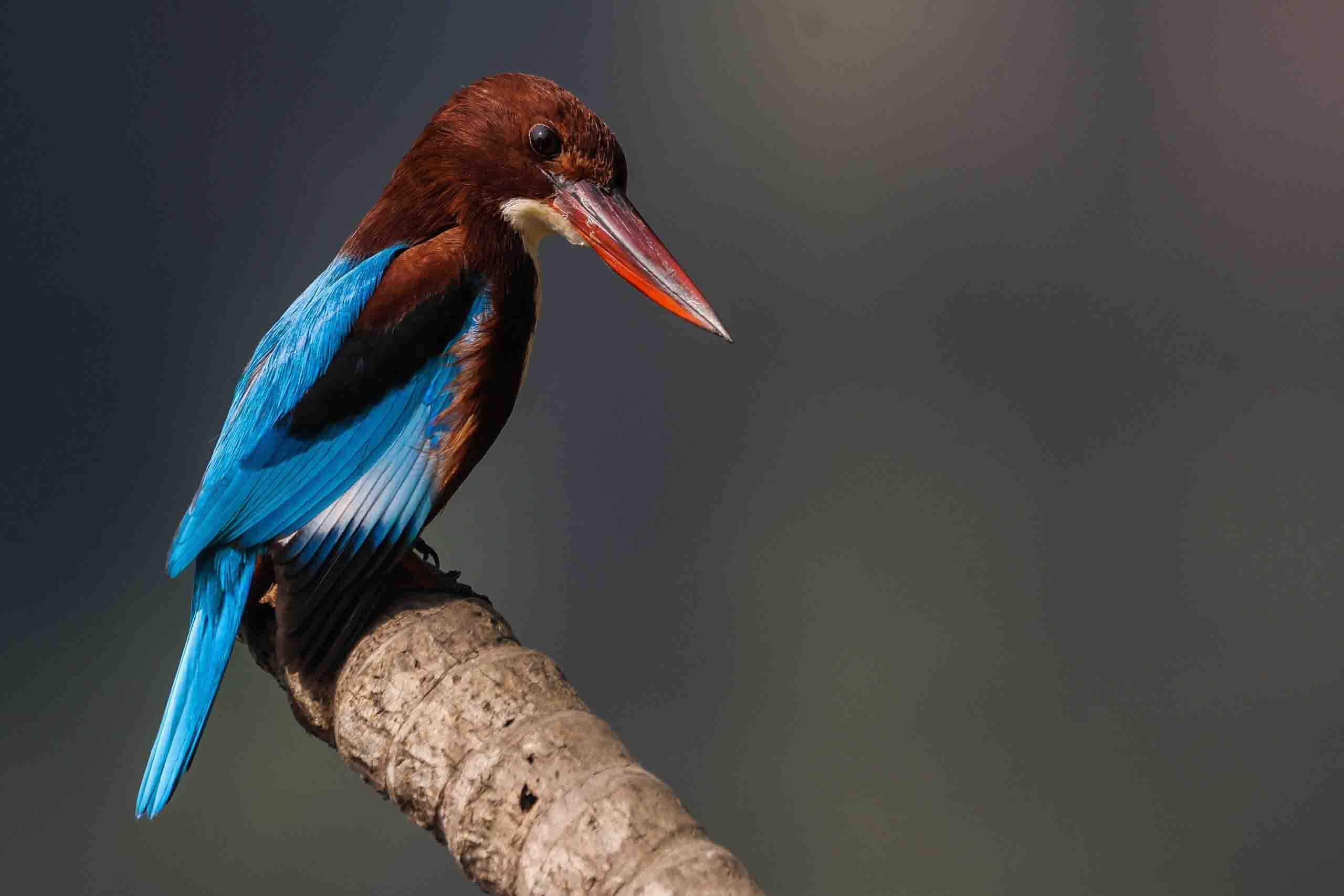
The White-throated Kingfisher is one of the most widespread kingfishers in Asia. You can spot it across India, Bangladesh, Sri Lanka, Myanmar, and even parts of the Middle East. Its adaptability allows it to thrive in diverse habitats, unlike many kingfishers that depend heavily on water.
Wetlands and Rivers: It often hunts along wetlands, ponds, lakes, and slow-moving rivers, where fish and frogs are abundant.
Agricultural Lands: In rural areas, the White-throated Kingfisher thrives around paddy fields and farmland, feeding on insects and small vertebrates.
Urban Spaces: This bird easily adjusts to human presence. It is a frequent visitor to urban gardens, parks, and even backyards.
Forests and Mangroves: You can also find it on forest edges, mangrove habitats, and open woodland clearings, showing its ecological flexibility.
This adaptability makes the White-throated Kingfisher one of the most commonly sighted birds in South Asia. It can live close to villages, towns, and even busy cities, as long as food sources remain available.
By thriving in both natural and human-modified landscapes, the White-throated Kingfisher proves itself as a resilient survivor and a symbol of biodiversity in changing environments.
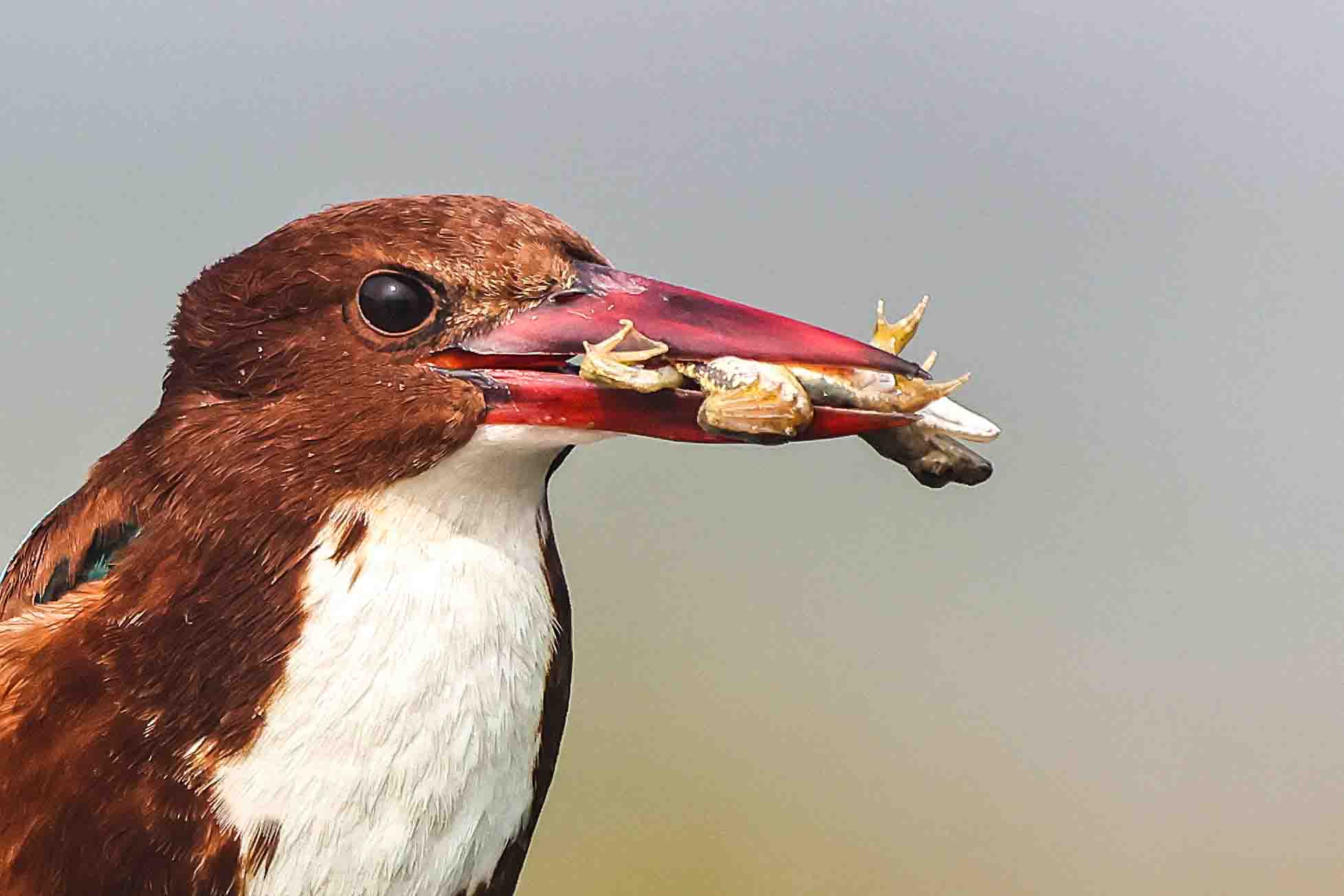
The White-throated Kingfisher is an opportunistic predator with a wide and versatile diet. It thrives in forests, wetlands, fields, and even urban areas, adjusting its hunting style to every habitat.
- 🦗 Insects: Grasshoppers, beetles, dragonflies, and crickets are caught with quick ground strikes.
- 🦎 Reptiles: Lizards, skinks, and geckos form a major share of its meals.
- 🐟 Fish: Small fish are snatched with precise dives near ponds, rivers, and canals.
- 🐸 Amphibians: Frogs and tadpoles often become easy prey.
- 🐀 Rodents: Mice and small mammals are hunted in farmlands and grasslands.
- 🦜 Birds: Occasionally, it captures small birds, showing its strength and adaptability.
The White-throated Kingfisher hunts with keen eyesight and lightning-fast reflexes. It often perches on branches, wires, or poles, scanning the ground for movement. Once it spots prey, it dives or swoops down in a rapid strike. After capture, it thrashes the prey against a hard perch to kill or disable it before swallowing.
Unlike most kingfishers that rely mainly on water, the White-throated Kingfisher hunts both on land and in water, making it one of the most adaptable hunters in its family. This versatility allows it to survive in rice fields, city gardens, and wild forests, proving why it is one of the most successful kingfishers in Asia.

White-throated Kingfisher Courtship Ritual
The White-throated Kingfisher shows remarkable breeding strategies that secure the survival of its young. Its nesting period usually lasts from March to July.
Nest Sites: These kingfishers dig deep burrows in earthen banks, mud walls, or even old tree cavities. The tunnels may extend up to a meter, providing safety from predators.
Egg Laying: A female White-throated Kingfisher lays 4 to 7 glossy white eggs in each clutch.
Incubation: Both parents share the duty of incubating eggs, ensuring proper warmth and protection. The incubation period lasts about 20–22 days.
Parental Roles: After hatching, both parents work tirelessly to feed the chicks with insects, lizards, and small fish.
Fledging: Within a few weeks, the chicks grow strong and leave the nest to explore their surroundings.
Adaptability: The White-throated Kingfisher shows flexibility in nesting choices, often adapting to human-modified landscapes like farms and villages.
This behavior highlights the bird’s resilience and ability to thrive across diverse habitats. Documenting the breeding and nesting behavior of the White-throated Kingfisher helps in understanding its ecological role and importance in maintaining healthy ecosystems.

The White-throated Kingfisher is famous for its loud, high-pitched call, sounding like a sharp “klee-klee-klee.” Its voice echoes across fields, ponds, and forests, marking its territory clearly.
✅ Highly Territorial:
The White-throated Kingfisher aggressively defends its hunting grounds. It chases away intruders with fast dives and loud calls.
✅ Solitary or Paired:
They are mostly solitary but form pairs during the breeding season. Pairs coordinate to protect nests and hunting areas.
✅ Active Hunters:
These birds perch on wires, poles, or branches to scan for prey. Their diet includes fish, frogs, insects, and small reptiles.
⚡ Bold and Confident:
White-throated Kingfishers confront other birds with upright posture and fearless calls. They dominate both urban and rural habitats.
🔹 Daytime Activity:
Active throughout the day, they hunt during morning and late afternoon when prey is most visible.
🔹 Patience and Precision:
They exhibit remarkable patience, waiting silently before plunging to catch prey with precision.
🔹 Vibrant Presence:
With turquoise wings, a chestnut head, and a white throat, they add color and life to any landscape.
✅ Symbol of Wilderness:
Their persistent calls, dynamic hunting, and striking plumage make White-throated Kingfishers a true emblem of natural habitats.
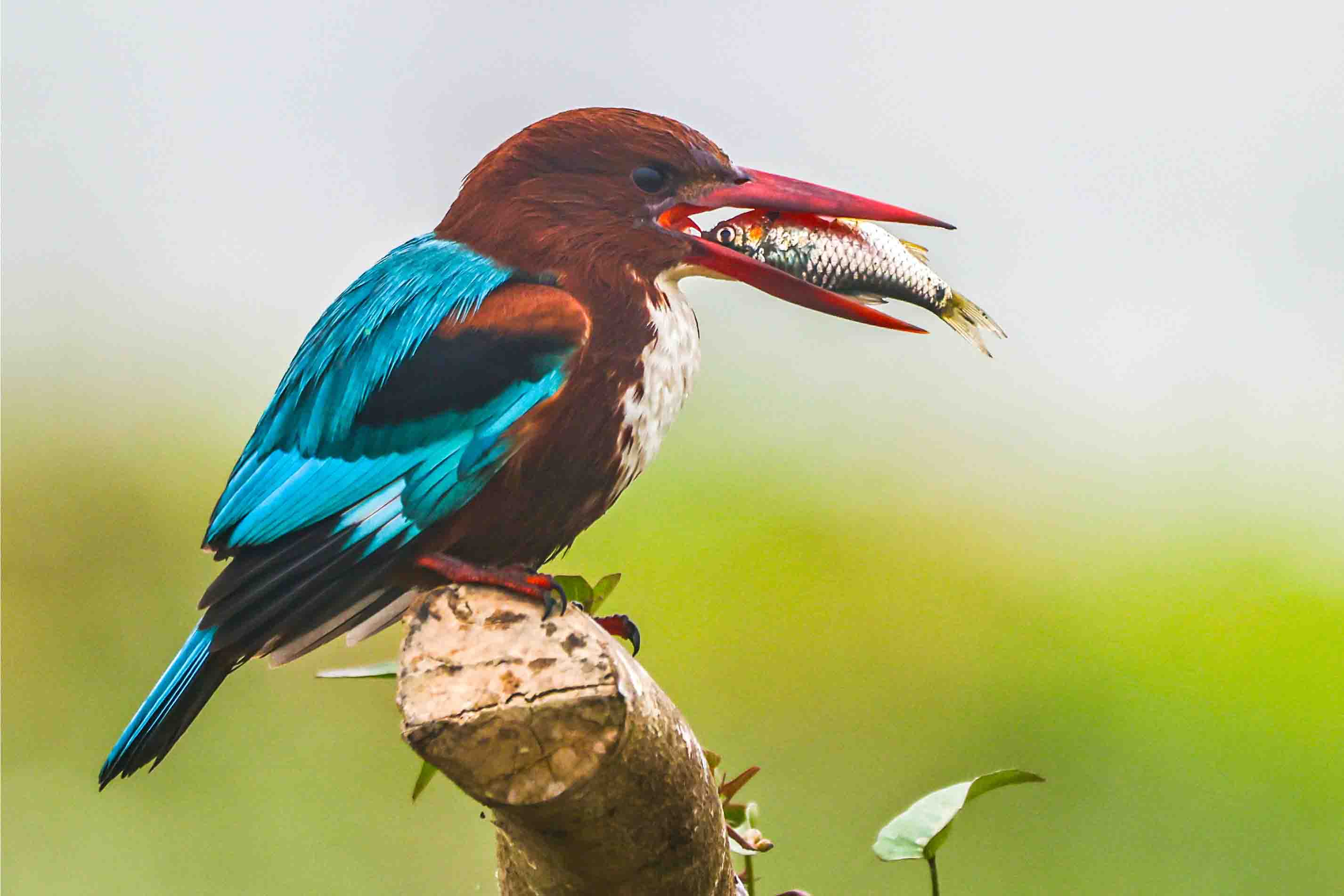
The White-throated Kingfisher is not only admired for its striking blue wings, chestnut body, and bright red bill, but it also plays a vital ecological role in maintaining balance across diverse habitats.
As an opportunistic predator, the White-throated Kingfisher preys on a wide range of species, including insects, grasshoppers, beetles, small fish, amphibians, lizards, and even small rodents. By regulating these populations, it prevents overpopulation and protects crops from pest damage, making it a natural ally for farmers and contributing to sustainable agriculture.
Its presence in wetlands, paddy fields, grasslands, and urban gardens is also a strong indicator of ecosystem health. A thriving population of White-throated Kingfishers often signals clean water bodies and a healthy prey base. In turn, this makes the bird a bio-indicator species, essential for monitoring environmental well-being.
Beyond pest control, the White-throated Kingfisher is an ecological guardian in food chains. By feeding on lower-trophic-level species and serving as prey for larger raptors, it ensures energy transfer and stability within ecosystems. Its vibrant calls and flashes of blue also add to the aesthetic and cultural value of landscapes, making it a beloved species among birdwatchers and nature photographers.
Protecting the White-throated Kingfisher, therefore, means preserving biodiversity, securing agricultural benefits, and ensuring harmony in natural ecosystems.
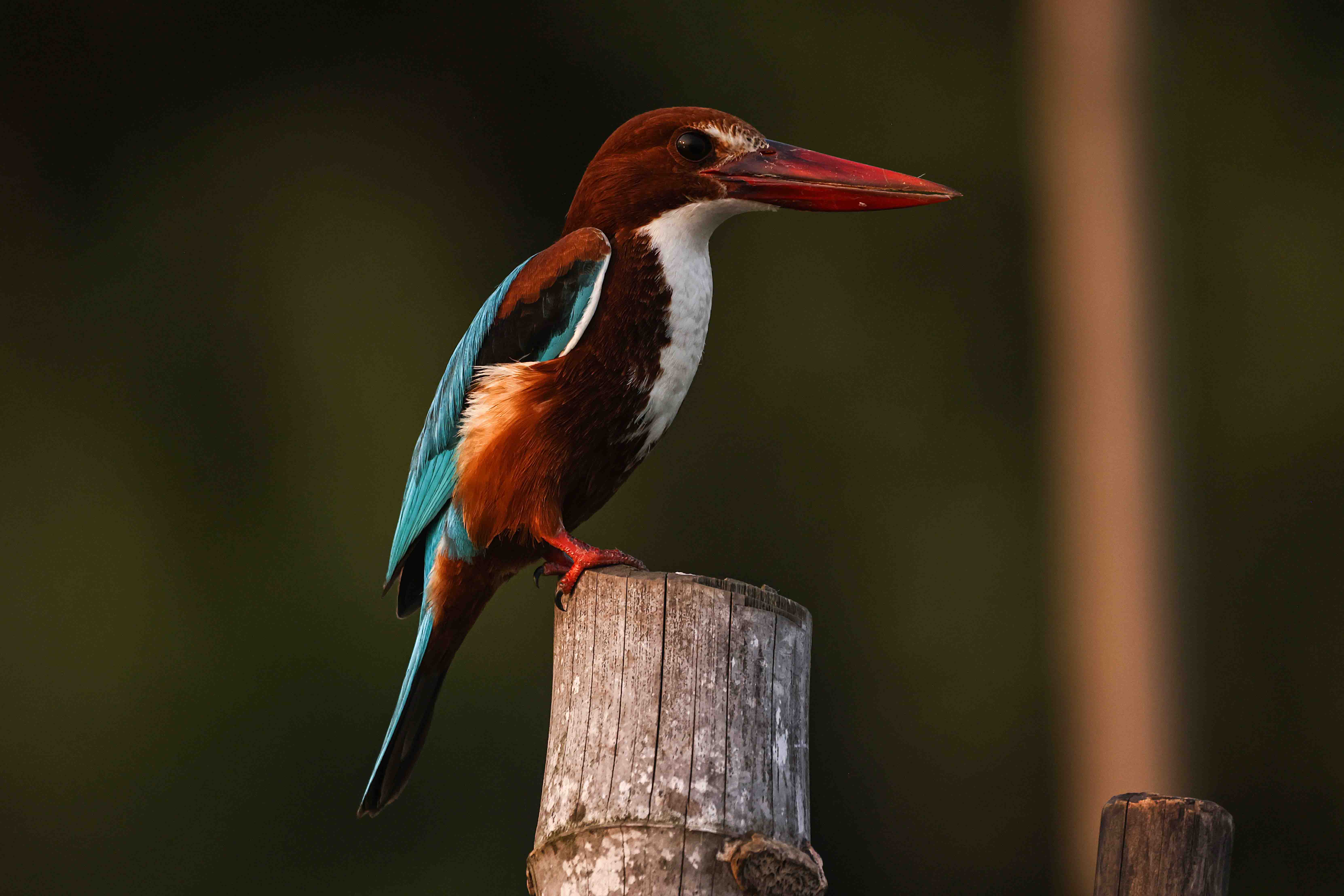
According to the IUCN Red List, the White-throated Kingfisher is categorized as “Least Concern”, meaning its global population is currently stable. However, this does not imply that the species is free from risks. Local populations are increasingly threatened by habitat destruction, wetland degradation, urban expansion, pollution, and pesticide use in agricultural areas.
Habitat Loss: The drainage of wetlands and cutting of trees for development reduce natural nesting and perching sites.
Pollution: Contaminated water bodies affect the fish and amphibian populations that form its diet.
Pesticides: Heavy pesticide use in agriculture kills insects, which are a major food source, and also introduces toxins into the food chain.
Urban Expansion: Increased construction and noise pollution disturb breeding behavior and reduce safe habitats.
Conservation Efforts and How You Can Help
While the species is not endangered, proactive conservation is essential to prevent future decline. Some measures include:
Preserve Wetlands and Water Bodies: Safeguarding lakes, rivers, and marshes ensures the White-throated Kingfisher continues to thrive.
Promote Organic Farming: Reducing pesticide use helps maintain insect populations and prevents harmful chemicals from entering food chains.
Plant Native Trees: Tall trees near wetlands and farmlands provide perching, roosting, and nesting sites.
Awareness and Education: Encouraging local communities and school programs to protect kingfishers fosters coexistence.
Ecotourism: Birdwatching activities can raise awareness while providing economic incentives to conserve local habitats.
By conserving the White-throated Kingfisher, we protect not only a dazzling bird but also the wetlands, farmlands, and ecosystems that sustain human life. Ensuring its survival secures cleaner water, healthier food chains, and balanced biodiversity for generations to come.

Not Just a Fisher: Despite its name, the White-throated Kingfisher hunts far beyond water. It often preys on lizards, insects, and even small birds, making it one of the most versatile kingfisher species.
Powerful Beak: Relative to its body size, this kingfisher has one of the strongest beaks in the bird world. Its sharp, red beak allows it to crush prey with ease.
Fearless Predator: It is known to attack snakes and larger prey, showing extraordinary courage compared to its size.
Cultural Symbolism: In many parts of India and Southeast Asia, the White-throated Kingfisher is seen as a symbol of good luck and prosperity, often featured in folk tales and traditional stories.
Adaptability: Unlike many birds, this species thrives in both rural farmlands and busy urban areas, often perching on electric wires and roadside poles.
Distinctive Call: Its loud “klee-klee-klee” call is often heard before the bird is seen, making it easier for birdwatchers to locate.
Record Flyers: They are strong fliers and can cover large distances quickly while hunting, making them impressive subjects for action photography.
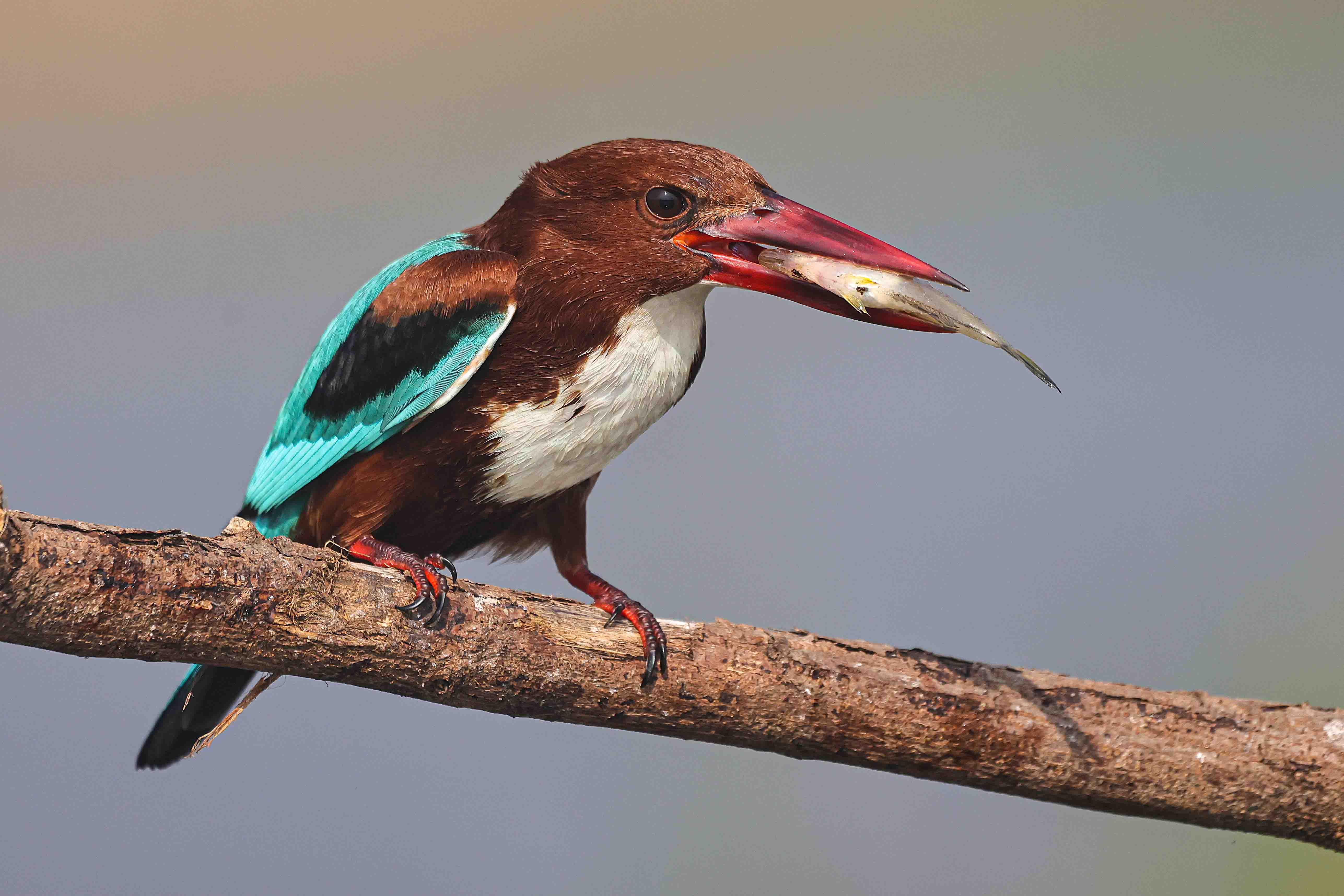
Spotting the White-throated Kingfisher (Halcyon smyrnensis) is easier than many other bird species because of its bright plumage and loud call. Here’s how you can increase your chances:
Listen Before You Look
The bird’s high-pitched “klee-klee-klee” call is often heard long before it is seen. Train your ears to recognize this distinct sound in wetlands, farmlands, and gardens.
Know Their Favorite Habitats
Look near wetlands, lakes, paddy fields, riversides, mangroves, and agricultural lands.
In urban areas, check gardens, roadside poles, and electric wires where they often perch to scout for prey.
Best Time to Spot Them
Early mornings and late afternoons are ideal as the birds are more active and the light enhances their vibrant colors.
During the breeding season (March–July), they are more vocal and easier to locate near nesting burrows.
Spotting Behavior
White-throated Kingfishers often sit motionless on a perch before diving suddenly to snatch prey. If you notice this behavior, stay still—they are likely to repeat the action.
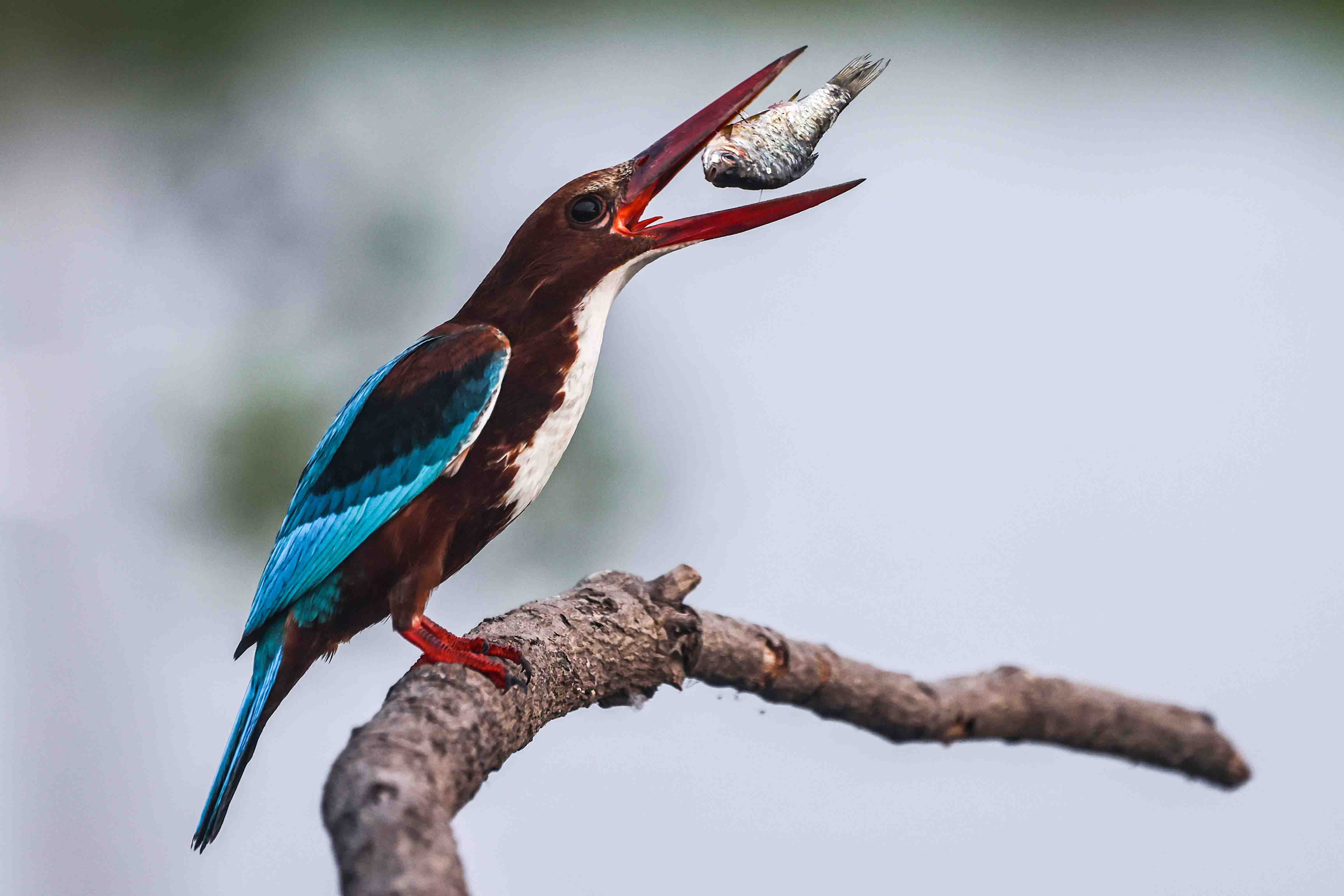
Photographing the White-throated Kingfisher can be rewarding but requires patience, preparation, and technique.
1. Gear & Settings
Camera: A DSLR or mirrorless camera with a telephoto lens (300mm or longer) works best.
Shutter Speed: Use 1/1000s or faster to freeze hunting dives or flight.
Aperture: f/4–f/5.6 for subject isolation with a blurred background; f/8–f/11 for environmental shots.
ISO: Start around ISO 200 in daylight; increase if light is low.
2. Composition Tips
Use the rule of thirds to frame the bird off-center, creating dynamic images.
Include habitat elements (water, branches, fields) to tell a story about the bird’s environment.
Try silhouette shots at sunrise or sunset for dramatic effects.
3. Shooting Techniques
Perch-Watching Method: White-throated Kingfishers are territorial and return to the same perch after hunting. Find a good perch, stay still, and wait for action.
Action Shots: Focus on capturing the moment when the bird dives, emerges with prey, or tosses food in the air before swallowing. These are signature behaviors.
Burst Mode: Use continuous shooting mode to capture fast sequences—ideal for hunting dives or wing spreads.
4. Ethical Photography
Always keep a safe distance to avoid disturbing the bird, especially during nesting season.
Avoid flash photography, which may startle the bird.
Respect their natural habitat—never damage vegetation or disturb nesting burrows.
5. Pro Tips for Success
- Patience is key: The bird may stay perched for long periods before moving, so wait quietly.
- Blend in: Wear neutral clothing to avoid drawing attention.
- Use natural light: Early morning and golden hour provide soft, warm tones that enhance the kingfisher’s brilliant blue feathers.
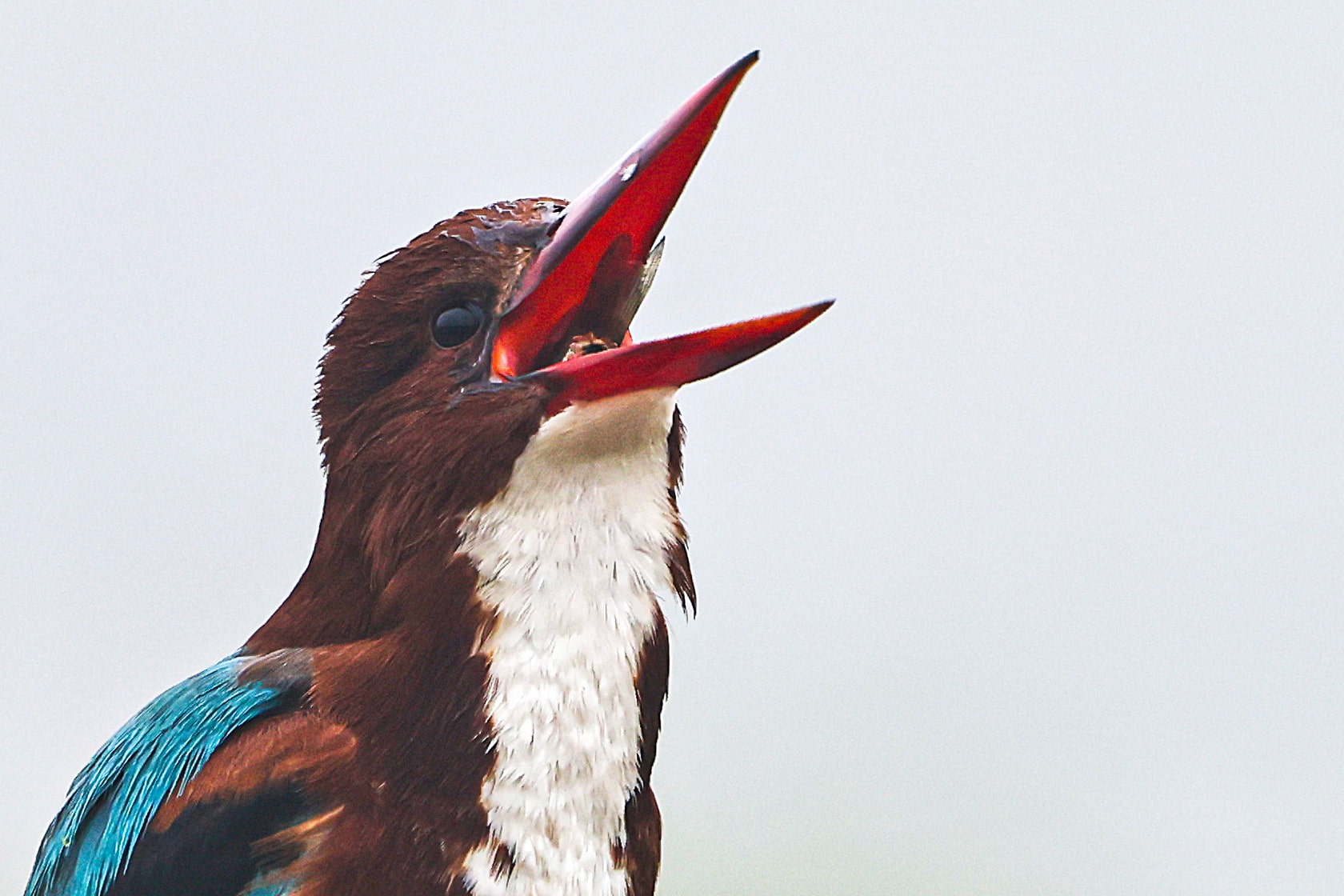
Q1. Where is the White-throated Kingfisher commonly found?
The White-throated Kingfisher is widespread across South Asia, Southeast Asia, and the Middle East. It thrives in wetlands, farmlands, mangroves, and even urban gardens.
Q2. What is the diet of the White-throated Kingfisher?
This bird feeds on insects, small reptiles, fish, frogs, rodents, and even small birds. Its ability to hunt both on land and water makes it unique among kingfishers.
Q3. What is the ecological importance of the White-throated Kingfisher?
By preying on insects and small animals, the White-breasted Kingfisher helps maintain balance in ecosystems and supports agriculture by controlling pests naturally.
Q4. Is the White-throated Kingfisher endangered?
No. It is listed as “Least Concern” by the IUCN Red List. However, urbanization, pollution, and pesticide use threaten local populations.
Q5. How can photographers capture the best shots of the White-throated Kingfisher?
Photographers should use a telephoto lens, shoot during golden hours (early morning/late afternoon), and practice patience to capture this bird while hunting, perching, or spreading its wings.
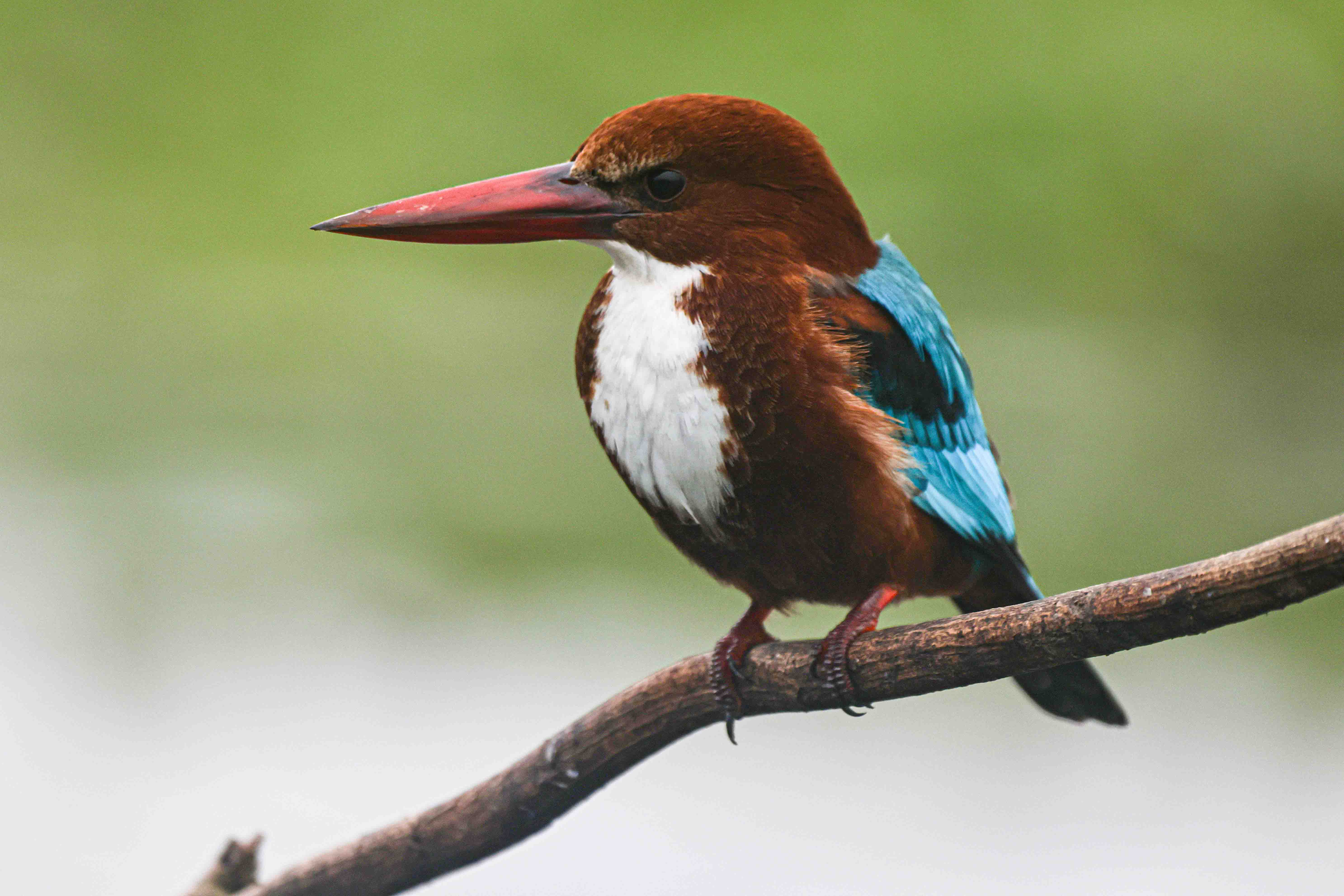
The White-throated Kingfisher is more than just a striking bird—it is a fearless hunter, a resilient survivor, and a vital guardian of wetland ecosystems. Beyond its dazzling blue wings and bold presence, this species plays a key role in keeping insect, fish, and small animal populations in balance, making it an ecological ally for both nature and humans.
For birdwatchers, wildlife photographers, and nature lovers, encountering the White-throated Kingfisher is always a rewarding experience. Its sharp calls, rapid dives, and flashes of electric blue across the landscape are unforgettable moments that connect us to the wild.
👉 Next time you’re near a wetland, riverbank, or even a village pond, keep your eyes open—you might just witness the White-throated Kingfisher in action. Capture the moment, cherish the beauty, and remember: protecting its habitats today ensures that future generations can enjoy this jewel of the wetlands tomorrow.
Recent Comments