

Street photography for beginners is an exciting journey into the heart of everyday life — where candid moments, raw emotions, and unexpected scenes become powerful visual stories. Unlike studio photography, street photography captures real-life interactions and spontaneous beauty in urban environments, making it both challenging and rewarding for new photographers. Whether you’re using a DSLR, mirrorless camera, or even a smartphone, learning the basics of street photography can drastically improve your observation skills, creativity, and confidence behind the lens.

Chinese new year in Territy Bazar, Kolkata
In this comprehensive guide to street photography for beginners, we’ll walk you through everything you need to know — from choosing the right gear and camera settings to mastering composition, lighting, and approaching subjects with respect. You’ll also discover practical tips on shooting techniques, location scouting, and how to overcome the fear of photographing strangers. If you’ve ever been curious about capturing the soul of the street, this step-by-step guide will help you get started with purpose, passion, and a sharper eye for storytelling.
Candid photography is at the heart of street photography for beginners. It captures real, unposed moments that reveal genuine emotions and stories. In candid shots, the subject doesn’t pose or even realize they are being photographed. This approach makes every image look natural, authentic, and full of life.
A good candid photograph tells a story through action. A person crossing the street, a vendor serving tea, or children playing in the rain — these moments reflect the soul of urban life. Unlike studio setups, candid photography doesn’t rely on costumes, choreography, or planned poses. You capture the world exactly as it unfolds.
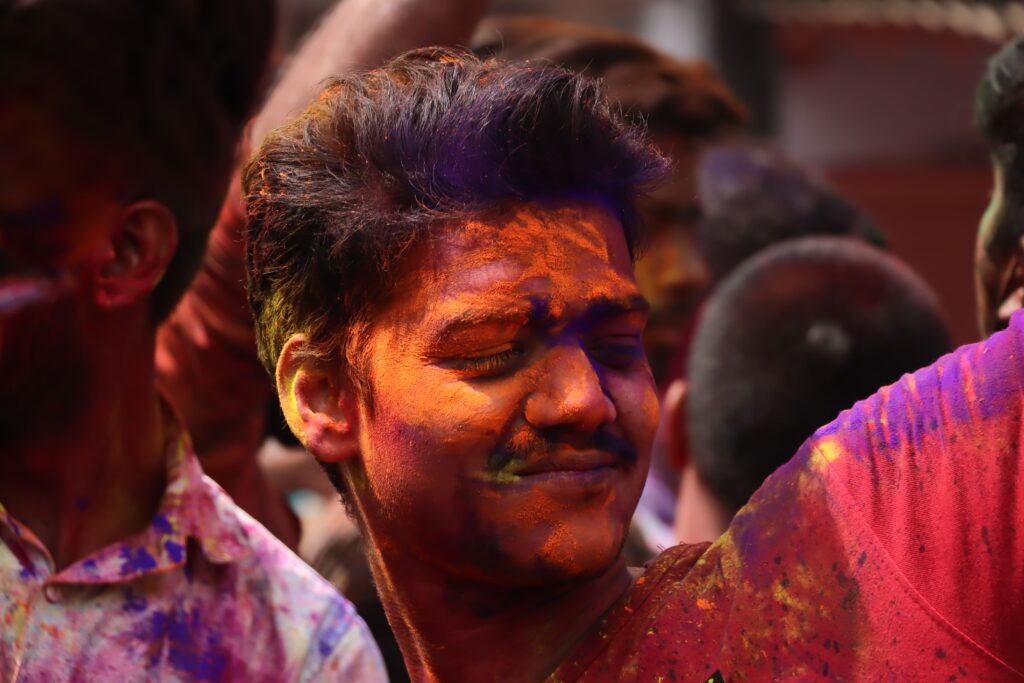
Holi in Varanasi
Street photographers often use natural light instead of flash. This helps preserve the scene’s original mood and avoids disturbing the subject. The goal is to blend into the environment and observe quietly. Timing, observation, and quick reactions are key skills every beginner should develop.
For those starting with street photography, candid shots are the best way to build confidence. They teach you to anticipate moments, frame fast, and understand human behavior. The more spontaneous your photos are, the more powerful and emotional they become.
Candid photography reminds us that the most compelling stories often happen in ordinary places — when no one is posing, and life simply happens.
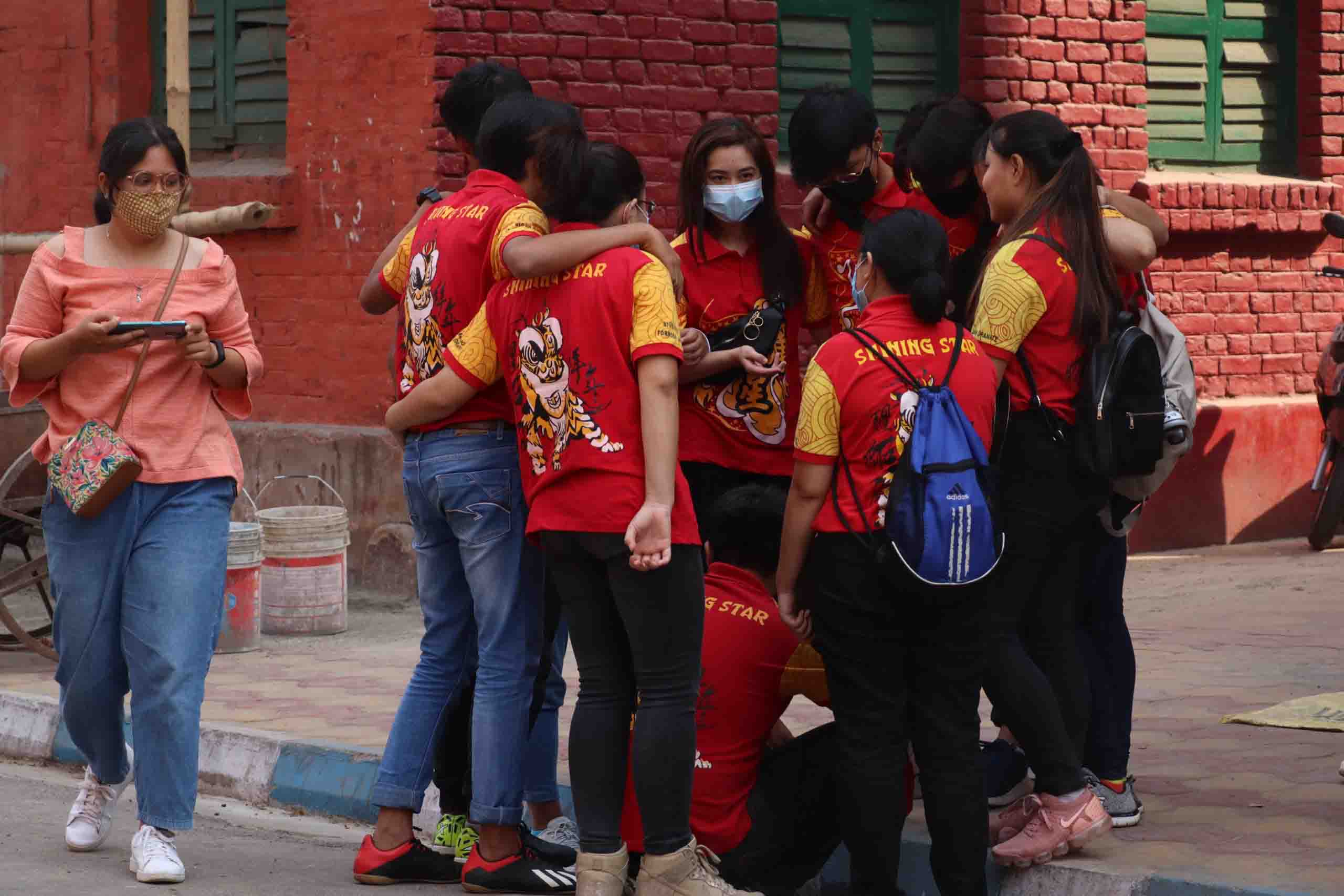
Chinese new year in Territy Bazar, Kolkata
When you start street photography for beginners, the right gear makes a big difference. You don’t need expensive or heavy tools—just the right ones to stay mobile, focused, and ready for any shot.
Cameras
Choose a lightweight camera that’s easy to carry during long walks.
A DSLR or mirrorless camera with a fast shutter speed captures spontaneous street moments perfectly.
Look for silent or electronic shutters to stay unnoticed while shooting.
Weather-sealed bodies help protect your gear during outdoor shoots.
Lenses
A wide-angle lens (24mm–35mm) is ideal for capturing scenes with context and emotion.
Avoid heavy telephoto zoom lenses; they limit movement and attract attention.
A prime lens offers better sharpness and low-light performance—great for night streets.
Experiment with 50mm lenses for natural perspectives in street photography.
Backpacks
Always protect your gear with a durable, lightweight backpack.
Keep your camera, lenses, and batteries organized in separate padded sections.
Carry lens cleaning tools to keep your shots dust-free.
Choose a water-resistant backpack for unpredictable weather.
Other Essential Accessories
Carry extra batteries to avoid power loss during long street sessions.
Keep spare memory cards for continuous shooting.
A lens cloth and blower help maintain clean optics.
Use a wrist or neck strap for comfort and quick access.
A portable power bank can recharge devices on the go.
Starting with the right setup helps you focus on creativity rather than technical issues. Remember, in street photography for beginners, the best equipment is what keeps you mobile, alert, and ready to tell stories through your lens.
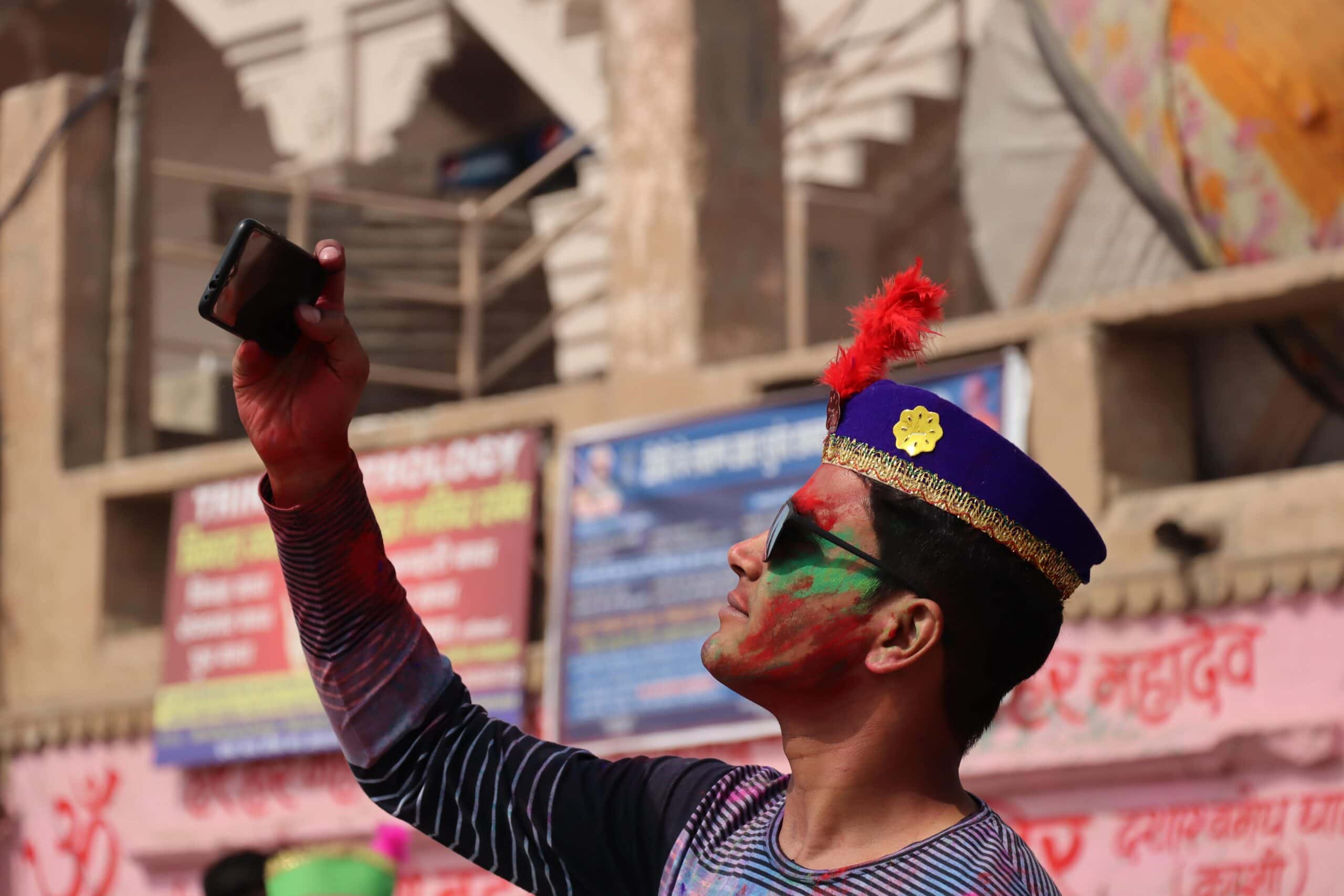
Holi in Varanasi
A reliable camera is the foundation of street photography for beginners. It helps you react quickly, stay discreet, and capture real-life moments with precision. Choose a camera that complements your shooting style and movement on busy streets.
Some important and fundamental camera settings for Street Photography:
- Shutter speed: When we are shooting on the street, we want to freeze any moment. 1/125 shutter speed is best to perfectly freeze moments. The shutter speed can be faster as per light condition.
- Aperture: When we capture portrait photographs, most of the times we want blurred background to make the subject more lively. For that, we need a shallow depth of field to enhance the subject. f/2.8 is perfect for that. But for street photoshoot sometimes we need some background with people to create a story. f/5.6 aperture appropriate for that.
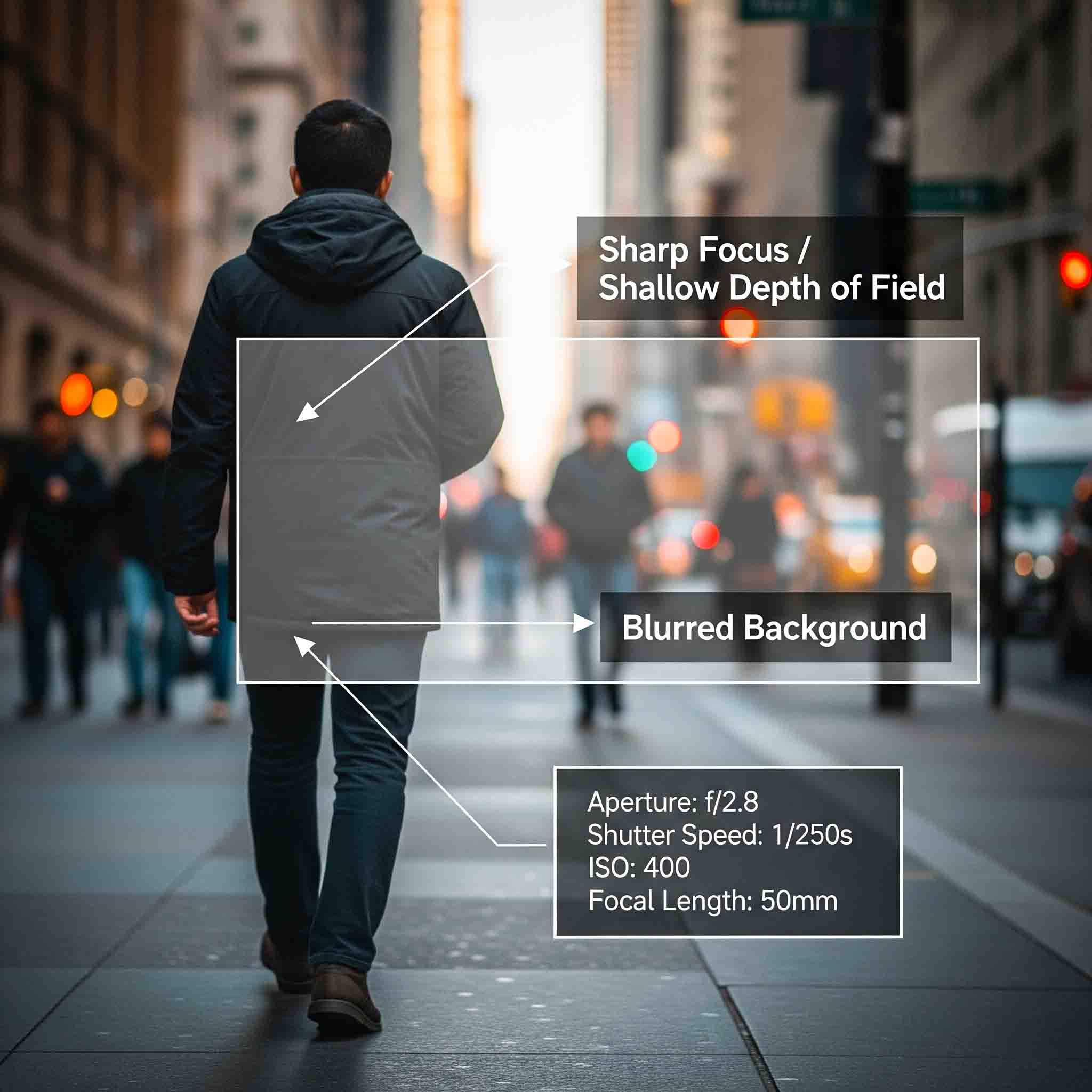
Depth of Field in Digital Photography
- ISO: More ISO means more noise or grains in the picture. ISO 200 is best sensitivity for street photoshoot in a brighter day. As per light condition we can use ISO 400.
*Mastering camera settings in street photography helps you capture spontaneous moments with sharp focus, perfect exposure, and true emotion.
- White Balance: As ISO settings, white balance is another important feature for street photoshoot. “Daylight” white balance mode is mostly preferable for photoshoot in daylight. For street photoshoot at night Auto white balance mode is appropriate.
- Focal Length: Choosing the best focal length for street photoshoot is the most important factor. 50mm prime lens is perfect to cover all street activities. A 50mm prime lens is typically fast, allow to shoot in low ambient light. And it’s focal length is versatile for portraits and environmental shots. 18mm-200mm lens can also be used to cover a vast range.
- Exposure mode: Most of the photographers use manual exposure mode for street photoshoot. The exposure should be set as per the light condition. Auto exposure mode can also be used for inconsistent light.
- AF: Continuous AF is best for street photoshoot. When the AF is set to continuous autofocus mode, the camera will reset the autofocus every time the shutter is half pressed.
A good camera doesn’t just record what you see—it connects you to the rhythm of the street. For anyone exploring street photography for beginners, it’s your most trusted tool to freeze emotion, energy, and everyday life in motion.
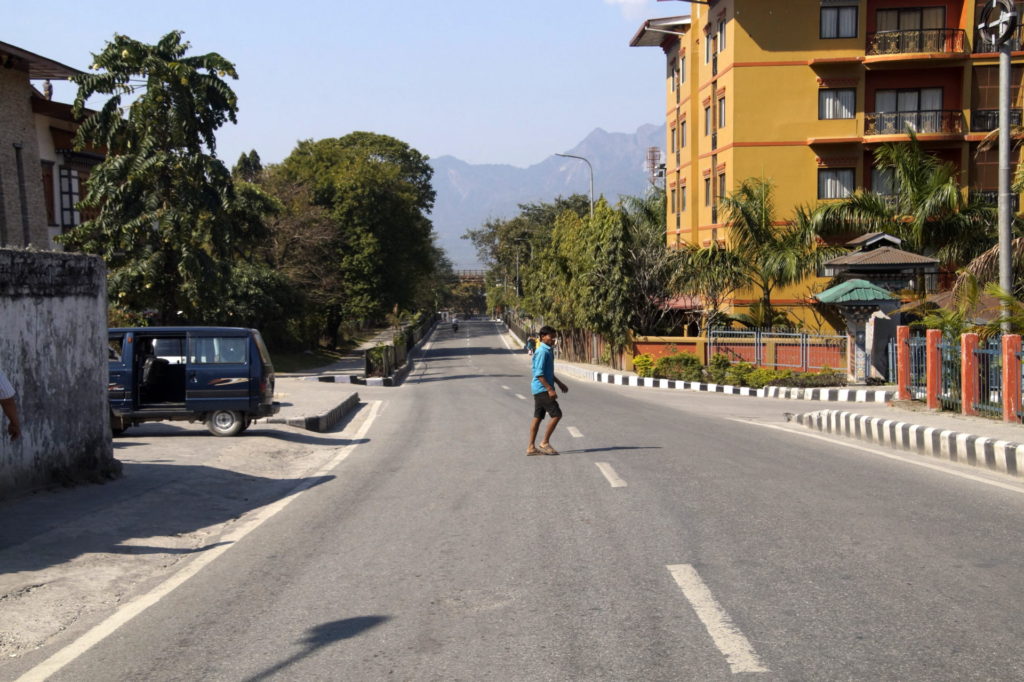
Street of Bhutan
In street photography for beginners, patience often makes the biggest difference between an average photo and a masterpiece. You don’t always need to chase the perfect shot — sometimes, the best moments come to those who wait.
Here’s how you can master this technique:
- Observe the environment carefully. Before taking out your camera, spend a few minutes watching how people move, interact, and react to light and shadows.
- Find a location with character. Look for busy intersections, colorful walls, markets, or spots with interesting architecture. These areas naturally create dynamic backgrounds.
- Study the light. Notice how the sunlight changes through the day. The golden hour often gives warm tones, while mid-day light adds strong contrast.
- Wait for the right story to unfold. Great street photography is about emotion and timing. Wait for something genuine — a laugh, a gesture, or a look that tells a story.
- Stay ready. Keep your camera on and settings adjusted for quick reaction. In street scenes, moments last just a second.
- Blend in with your surroundings. The more invisible you become, the more natural your subjects will appear.
- Use patience as your creative tool. Waiting helps you connect with the environment and anticipate moments before they happen.
When you find an appropriate spot and wait, you give yourself the chance to capture raw emotions and real-life stories. In street photography for beginners, this technique builds discipline, awareness, and the ability to see beauty in everyday life.
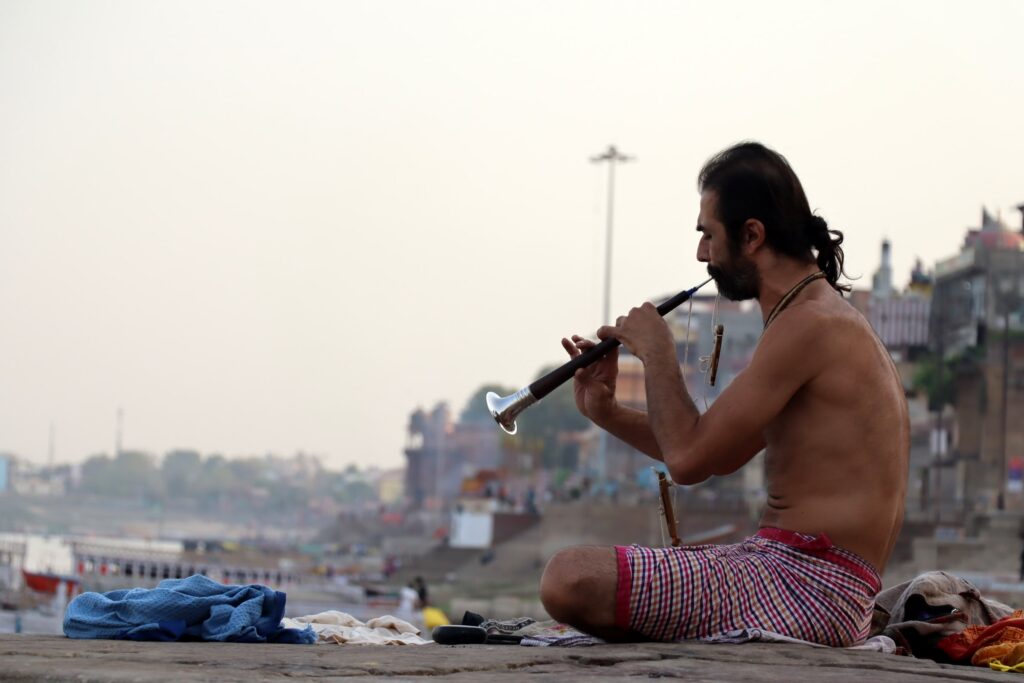
Candid Photography in Varanasi Ghat
One of the most powerful tips in street photography for beginners is simple — get closer to your subject. Physical proximity often transforms an ordinary frame into a powerful story. When you step closer, you capture more emotion, texture, and life. Every wrinkle, glance, or gesture becomes a narrative in itself.
Why getting closer matters:
- Adds intimacy: Close shots reveal human expressions and emotions that distant frames often miss.
- Enhances details: You can highlight clothing textures, street patterns, or facial reactions.
- Creates impact: Tight compositions pull viewers into the moment, making the image more engaging.
- Removes distractions: Getting closer allows you to fill the frame with what truly matters.
Tips for beginners:
- Walk confidently but respectfully around your subjects.
- Blend into the crowd; act naturally to avoid making people uncomfortable.
- Use a wide-angle lens (like 28mm or 35mm) for immersive scenes.
- Observe before clicking — anticipate an interesting gesture or emotion.
- Move with intent. Don’t zoom — step forward instead.
Example scenario:
Imagine walking through a busy market or park. Instead of shooting from across the street, move a few meters closer. Focus on the vendor’s hands, a child’s curiosity, or the play of light on someone’s face. These moments bring your photos to life.
Getting close connects you with your subjects and the rhythm of the street. For anyone exploring street photography for beginners, this small shift in distance can redefine your storytelling power.
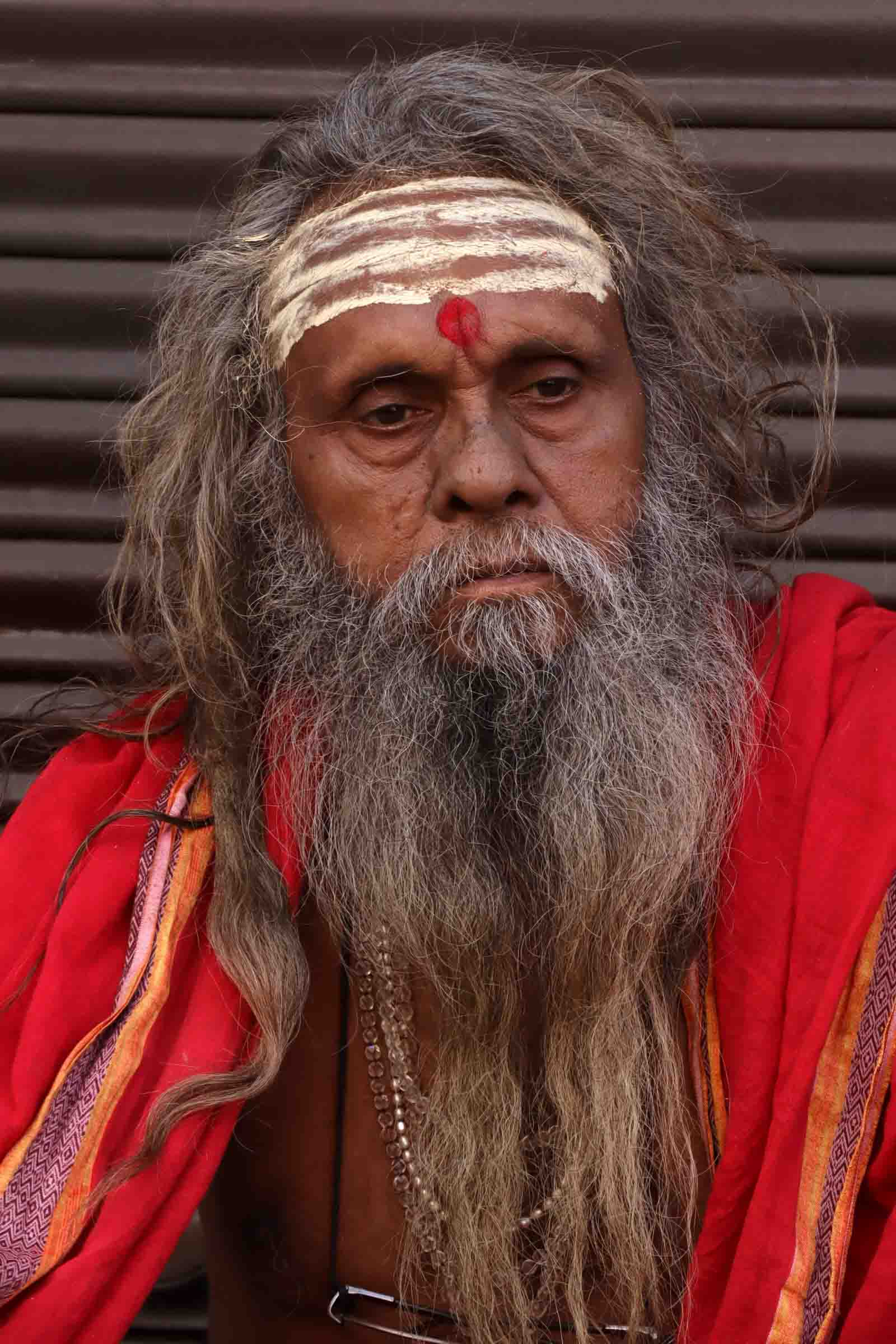
Candid Photography of a Sadhu in Varanasi
In street photography for beginners, emotions tell the real story. Capturing expressions and moods makes your photos powerful and relatable. A simple smile, a frown, or a thoughtful glance can transform an ordinary street scene into a timeless story.
Here’s how you can master expressions and moods in street photography:
- Observe the faces around you. Watch people in markets, on buses, or at festivals. Look for genuine emotions.
- Wait for the right moment. Timing is everything. The best expressions appear naturally and last only a second.
- Focus on the eyes. Eyes reflect emotions more than any other facial feature. Capture them sharply.
- Avoid forced poses. Authentic expressions make your photo feel alive and meaningful.
- Use light wisely. Shadows and highlights can intensify the mood of your subject’s face.
- Anticipate reactions. Notice body language—people’s gestures often signal upcoming emotions.
- Get close, but stay respectful. Close shots reveal details that distant frames can’t. Always respect personal space.
- Tell a story. Combine facial expressions with context—street vendors, commuters, or children playing—to create emotional depth.
Every street corner holds stories of joy, sorrow, curiosity, or determination. When you learn to recognize and capture these expressions, your photography will connect deeply with viewers.
Pro Tip: Practice shooting in busy areas where emotions flow freely. The more you observe, the better you’ll predict the right moment to click.
By focusing on expressions and moods, you’ll turn your photos from simple street scenes into compelling human stories—exactly what makes great street photography for beginners.
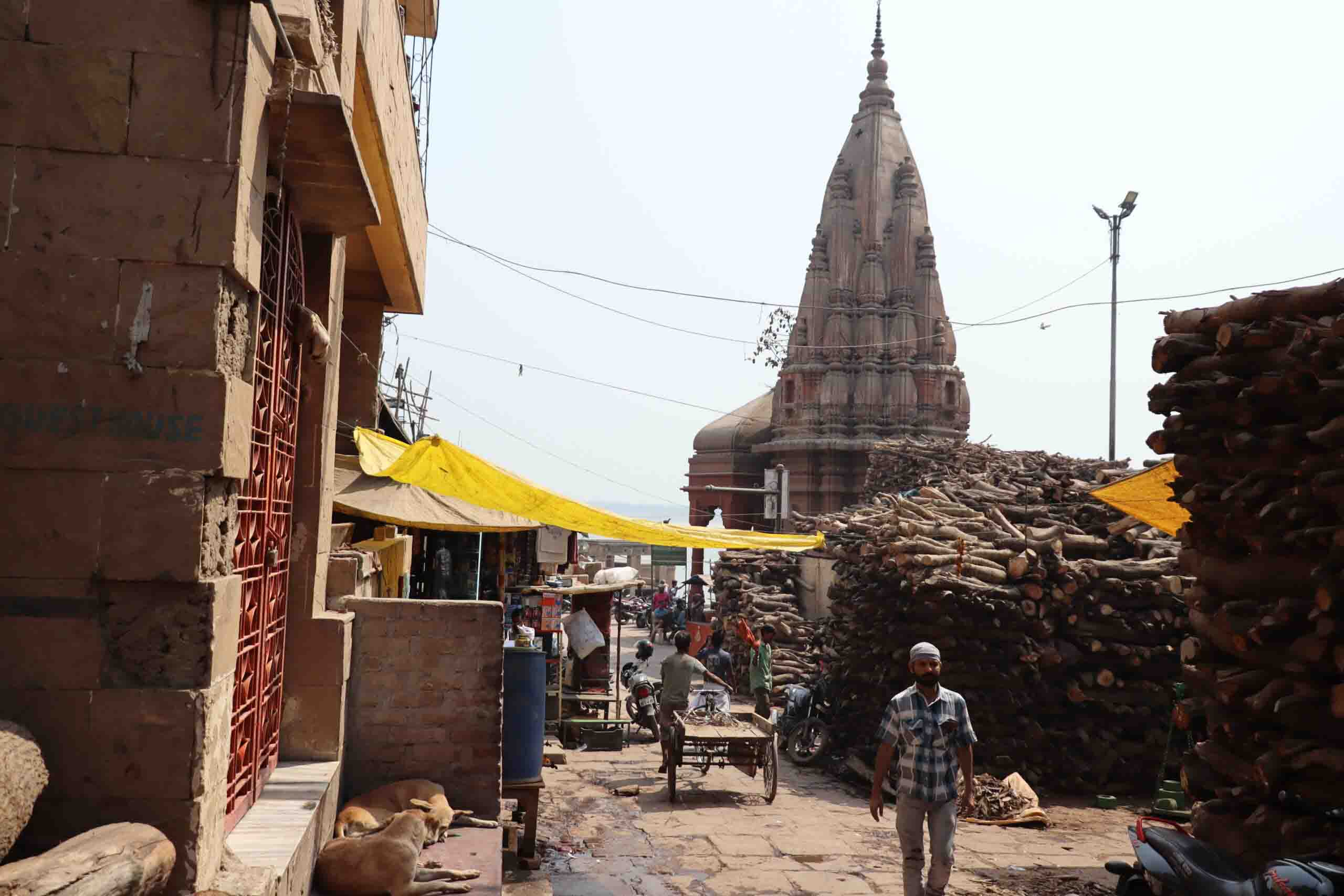
Manikarnika Ghat of Varanasi
Lighting is the heart of every photo. For street photography for beginners, understanding light is one of the most important skills to master. The way light falls on your subject changes the entire mood of your image.
Here are some essential lighting tips to help you capture better street photos:
Observe the main light source: Always check where your light is coming from—sunlight, street lamps, or reflections.
Use natural light wisely: Morning and evening light (golden hours) create soft and warm tones that flatter your subjects.
Handle harsh midday light: Strong sunlight can create hard shadows. Use those shadows creatively for dramatic contrast.
Shoot on cloudy days: Overcast skies act like a giant softbox, giving you even lighting and rich tones.
Try backlighting: Position your subject between you and the light source for a glowing effect or interesting silhouettes.
*Lighting in street photography transforms ordinary scenes into powerful stories by shaping mood, depth, and emotion with every frame.
Experiment with artificial light: Neon signs, car headlights, or street lamps can add atmosphere to urban scenes.
Use flash with purpose: A flash can separate your subject from the background in low light or crowded scenes.
Balance exposure: Adjust ISO, shutter speed, and aperture according to light intensity to avoid overexposure.
Capture reflections and highlights: Light bouncing off wet roads, windows, or metal adds depth and character.
In street photography for beginners, light is your best creative tool. Learn to see it, feel it, and use it to tell visual stories. Whether it’s sunrise warmth, the glow of street lamps, or the raw light of noon—mastering light will elevate your street shots from snapshots to art.
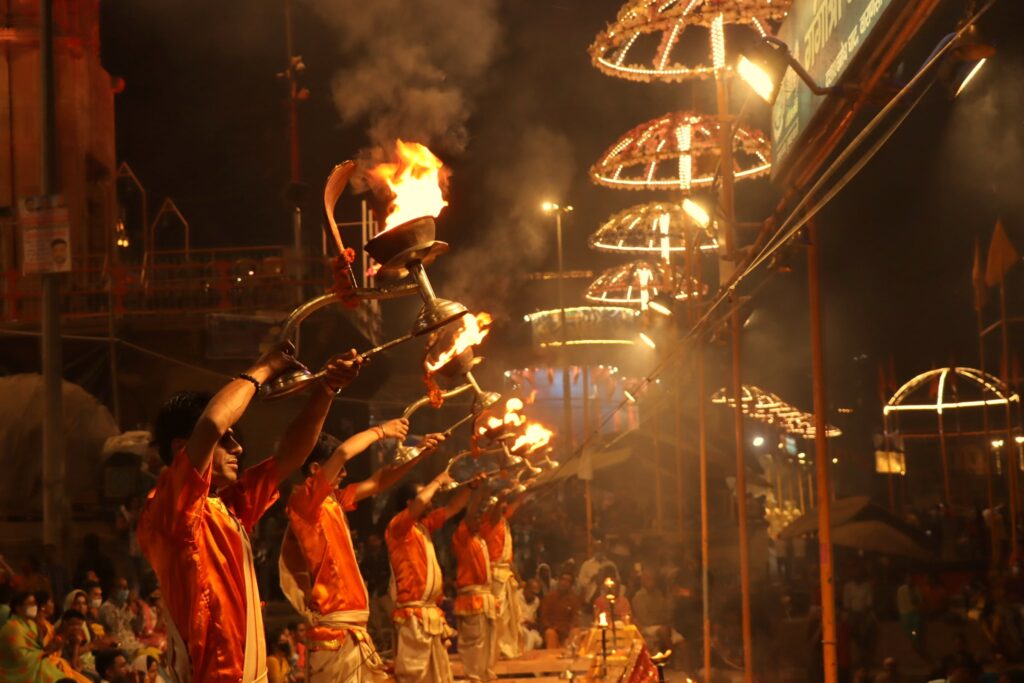
Ganga Arti in Varanasi Ghat
Composition plays a major role in creating powerful street photographs. For street photography for beginners, mastering composition is the key to turning random moments into storytelling images. It helps you guide the viewer’s eye and highlight the emotion, energy, and rhythm of the streets.
Here are some practical composition tips for beginners:
- Focus on the story: Every frame should tell a story. Capture emotions, interactions, or a unique slice of urban life.
- Use leading lines: Roads, fences, shadows, and architecture naturally lead the viewer’s eye to your main subject.
- Balance your frame: Keep the subject in harmony with the surroundings. Don’t let clutter dominate your composition.
- Play with depth: Use layers—foreground, subject, and background—to create dimension and realism in your shot.
- Include the environment: Sometimes, the background enhances the story. Use buildings, colors, and textures to add context.
- Look for patterns and geometry: Repetition, symmetry, and shapes bring visual interest and structure to your image.
- Experiment with framing: Shoot through windows, doors, or other elements to add depth and curiosity.
- Wait for the right moment: Composition and timing go hand in hand. Anticipate when the elements align perfectly.
In street photography, not every shot needs a blurred background. Sometimes, the environment adds just as much character as the subject. A skilled photographer blends subjects, surroundings, and light into one visual harmony.
Mastering composition takes practice and patience. Keep observing, experimenting, and refining. Over time, your creative vision will define your unique style in street photography for beginners.

Street of Varanasi
Photo editing is a vital part of street photography for beginners. A good photo tells a story, but smart editing helps you tell it better. Editing allows you to enhance mood, balance light, and highlight the emotions captured on the street.
Here are some essential tips to improve your editing workflow:
- Organize your shots first. Choose images that reflect strong emotions, interactions, or compositions.
- Adjust exposure and contrast. Proper lighting brings life to your street photos. Slight tweaks can make shadows and highlights pop.
- Enhance colors carefully. Avoid over-saturation. Street photography looks best when colors feel real and expressive.
- Crop and straighten. Clean edges and correct perspective improve visual flow and storytelling.
- Remove distractions. Clone out small spots, wires, or elements that take focus away from your main subject.
- Play with black and white. Many powerful street photos gain emotion and timelessness in monochrome.
- Use presets for consistency. Lightroom presets help beginners maintain a consistent tone across multiple shots.
Recommended tools for street photography:
- Adobe Lightroom: Great for managing and editing large collections quickly.
- Adobe Photoshop: Ideal for detailed retouching and advanced adjustments.
Editing doesn’t mean altering reality—it’s about emphasizing truth. The goal is to enhance what you saw, not to fake it. With practice, editing becomes your creative signature in street photography for beginners.
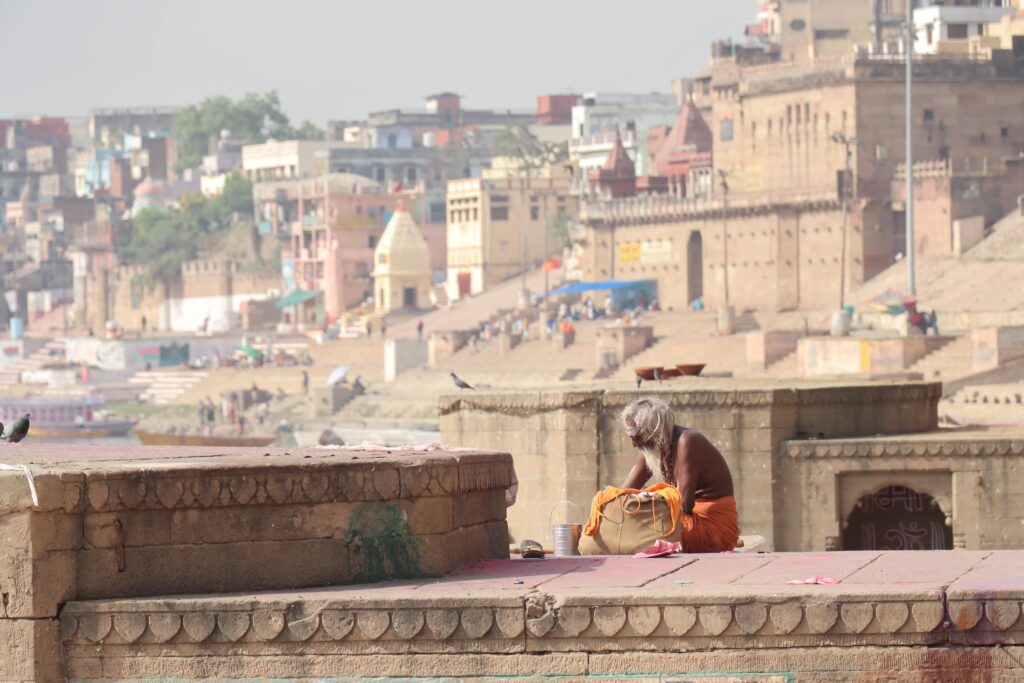
Varanasi Ghat
If you want to be a street photographer, first thing you need a vivid research and go through the works of world class photographers. It will give you inspiration, and help you understand what you are capable of achieving in this category. View works of different photographers who shoot in a variety of places. including cities and villages. Read street photography books and blogs on a regular basis. Read about the history and location of the photographer. look through as much of their portfolios as you can. That will offer you great ideas to capture good street photos. Some great street photographers are
- Eugène Atget (1857–1927) France,
- Lisette Model (1901–1983) Austria,
- Henri Cartier-Bresson (1908–2004) France,
- Garry Winogrand (1928–1984) USA,
- Shomei Tomatsu (1930–2012) Japan
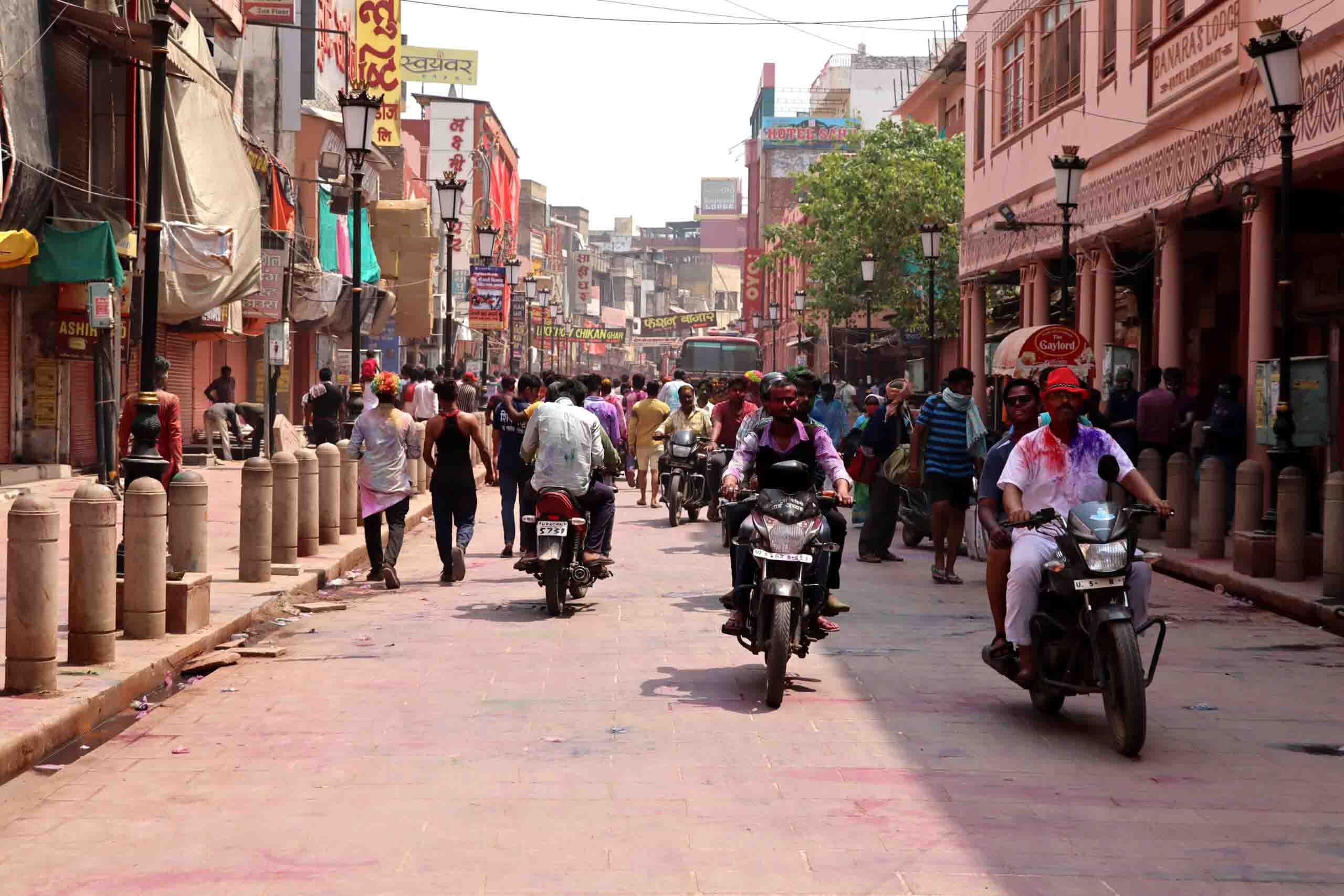
Holi in Varanasi
Street photography captures real life, emotions, and society in its purest form. But with great artistic freedom comes responsibility. Every click you take in a public space carries an ethical weight. As a street photographer, you must balance creativity with respect for others.
Key Ethical Considerations in Street Photography:
- Respect personal boundaries: Always remember that people in your frame are not just subjects; they are individuals with privacy.
- Avoid intrusion: If someone feels uncomfortable, lower your camera. A great photo is never worth making someone uneasy.
- Understand local laws: Every country or region has different rules about photographing people in public. Know them before you shoot.
- Ask permission when possible: In some cases, a simple smile or gesture can earn consent. It builds trust and makes your work more genuine.
- Be mindful of children and vulnerable groups: Avoid photographing minors or people in distress without explicit consent.
- Respect cultural and religious sentiments: What may seem normal to you could be offensive in another culture.
- Don’t exploit emotions: Capturing sorrow, poverty, or personal struggles requires sensitivity and compassion.
- Use your work responsibly: When sharing online or in exhibitions, avoid misrepresenting your subjects or situations.
- Maintain transparency: If your photograph gains attention, acknowledge your subjects respectfully and honestly.
- Promote awareness, not violation: True street photography reflects life’s truth, not people’s discomfort.
Street photography is powerful because it tells stories that words cannot. But ethical practice ensures those stories are told with dignity and respect. When you press the shutter, think not only about the frame — think about the human behind it.
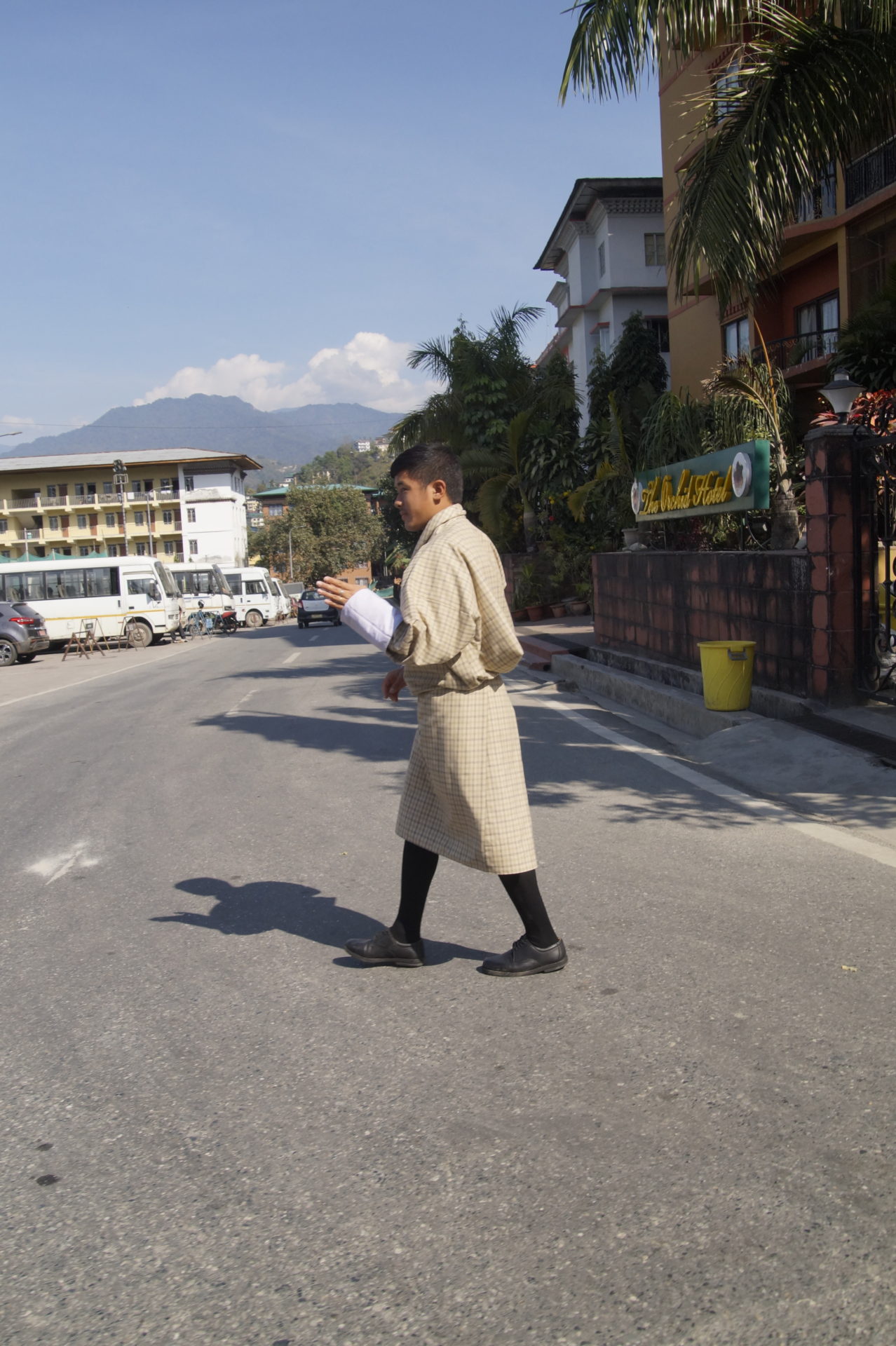
Street of Phuentsholing Town, Bhutan
Q1. What is street photography for beginners?
Street photography for beginners is the practice of capturing candid, everyday life in public spaces. It focuses on real emotions, spontaneous interactions, and urban stories rather than staged or posed images.
Q2. What camera settings work best for street photography?
Beginners can start with shutter speeds of 1/125 sec or faster, aperture between f/2.8 and f/5.6, and ISO 200–400 depending on light. Continuous autofocus and daylight white balance also work well for most street scenarios.
Q3. What lens should beginners use for street photography?
A 35mm or 50mm prime lens is ideal. These lenses are lightweight, discreet, and versatile for capturing portraits, environments, and candid street scenes.
Q4. Is street photography legal for beginners?
In most countries, photographing in public spaces is legal. However, respecting people’s privacy and cultural norms is essential. Always check local regulations before shooting.
Q5. How can beginners overcome shyness in street photography?
Start shooting in busy areas where people are less likely to notice. Practice photographing crowds, shadows, or silhouettes before moving closer to individuals. With time, your confidence will grow.
In the fast-paced rhythm of urban life, street photography offers a powerful way to tell stories, capture raw human emotions, and document the beauty of the everyday. As we’ve explored in this guide, understanding the fundamentals—like choosing the right gear, using natural light effectively, and mastering the art of observation—can make a world of difference when starting your journey into the streets. For those new to this genre, it’s important to remember that great images aren’t about expensive equipment, but about timing, intuition, and the ability to see beauty in the mundane.
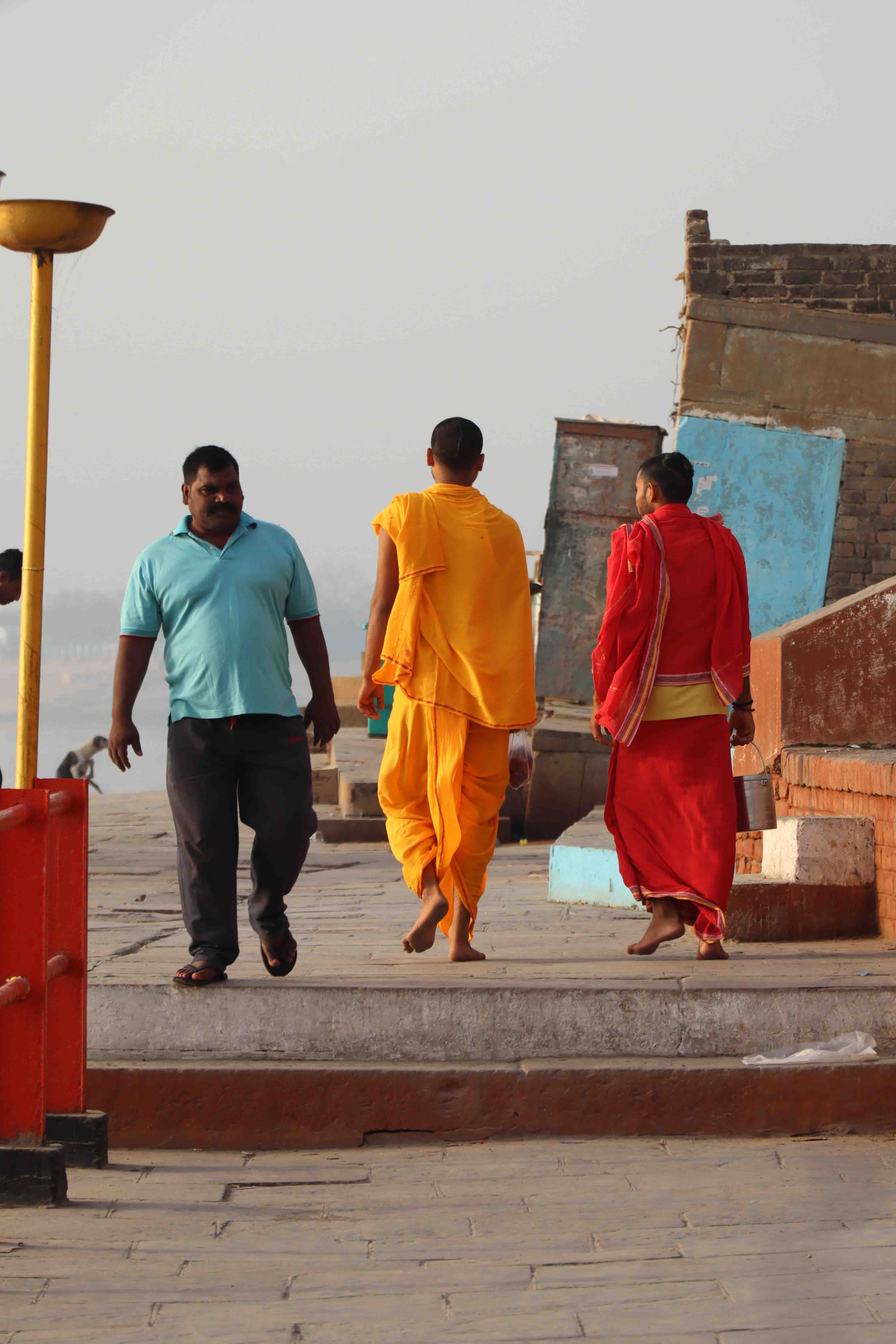
Varanasi Ghat
Street photography for beginners is more than just pointing a camera at a crowd—it’s about learning to anticipate moments, respecting your subjects, and developing your own visual voice. As you practice and grow, your confidence and creativity will naturally evolve. Don’t be afraid of making mistakes; every misstep teaches you something new about light, composition, and human interaction. Embrace the unpredictability of the streets, and let the city become your classroom.
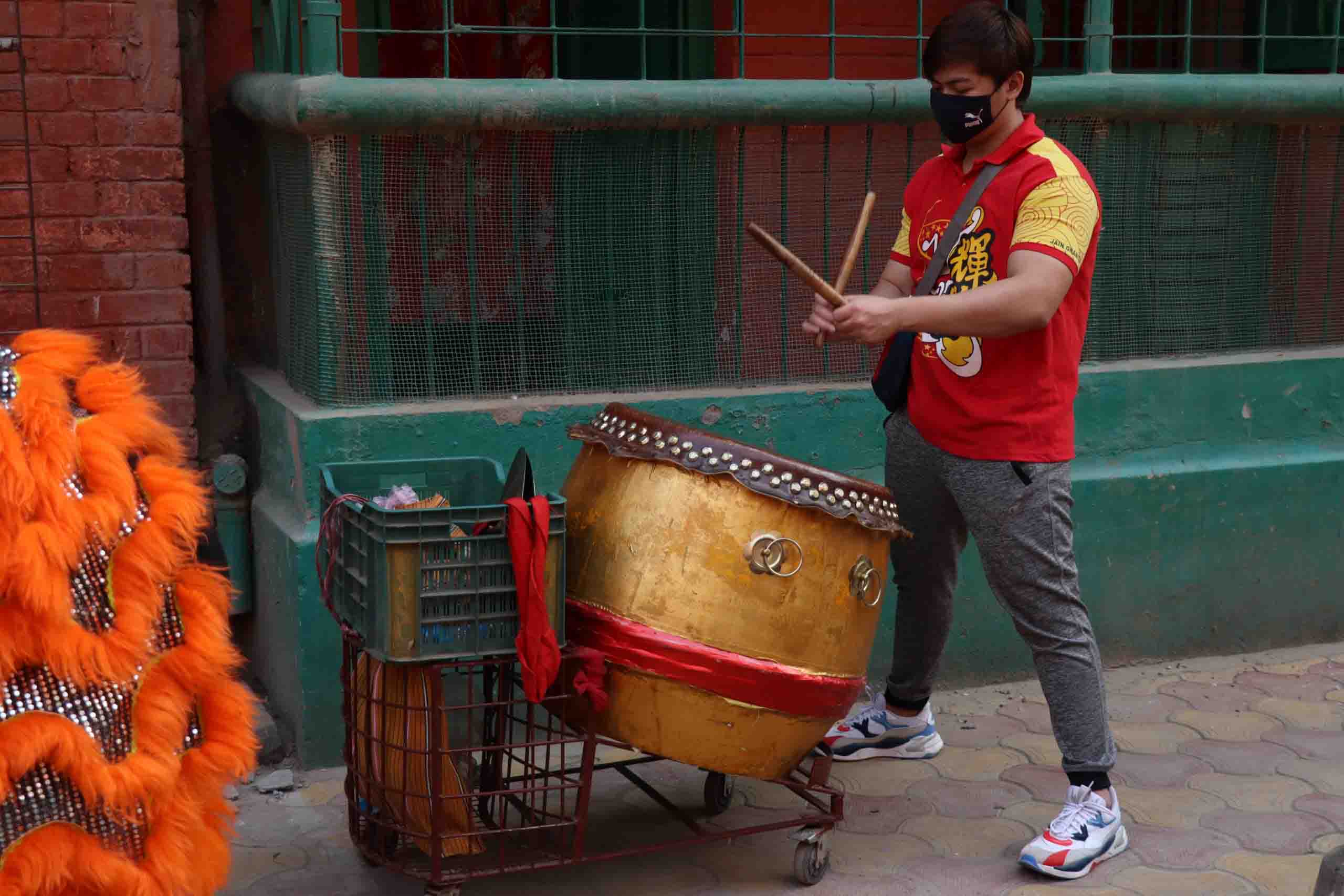
Chinese new year in Territy Bazar, Kolkata
Whether you’re capturing a quiet gesture, a dramatic silhouette, or a fleeting expression, the streets offer endless opportunities for compelling imagery. Keep your camera ready, your eyes open, and your mind curious. With patience and persistence, street photography for beginners can transform into a lifelong passion—and an art form that continually challenges and inspires.
Recent Comments